1. Overview
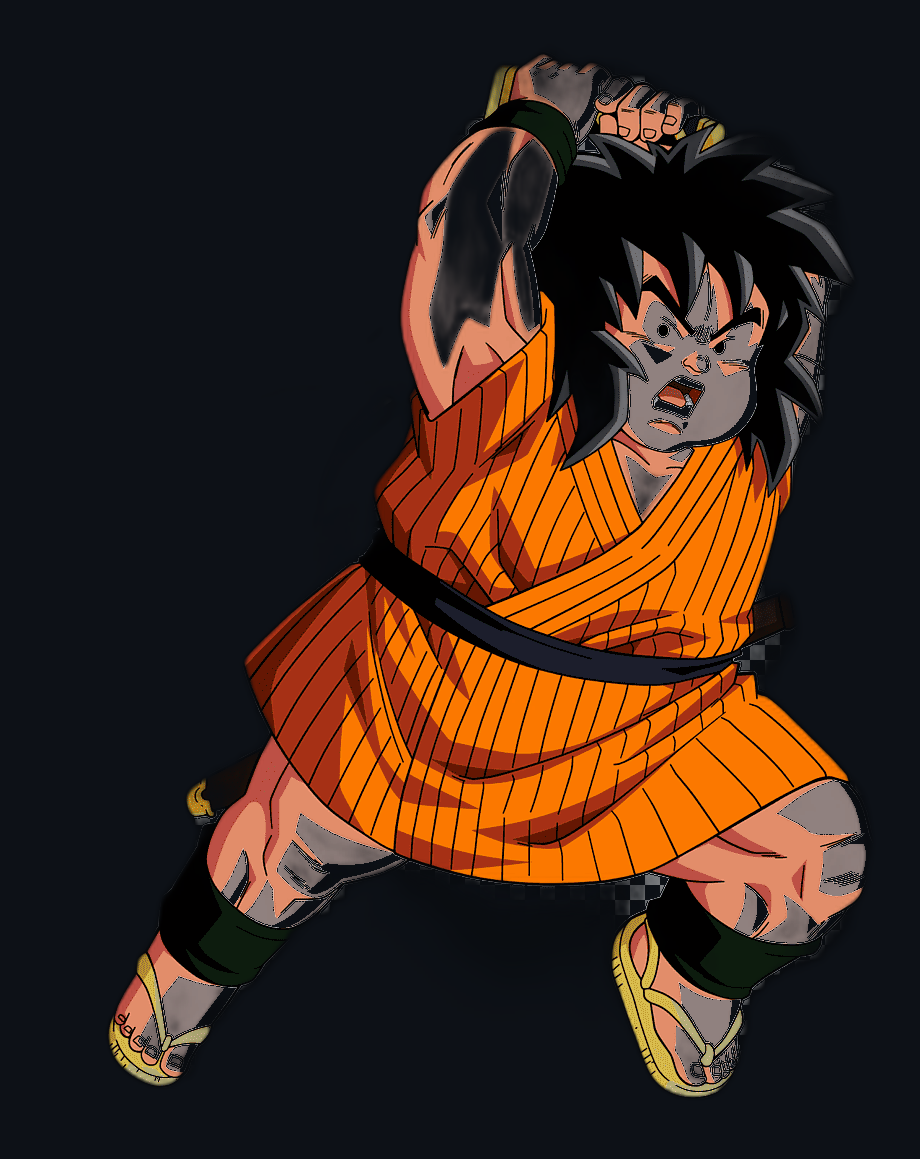
Yamcha is one of the original Dragon Team members and Goku's earliest rival-turned-ally. Starting his journey as the feared Desert Bandit who terrorized travelers alongside his shapeshifting companion Puar, Yamcha overcame his signature weakness — a paralyzing fear of women — to become a dedicated martial artist under Master Roshi's tutelage. What sets Yamcha apart from other Z-Fighters is not his raw power, which was surpassed early in the series, but his creative combat techniques and unwavering courage. His Wolf Fang Fist remains one of the most visually distinctive martial arts styles in Dragon Ball, and his Spirit Ball technique demonstrated a level of ki control that even seasoned fighters struggle to master. Yamcha's character arc traces the journey of a talented fighter who, despite falling behind the Saiyan power curve, never stopped showing up. He represents the human spirit's refusal to quit in a world of gods and super-saiyans. For fans analyzing Yamcha, this guide covers his abilities, techniques, fighting style, and the strategic choices that defined his martial arts career.
2. Basic Data & Specifications
Yamcha's combat statistics reflect his journey from a talented human fighter to a martial artist who, while outclassed by Saiyans, remained a capable warrior by Earthling standards. The table below compares his key attributes at various points in the series.
| Attribute | Yamcha (Saiyan Saga) | Human Z-Warrior Avg | Evaluation |
|---|
| Power Level | 1,480 | ~1,200 (Tien Shinhan) | Slightly above Tien at this point, showing his training under Kami bore fruit. |
| Combat Speed | Mach 1.5+ | Variable | Above average for a human Z-Fighter. His desert bandit background gave him quick reflexes. |
| Ki Control | 8/10 | 7/10 | Excellent. The Spirit Ball requires fine ki manipulation that few masters achieve. |
| Technique Creativity | 8/10 | 6/10 | Wolf Fang Fist and Spirit Ball are original creations, not copied techniques. |
| Durability | 4/10 | 5/10 | Human-level durability. Yamcha's Saibaman death highlights his fragility relative to aliens. |
| Endurance | 6/10 | 6/10 | Good by human standards but cannot sustain prolonged high-power combat like Saiyans. |
3. Ability Analysis
Yamcha's technique set is small but distinctive. Each ability reflects his creative approach to martial arts and his feral-inspired combat origins.
Wolf Fang Fist (Rouga Fist)
Yamcha's signature technique mimics the movements of a wolf — a barrage of claw-like hand strikes delivered with rapid, feral intensity. The technique combines horizontal slashes, vertical rakes, and piercing thrusts aimed at vital points. Its strength lies in close-quarters pressure: once Yamcha closes the distance, the rapid succession of strikes makes counter-attacking difficult. The weakness is its linear nature — opponents who can read the pattern or who have superior speed can sidestep and punish. In the 21st World Martial Arts Tournament, this technique overwhelmed weaker opponents but struggled against fighters with solid defensive fundamentals. Against Jackie Chun (Master Roshi in disguise), Yamcha's Wolf Fang Fist was countered by the Mafuba. Best used as a pressure tool rather than a finishing move.
Spirit Ball (Sokidan)
Yamcha's most sophisticated technique — a ki sphere that the user can control telekinetically after launch, allowing it to change direction mid-flight and pursue moving targets. The Spirit Ball requires immense concentration and precise ki control because the user must maintain the energy construct's stability while simultaneously directing its path. This technique appears simple but is actually one of the most advanced ki manipulation skills in the Dragon Ball universe. Few characters outside of Yamcha have demonstrated this level of remote ki control. The Spirit Ball's primary tactical advantage is its unpredictability — unlike a standard energy blast that travels in a straight line, the Spirit Ball can curve around obstacles and flank an opponent's guard. Its weakness is the concentration cost: while controlling the Spirit Ball, Yamcha's personal defense is compromised. He can either control the ball or defend himself, rarely both at full capacity.
Kamehameha
Like all of Master Roshi's students, Yamcha learned the Kamehameha wave. However, his version is less refined than Goku's or Krillin's. Yamcha's Kamehameha has comparable raw output to Krillin's in terms of ki efficiency but lacks the same tactical versatility. He tends to use it as a straightforward blast rather than in creative configurations. The technique drains him faster than it does Goku, limiting him to 2-3 full-powered shots before his stamina becomes a factor.
4. Best Fighting Style
Build A: Pressure Aggressor
Focus on rapid close-quarters combat using Wolf Fang Fist to overwhelm opponents before they can establish distance. Open with a Spirit Ball feint to force the opponent into a defensive position, then close the gap while they are occupied with the remote projectile. This build maximizes Yamcha's technique creativity and speed advantages. Effective against slower, brute-force opponents who cannot handle multiple attack vectors simultaneously. Weak against opponents who can maintain distance and use long-range attacks to control the engagement.
Build B: Ki Control Specialist
Prioritize the Spirit Ball as the primary offensive tool, using its remote guidance to control the battlefield. Supplement with Kamehameha blasts from different angles while the Spirit Ball occupies the opponent's attention. This build requires strong ki management and battlefield awareness. Best used against single powerful opponents who rely on blocking and tanking. The key is to never let the opponent focus on one threat — always have at least two attack vectors active. The weakness is that this build drains stamina rapidly; if the opponent survives the initial onslaught, Yamcha will be depleted.
Build C: Tactical Support
When fighting alongside stronger allies, Yamcha shines as a support fighter. Use Wolf Fang Fist to lock down opponents in close combat, creating openings for heavier hitters. The Spirit Ball can be used to disrupt enemy formations or force opponents into vulnerable positions for allies to exploit. This is the most effective role for Yamcha in post-Saiyan Saga battles, where his raw power cannot match the primary threats. Focus on positioning, timing, and creating opportunities rather than dealing direct damage.
5. Strategy & Matchups
Early Dragon Ball Era (Power Level ~100-200)
Yamcha is at his relative peak during the original Dragon Ball tournaments. His Wolf Fang Fist and growing proficiency make him a genuine contender. Focus on aggressive pressure and use your speed advantage. At the 22nd World Martial Arts Tournament, Yamcha had trained under Kami and reached power levels competitive with Tien. Against opponents like Goku or Tien, rely on technique creativity rather than brute strength.
Saiyan Saga (Power Level 1,480)
This is Yamcha's most critical period from a strategic perspective. His power level of 1,480 makes him the second-strongest human Z-Fighter at this point, behind Tien. Against the Saibamen (power level ~1,200), Yamcha is actually favored. His mistake was not in accepting the fight but in failing to secure the kill. The Saibaman self-destruct took him by surprise — a lesson that applies broadly: never assume a Dragon Ball opponent is defeated until they are completely incapacitated. Against Nappa (power level 4,000) or Vegeta (18,000), Yamcha has zero chance in direct combat and should focus on evasion and support.
Post-Saiyan Saga Support Role
After the Saiyan Saga, Yamcha's combat role shifts entirely to support. His power level, even after training in the Room of Spirit and Time before the Cell Games, maxes out around 3-5 million. This is insignificant compared to the Cell-tier fighters (100+ million). In this era, Yamcha's best strategy is battlefield support: use the Spirit Ball for harassment, provide tactical communication, and act as a diversion for stronger allies. The key is positioning — stay at the edges of the battle, never in the center.
6. Matchups & Counters
Yamcha performs well against opponents of similar or slightly higher power levels who lack advanced technique diversification. His Wolf Fang Fist can overwhelm one-dimensional brawlers, and the Spirit Ball gives him an edge against stationary or slow opponents. He struggles against fighters with superior speed or long-range dominance. Tien Shinhan is his natural rival — their abilities are closely matched, with Tien having slightly better techniques (Solar Flare, Multi-Form) that counter Yamcha's aggressive style. Against Saiyan-tier opponents (Vegeta, Nappa, Saiyan Saga Goku), Yamcha's only viable strategy is avoidance and support; direct confrontation ends quickly. The Ginyu Force members like Guldo or Recoome would overpower him due to both power level gaps and exotic abilities. Against pure martial artists of similar power (early Dragon Ball Krillin, Nam, Ranfan), Yamcha has the advantage due to his experience and technique creativity. The worst matchup for Yamcha is any opponent with a significant power level gap who also has mobility advantages — they can both outrun his Spirit Ball and overpower his Wolf Fang Fist.
7. Expert Tips & Common Mistakes
Mistake 1: Overextending with Wolf Fang Fist
The Wolf Fang Fist's rapid strike pattern creates an illusion of dominance, but it leaves Yamcha committed to the attack duration. If the opponent reads the pattern or has a counter, Yamcha is fully exposed mid-combo. The fix: use Wolf Fang Fist in short bursts, never the full combo unless the opponent is confirmed staggered.
Mistake 2: Spirit Ball Tunnel Vision
Controlling the Spirit Ball requires intense focus, and inexperienced users lose awareness of their surroundings. This is how opponents can flank and counter-attack while Yamcha is directing the ball. The fix: maintain peripheral awareness and be willing to abandon the Spirit Ball to defend yourself. A missed Spirit Ball is better than taking a direct hit.
Mistake 3: Fighting Beyond Your Weight Class
Yamcha's bravery is one of his defining traits, but bravery without strategy gets you killed — as the Saibaman demonstrated. Against significantly stronger opponents (2x+ power gap), direct confrontation is suicide. The fix: assess power levels before engaging and recognize when to switch to support mode. There is no shame in fighting smart against impossible odds.
8. Frequently Asked Questions
Is Yamcha really the weakest Z-Fighter?
Among the core Dragon Team (Goku, Vegeta, Gohan, Piccolo, Krillin, Tien, Yamcha), Yamcha is generally considered the weakest by the end of the series. However, he remains stronger than most of Earth's population and was one of the stronger human fighters during the Saiyan Saga.
Why did Bulma break up with Yamcha?
According to supplementary materials, Yamcha's infidelity issues led to their breakup. Bulma was also drawn to Vegeta's intensity and confidence. Yamcha and Bulma remain on friendly terms, and Yamcha has moved on to a successful baseball career.
Can Yamcha still use the Spirit Ball?
Yes, the Spirit Ball remains in Yamcha's technique arsenal throughout the series, though he uses it less frequently as his combat role shifts to support. The technique does not degrade with lack of use once mastered.
Did Yamcha ever surpass Tien Shinhan?
During the Saiyan Saga, Yamcha's power level (1,480) was slightly above Tien's (1,300) at the time they faced the Saiyans. However, after training on King Kai's planet and beyond, Tien consistently maintained an edge due to his more disciplined training regimen and broader technique set.
What happened to Yamcha after Dragon Ball Z?
Yamcha became a professional baseball player for the Taitans team. His martial arts training, particularly his reflexes and hand-eye coordination, made him an exceptional player. He remains active in the Dragon Team's social circle and participates in major events like Bulma's birthday parties.