1. Shin Overview
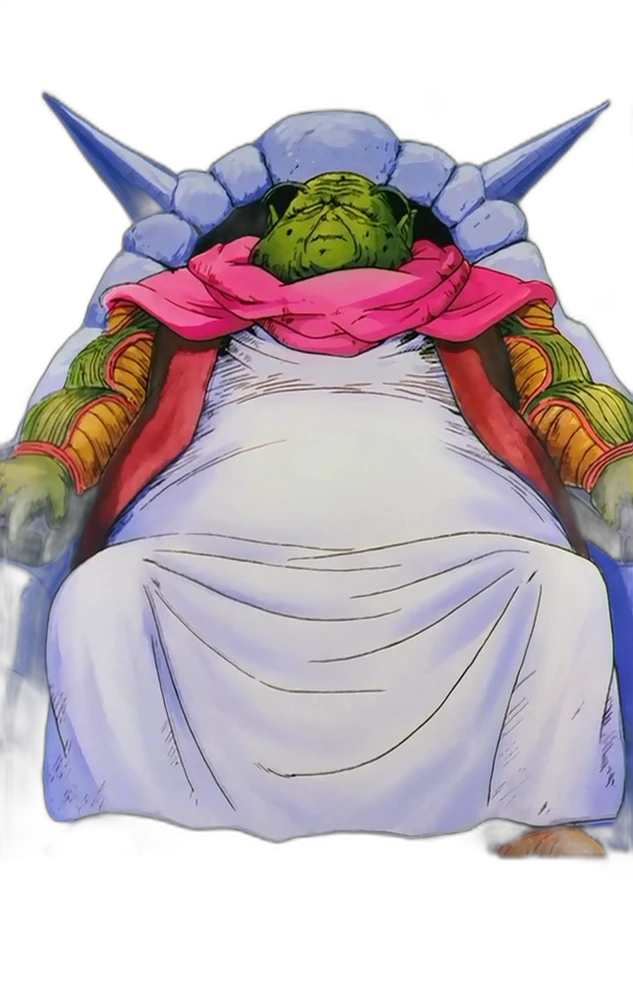
Shin, the Supreme Kai of Universe 7, stands as the highest-ranking deity charged with overseeing the creation and protection of the entire universe. As a member of the Shinjin race born from the fruit of the sacred Kaiju trees on the World of the Kais, Shin was originally one of several Supreme Kais who governed Universe 7 in a divine council. However, the ancient warlock Bibidi's rampage with Majin Buu killed all other Supreme Kais, leaving Shin as the sole survivor of his race -- a trauma that defined his personality for millennia to come.
Unlike the confident, commanding deities one might expect from the highest divine authority in the universe, Shin is defined by his fear and caution. The loss of his fellow Supreme Kais at the hands of Majin Buu left deep psychological scars, and he approaches threats with a wariness that the Z-Fighters initially mistake for weakness. When Shin is introduced during the Buu Saga, his pale skin, white hair, and elf-like features make him look nothing like the god the Z-Fighters expected. His power, while overwhelming by mortal standards at an estimated power level of 91,000, proved insufficient against the revived Majin Buu, and his lack of combat experience rendered him more of a strategist than a frontline fighter.
Shin's role in Dragon Ball extends far beyond his combat capabilities. As the Supreme Kai, he possesses knowledge of the universe's creation, the inner workings of divine ki, and the cosmic balance between creation and destruction. His life is permanently linked to Beerus, the God of Destruction: if Shin dies, Beerus dies as well -- a cosmic safeguard ensuring the God of Destruction has a vested interest in protecting his counterpart. This vulnerability haunted Shin for millennia, as he feared Beerus would destroy him for being weak. Yet despite his anxieties, Shin consistently steps forward when the universe needs him, proving that courage is not the absence of fear but action despite it.
2. Basic Data and Profile
| Species | Shinjin (Glind) |
| First Appearance | Dragon Ball Z Chapter 437 / Episode 213 (1993) |
| Affiliation | Divine Realm, later allied with Z-Fighters |
| Power Level | ~91,000 (estimated combat); divine authority far higher |
| Position | Supreme Kai of Universe 7 (creation deity) |
| Divine Techniques | Kiai, Healing, Telekinesis, Telepathy, Matter Creation |
| Titles | Supreme Kai of Universe 7, Last of the Shinjin |
| Cosmic Link | Life linked to Beerus (God of Destruction) |
3. Ability Analysis
Shin's abilities are divided between divine authority and combat capability. While his combat power is significant by mortal standards, his true strength lies in the unique abilities granted by his Supreme Kai status. Understanding this duality is essential to appreciating Shin's role in the Dragon Ball power hierarchy.
Divine Techniques
- Kiai (Divine Shockwave): A projection of pure divine energy that creates a powerful shockwave capable of pushing back or stunning opponents. Unlike standard ki attacks, Kiai operates on a divine frequency that is more difficult for mortals to sense and counter.
- Healing: Shin can heal injuries by channeling divine energy through his hands. This ability is faster and more comprehensive than standard Senzu Bean recovery but drains significant energy from the healer, making it unsuitable for battlefield triage.
- Telekinesis: As a Supreme Kai, Shin possesses powerful telekinetic abilities that allow him to move objects and opponents with his mind. This technique is particularly effective against opponents who rely on physical positioning and environmental advantages.
- Telepathy: Shin can communicate mentally across vast distances, coordinate allies silently, and read the surface thoughts of mortals. This ability makes him an invaluable strategist and intelligence gatherer.
- Matter Creation: Supreme Kais possess the ability to create matter from divine energy, though this process is energy-intensive and typically reserved for maintaining the cosmic order rather than combat applications.
Combat Limitations
Shin's combat performance is constrained by two factors: his lack of battle experience and his psychological trauma. As the youngest Supreme Kai before his elders were killed, he never completed his combat training. Against foes like Majin Buu, even his divine power level of 91,000 was insufficient. However, Shin compensates for these limitations through strategic acumen, guiding more powerful fighters to the right positions rather than engaging directly.
4. Build and Optimization
Shin's optimal build prioritizes strategic support and divine utility over direct combat. He functions best as a force multiplier, using his telepathy and healing to coordinate allies while deploying his Kiai for crowd control. His build is fundamentally that of a commander and healer, not a frontline fighter.
For maximum effectiveness, Shin should invest in three core areas: divine energy reserves to sustain extended healing and telepathic coordination during prolonged engagements, tactical awareness to identify the optimal moments to deploy each ability, and defensive evasion to avoid direct confrontation with opponents who could one-shot him. His Potara earring with Kibito provides a fusion option as an emergency measure, combining both fighters' capabilities into a more combat-effective entity.
The critical weakness in Shin's build is his psychological vulnerability. His fear of Majin Buu and his anxiety about Beerus can impair decision-making under pressure. Training focused on emotional regulation and combat exposure can help mitigate this weakness, allowing Shin to make clear-headed tactical decisions even in high-stakes situations that trigger his trauma response.
5. Strategy and Playstyle
Shin's combat strategy is fundamentally different from mortal fighters. He does not seek to defeat opponents through direct confrontation but rather through information advantage, tactical positioning, and force multiplication. His playstyle is reactive and analytical, prioritizing understanding the threat before engaging.
In the information-gathering phase, Shin uses telepathy to assess opponent capabilities, intentions, and weaknesses. He communicates these findings to allied fighters, giving them crucial intelligence advantages. During active combat, Shin positions himself at the periphery, deploying Kiai shockwaves to disrupt opponent attacks and healing allies when they take damage. His telekinesis is reserved for critical moments -- pulling an ally out of an attack's path, redirecting an incoming projectile, or creating an opening for a decisive counterattack.
Shin's most important strategic responsibility is knowing when not to fight. Unlike Saiyans who relish combat, Shin understands that engaging a superior opponent directly is a failure of strategy, not a test of honor. His willingness to retreat, regroup, and seek alternative solutions has saved the universe on multiple occasions, most notably when he guided the Z-Fighters to Babidi's ship and ensured they were positioned to confront Majin Buu before his full revival.
6. Matchup Analysis
Shin's matchup dynamics are unique because his effectiveness depends less on raw power and more on the nature of the threat and the allies available to him. His divine abilities provide advantages against certain opponent types while leaving him vulnerable to others.
Favorable Matchups
- Mortal-level threats (Frieza's army, Cell-level): Shin's power level of ~91,000 is sufficient to handle most pre-Buu Saga threats comfortably, giving him both a power advantage and a divine abilities advantage.
- Psychological opponents (Ranfan, Guldo): Telepathy allows Shin to read and counter psychological manipulation tactics. His millennia of experience make him immune to intimidation.
Even Matchups
- Lower-tier gods (Kibito, other attendants): Fellow divine beings have similar resistances, making these matches about skill and experience rather than divine advantages.
Difficult Matchups
- Supreme-tier threats (Majin Buu, Beerus, Jiren): Opponents whose power dwarfs Shin's combat capabilities force him into a purely strategic role. His healing and telepathy remain useful, but he cannot engage directly.
- Magic users (Bibidi, Babidi, Moro): Magic operates outside the divine framework that Shin understands. Techniques like Babidi's mind control or Moro's energy absorption bypass conventional defenses and divine resistances alike.
- Speed blitzers (Dyspo, Burter): Opponents who can attack before Shin completes a telepathic communication or healing technique exploit his relatively slow combat speed.
7. Expert Tips
Mastering Shin's unique playstyle requires understanding several advanced concepts that distinguish divine combat from mortal martial arts. These tips draw from detailed analysis of his canonical appearances and the broader cosmology of the Dragon Ball multiverse.
Tip 1 -- The Kiai Is Not a Damage Tool but a Setup Tool: Many players misuse Shin's Kiai as an attack, expecting it to deal significant damage. The Kiai's true value is crowd control -- it creates space, interrupts opponent techniques, and sets up opportunities for stronger allies. A well-timed Kiai can save an ally from a killing blow or disrupt an opponent's charging attack.
Tip 2 -- Telepathy Requires Active Maintenance: Shin's telepathic network is not automatic. He must actively maintain the connection with each ally, processing their sensory input and relaying tactical information. In chaotic battles with multiple allies, Shin should prioritize maintaining connections with the two or three most critical fighters.
Tip 3 -- Heal Strategically, Not Compulsively: Healing drains Shin's divine energy reserves. Healing minor injuries wastes resources that might be needed for a critical save later. Establish clear triage criteria with the team before battle.
Tip 4 -- Leverage the Beerus Connection: The cosmic link between Shin and Beerus is not just a vulnerability -- it is also a deterrent. Any opponent who threatens Shin directly also threatens Beerus's life, which means the God of Destruction has a vested interest in protecting him. Shin can leverage this by signaling to Beerus through their connection when facing threats he cannot handle alone.
8. Frequently Asked Questions
Who is Shin in Dragon Ball?
Shin is the Supreme Kai (God of Creation) of Universe 7, the highest-ranking creation deity in the universe. He is the sole survivor of the ancient warlock Bibidi's rampage with Majin Buu, which killed all other Supreme Kais. Despite his divine status, Shin is characterized by his caution and fear, stemming from the trauma of losing his entire race.
How strong is Shin compared to other Dragon Ball characters?
Shin's combat power level is estimated around 91,000, making him significantly stronger than Frieza's first form but considerably weaker than the late-series powerhouses. However, his divine abilities -- telepathy, healing, telekinesis, and matter creation -- give him strategic value far beyond his raw power level.
What is Shin's relationship with Beerus?
Shin's life is cosmically linked to Beerus, the God of Destruction: if Shin dies, Beerus dies as well. This connection ensures the God of Destruction has a vested interest in protecting his creation counterpart. Despite this link, Shin feared Beerus for millennia, worried the God of Destruction would kill him for being weak.
Does Shin fuse with Kibito?
Yes, Shin fuses with his attendant Kibito using the Potara earrings, becoming Kibitoshin. This fusion combines both fighters' abilities and power levels into a single entity. However, the fusion is later undone by the Dragon Balls when both deities realize they prefer their separate identities.
Why is Shin so afraid of Majin Buu?
Shin witnessed Majin Buu's original rampage firsthand, which killed all other Supreme Kais and left Shin as the sole survivor of his species. This traumatic experience defined his personality for millions of years, making him perpetually cautious and fearful of threats he cannot control. His fear of Buu is not cowardice but a rational response to devastating trauma.