1. Overview
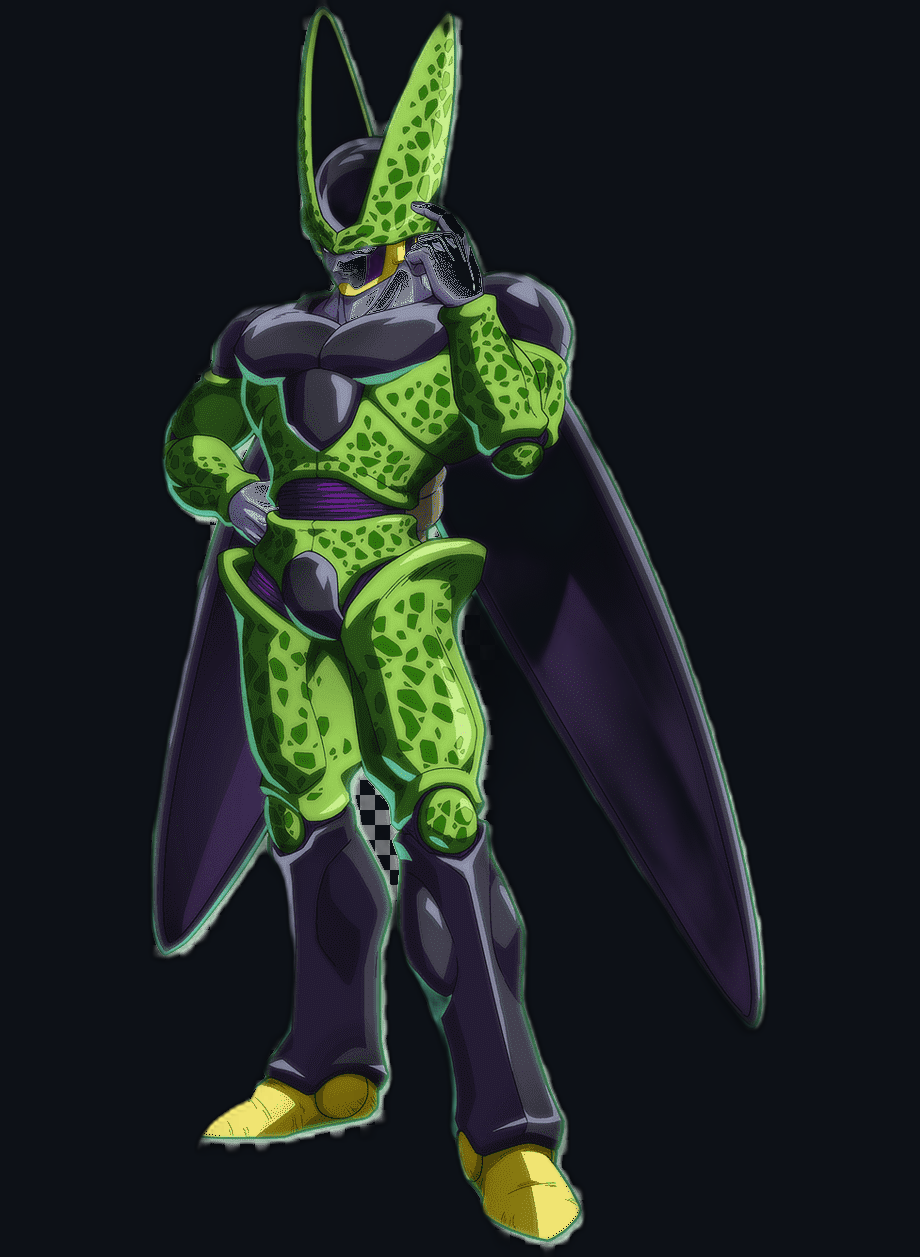
Cell is Dr. Gero's ultimate bio-android, genetically engineered from the cells of the greatest warriors to ever visit Earth. Grown in a subterranean laboratory and completed years after his creator's death, Cell emerged as a terrifying predator that evolved through absorption. His journey from Imperfect larval form to the Perfect Life Form through absorbing Androids 17 and 18 makes him one of Dragon Ball Z's most iconic villains. The Cell Games tournament, his televised challenge to Earth's strongest fighters, culminated in Gohan's Super Saiyan 2 awakening and one of the most dramatic finales in shonen anime history. This guide covers Cell's biology, combat abilities, strategic evolution through forms, and the unique techniques his genetic makeup provides. Dragon Ball Z Cell Saga (Episodes 141-194) documents his complete arc.
2. Basic Data
| Attribute | Imperfect Cell | Semi-Perfect Cell | Perfect Cell |
|---|---|---|---|
| Power Level | ~1.5e12 | ~3e14 | ~3.8e14 |
| Height | 210 cm | 250 cm | 195 cm |
| Appearance | Insectoid, tail, green spots | Bulky, oversized frame | Sleek, humanoid, perfect symmetry |
| Regeneration | Full (nucleus level) | Full | Full |
| Speed | Fast (supersonic) | Moderate | Instant Transmission tier |
Cell's power progression follows a unique absorption curve. Unlike Saiyans who grow through near-death recovery, Cell's power increases by consuming bio-mass and absorbing specific android components. The jump from Imperfect to Semi-Perfect (absorbing Android 17) is a roughly 200x multiplier. The final step to Perfect (absorbing Android 18) is a more modest 1.3x but grants perfect ki control and Instant Transmission. His Super Perfect form, achieved after self-destruction and regeneration, represents another 1.3x boost.
3. Ability Analysis
Kamehameha. Cell inherited the Kamehameha from Goku's cells and perfected it beyond its original user's capability. His signature Solar Kamehameha — a one-handed charged Kamehameha performed one-handed while the other hand charges additional ki — is unique to him. The technique is deceptive because the visible beam is only part of the energy: Cell channels additional ki from his tail simultaneously. This hidden energy pool is what makes his Kamehameha clashes so devastating, as demonstrated against Gohan's Father-Son Kamehameha.
Special Beam Cannon (Makakosappo). Inherited from Piccolo's cells, Cell can perform the Special Beam Cannon with vastly superior charge speed. While Piccolo required extended charging against Raditz, Cell fires a version with near-instant charge. The spiraling energy drill penetrates most defenses. He used this technique primarily against faster opponents who relied on durability.
Destructo Disc (Kienzan). From Krillin's cells, Cell can generate the energy disc that slices through nearly any material. What makes Cell's version dangerous is his ability to throw multiple discs simultaneously from both hands plus his tail, creating an unavoidable net. In the Cell Games, he deployed this technique primarily to control space and force opponents into his Kamehameha line of fire.
Instant Transmission (Shunkan Ido). From Goku's cells, Cell can teleport anywhere within detectable ki range. In Perfect form, this becomes his deadliest tactical tool. He famously used Instant Transmission to teleport to King Kai's planet and threaten the afterlife, then returned to Earth with an incoming self-destruction. The ability makes him nearly impossible to corner or predict.
Cell Juniors. Cell can spawn 7 identical miniature copies of himself from his tail. Each Cell Junior possesses power roughly equivalent to Super Saiyan-level fighters, capable of matching Vegeta, Trunks, Piccolo, Tien, and Krillin simultaneously. They regenerate from any damage and share Cell's aggressive battle instincts. The Cell Juniors were used primarily to provoke Gohan's anger, but they are also an effective tactical force for overwhelming numerical superiority.
Regeneration. Cell possesses the most powerful regeneration in Dragon Ball Z. As long as a single cell nucleus survives, Cell can completely regenerate his body. Even after Gohan's Super Kamehameha obliterated his upper torso, Cell regenerated fully within seconds. This was demonstrated most dramatically when he self-destructed on King Kai's planet and regenerated from a single remaining nucleus, returning in Super Perfect form with even greater power.
4. Build Recommendation
Build 1: Beginner — Absorption Rush (Story Mode / PvE). Start in Imperfect form and focus on absorption tactics. Use tail attacks and grab maneuvers to close distance. Prioritize city-absorbing for rapid power gain. Transition to Semi-Perfect after absorbing Android 17, then Perfect after absorbing Android 18. Recommended skill rotation: Tail Grab -> Human Absorption -> Transition to Semi-Perfect -> Big Bang Kamehameha -> Pursue Android 18 -> Perfect Form -> Solar Kamehameha. This build is strongest against: NPC opponents and story mode enemies that follow predictable patterns. Weak against: players who can interrupt absorption sequences.
Build 2: Advanced — Perfection Control (PvP / Tournament). Start in Perfect form immediately (assume absorption is complete). Focus on tactical ki management and Instant Transmission positioning. The Solar Kamehameha is your primary damage tool, but use Destructo Disc nets for area control. Against aggressive opponents, retreat and use Cell Juniors as distraction while charging. Critical tactic: use Instant Transmission to escape combo lock and immediately counter with a close-range Kamehameha. Recommended skill rotation: Instant Transmission retreat -> Deploy Cell Juniors -> Destructo Disc net -> Solar Kamehameha -> Regeneration if damaged. Best against: Saiyan-type power escalators who grow stronger over time — end the fight before they peak.
Build 3: Special — Survival Instinct (Endurance / Comeback). This build exploits Cell's regeneration and absorption mechanic. Adopt a defensive, hit-and-run strategy. Take measured damage to bait opponents into overconfidence, then regenerate completely. If the situation becomes desperate, trigger self-destruction as a tactical reset — the Super Perfect form that emerges is both healed and empowered. This is high-risk because the self-destruction window leaves Cell vulnerable to complete annihilation if any nucleus is eliminated. Optimal in: ironman tournaments where Cell has multiple rounds to regenerate between matches.
5. Strategy Guide
Early Phase (Imperfect Form). Cell is at his weakest but also most deceptive. Opponents may underestimate the insectoid form. Use this to your advantage: the tail absorption attack is faster than it looks, and Cell's ground speed is superior to most opponents. Key objective: absorb bio-mass or Android 17 as quickly as possible. Avoid extended clashes with Super Saiyan-level opponents.
Mid Phase (Semi-Perfect to Perfect Transition). After absorbing Android 17, Cell gains significant bulk at the cost of speed. This form is a transitional bridge. Do not linger in Semi-Perfect — focus entirely on locating and absorbing Android 18. The power difference is substantial enough that rushing absorption is worth taking some damage. Once Perfect, Cell's speed returns and his ki control achieves precision.
Late Phase (Perfect Form — Cell Games). In Perfect form, Cell controls the engagement entirely. Open the Cell Games with psychological warfare (Cell Juniors) to test the opponent's temperament. Against calm opponents, escalate to Destructo Disc nets followed by Solar Kamehameha. Against emotional opponents, provoke them into reckless attacks and counter with Instant Transmission + point-blank Kamehameha. If Gohan is the opponent, be cautious — provoking him to anger triggers his latent power. Cell's overconfidence against Gohan (wanting to see his full power) is what led to his downfall in the canon timeline.
6. Matchup & Counter
Cell counters: Fighters who rely on sustained ki attacks and beam clashes. Cell's Solar Kamehameha has hidden tail-generated extra energy that surprises opponents expecting a standard beam struggle. Characters like Vegeta (Final Flash) and Piccolo (Special Beam Cannon) who commit to beam attacks find themselves out-muscled. Fighters with predictable attack patterns are also vulnerable to Instant Transmission counter-attacks.
Cell is countered by: Gohan specifically (Super Saiyan 2's power spike exceeds Perfect Cell's ceiling). Ultra-fast fighters who can pressure Cell before he deploys his tactical toolkit (Instant Transmission requires a moment of concentration). Fighters with existence erasure (Hakai, Spirit Bomb with God ki) bypass regeneration entirely — a nucleus-level regeneration means nothing if every cell is eliminated simultaneously.
How to beat Cell counters: Against Gohan, do not provoke him. Keep the fight technical and controlled rather than emotional. Against speedsters, deploy Cell Juniors early to create multiple engagement points and limit the opponent's movement options. Against existence erasure, the only strategy is avoidance — Instant Transmission at first sign of the technique charge. Cell's regeneration cannot recover from complete cellular annihilation.
7. Expert Tips
Common Mistake 1: Overconfidence in Perfect Form. Perfect Cell is powerful but not invincible. The arrogance of perfection is Cell's canonical weakness — he toys with opponents instead of finishing them. If you have a winning position, close the fight decisively rather than playing with the opponent. Gohan's Super Saiyan 2 awakening is a direct consequence of Cell's refusal to end the fight when he had the chance.
Common Mistake 2: Wasting Instant Transmission. Instant Transmission consumes significant ki and requires a detectable ki signature to lock onto. Using it frivolously leaves Cell vulnerable. Reserve Instant Transmission for: escaping combo sequences, landing point-blank Kamehamehas, and repositioning against beam attacks. Do not use it simply as movement enhancement.
Common Mistake 3: Early Cell Junior deployment. Cell Juniors drain Cell's energy to maintain. Deploying all seven early in the fight wastes ki that could be used for the Solar Kamehameha. Deploy 2-3 Juniors for tactical support, not all seven. The full deployment is only appropriate for psychological warfare against emotional opponents or as a desperation area-denial measure.
8. FAQ
Why did Cell need to absorb Androids 17 and 18 specifically?
Dr. Gero designed Cell with a specific biological imperative: to absorb the two infinite-energy androids created after him. Their permanent energy reactors provide Cell with limitless ki generation in his Perfect form, eliminating stamina concerns in extended battles. Regular humans provided bio-mass but not the energy reactor technology Cell's design required for perfection.
Could Cell have beaten Super Buu?
Based on power scaling within the franchise, Super Buu (after absorbing Gohan) operates at a significantly higher power level than Perfect Cell. Cell's regeneration is comparable to Buu's, but Buu's magic-based attacks, candy beam transmutation, and ability to absorb opponents would likely overwhelm Cell's technical fighting style. Cell's best chance would be Instant Transmission hit-and-run tactics, but Buu's regeneration makes that a battle of attrition Cell would eventually lose.
How did Cell learn Instant Transmission?
Cell inherited the genetic memory of Instant Transmission from Goku's cells. His bio-android nature allows him to access the muscle memory and technique knowledge of all contributors to his genetic makeup. Unlike Goku, who learned from the Yardrats, Cell intuitively understands the technique through cellular memory. He required no training or instruction.
What happened to Cell after his self-destruction?
Cell's self-destruction on King Kai's planet killed King Kai, Bubbles, and Gregory, but one cell nucleus survived. This nucleus regenerated Cell's body in his Super Perfect form, a state more powerful than his previous Perfect form. He teleported back to Earth using Instant Transmission and attempted to destroy it with a full-power Kamehameha, which Gohan ultimately deflected with a Father-Son Kamehameha.
Is Cell aware of his own nature as an artificial being?
Yes, Cell is fully aware that he is Dr. Gero's creation. Rather than experiencing existential distress about this, Cell embraces his artificial origins as proof of his superiority — he was designed to be the ultimate life form, a perfection that natural evolution could not produce. His pride in being a "perfect life form" constructed from the best genetic material in the universe is central to his personality.