1. Overview
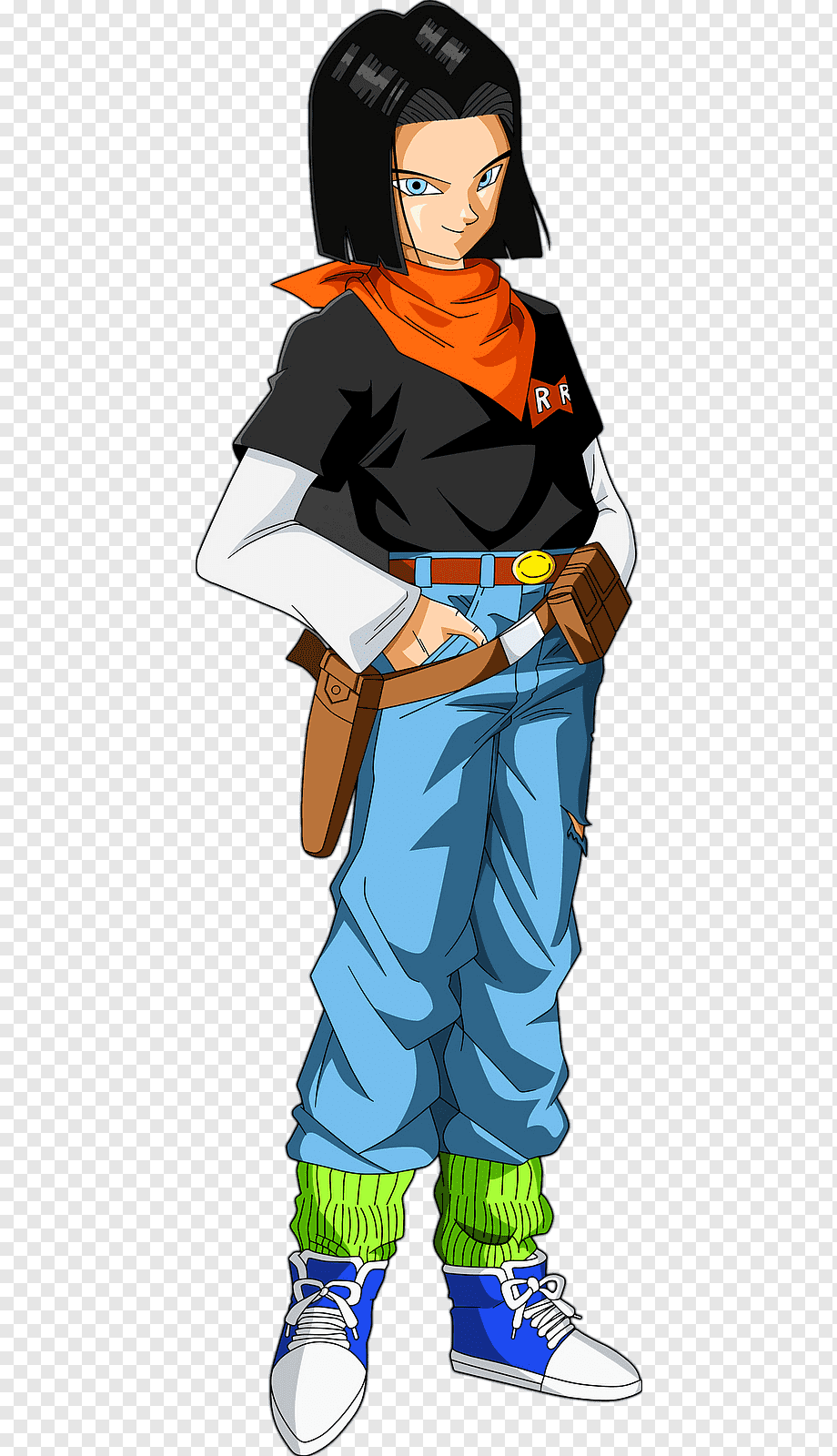
Android 17, born Lapis, is one of the most remarkable redemption stories in Dragon Ball history. Originally a human teenager kidnapped and cybernetically enhanced by Dr. Gero as a weapon of revenge against Son Goku, 17 began as a cold-blooded killer who murdered his own creator without hesitation. He and his twin sister Android 18 roamed the Earth during the Android Saga, matching Super Saiyan-level fighters with effortless superiority. Yet 17's defining trait was never malice but the detachment of a child playing a game. He fought not from hatred but from boredom, treating life-and-death battles as entertainment.
After being absorbed by Cell and later revived by the Dragon Balls, 17 chose a path no one expected. He abandoned human society entirely, becoming the silent protector of a remote island wildlife sanctuary. For years, he fought poachers and protected endangered species, finding in nature the peace that human society never gave him. His infinite energy reactor, originally designed for endless destruction, powered a life of quiet guardianship instead. He married a fellow ranger, had children, and built a family far from the world of ki battles and super-powered combat.
The Tournament of Power changed everything. Recruited by Goku to represent Universe 7, 17 entered the competition with no interest in glory or personal achievement. He fought with tactical brilliance, selflessness, and endurance born from his infinite energy supply. He outlasted gods, Saiyans, and monsters through pure strategy. His final act, using the Super Dragon Balls to wish back all erased universes rather than anything for himself, cemented his transformation from weapon of destruction to savior of the multiverse. In Dragon Ball Super: Super Hero, 17 returned briefly, still guarding his island sanctuary, a symbol of how far a person can grow when given a second chance.
2. Basic Data
| Attribute | Android Saga | Post-Revival | Tournament of Power |
|---|---|---|---|
| Power Level | ~SSJ-tier (infinite) | Rusty, retrained for ToP | SSB-tier (infinite stamina) |
| Fighting Style | Reckless, playful | Ranger tactics (non-ki) | Tactical, precise, conservation |
| Endurance | Unlimited (perpetual energy) | Unlimited (perpetual energy) | Unlimited (perpetual energy) |
| Key Ally | Android 18 | Wildlife (no allies) | Goku, Frieza, Vegeta, 18 |
| Key Feat | Overpowered SSJ Vegeta | Protected island alone for years | MVP -- eliminated Toppo, outlasted Jiren |
| Character | Nihilistic, detached | Peaceful, responsible | Selfless, tactical, heroic |
Android 17's power progression is unique because he did not train for combat between the Cell Saga and the Tournament of Power. His strength in the ToP represents a return to form after years of disuse, proving that his cybernetic enhancements provide a base level of power that does not degrade with time. The infinite energy reactor at his core provides limitless stamina, making him one of the few fighters in Dragon Ball who never tires regardless of combat duration.
3. Ability Analysis
Infinite Energy Reactor. 17's most dangerous and defining ability. Dr. Gero's cybernetic engineering gave him a perpetual energy generation system that provides unlimited ki without fatigue or stamina drain. In practical terms, 17 can fight at full power indefinitely. He never needs to rest, never slows down from exhaustion, and can maintain maximum-output ki barriers and attacks for hours while opponents deplete their reserves. This ability made him the ideal candidate for survival in the Tournament of Power's last-man-standing format. He outlasted gods, angels-in-training, and legendary Saiyans not by overpowering them but by simply continuing to fight when everyone else was exhausted.
Android Barrier. A nearly impenetrable energy shield that 17 can deploy around himself or others. The barrier is unique because it draws directly from his infinite energy reactor, meaning it cannot be overwhelmed through sustained pressure. Most barriers fall when the user runs out of ki; 17's barrier lasts as long as he chooses. He used this ability to survive attacks that eliminated far stronger fighters, including blasts from Super Saiyan Blue-level opponents and Jiren's eye lasers. The barrier can also be projected outward as a concussive force, turning defense into offense in an instant.
Power Blitz. 17's primary offensive technique, a rapid barrage of energy spheres fired from his palms. Unlike single-beam attacks, the Power Blitz covers a wide area and forces opponents to either block or dodge multiple simultaneous strikes. 17 can adjust the size, speed, and trajectory of each orb independently, making the attack highly adaptable. Against groups, he can saturate an area with dozens of homing orbs. Against single targets, he can focus them into a concentrated volley. The attack's true strength is its low energy cost relative to its damage output, a direct benefit of 17's tactical approach to combat.
Accel Dance. A devastating combination technique performed with his sister Android 18. The twins synchronize their movements and ki signatures to create a coordinated attack pattern that is nearly impossible to defend against. One sister initiates contact while the other strikes from the blind spot created by the first attack. The timing and precision required are beyond most fighters, but the twins' lifelong bond makes the technique instinctive. During the Tournament of Power, their Accel Dance briefly overwhelmed opponents who had individually been giving them trouble.
Tactical Genius. 17's most underrated ability is not a cybernetic power but his strategic mind. Years of solitary ranger work honed his ability to assess threats, conserve resources, and identify opponent weaknesses. In the ToP, he consistently outperformed more powerful teammates through superior tactics. He identified that Toppo's Justice Flash required a blind spot approach rather than direct confrontation. He realized that Jiren's power was best countered through teamwork rather than individual strength. And crucially, he understood the tournament's rules better than anyone, exploiting ring-outs and environmental hazards to eliminate foes he could not overpower.
4. Build Recommendation
Build 1: Beginner -- Barrier Defender (PvE / Survival). Focus on 17's defensive capabilities and infinite stamina. Open with Android Barrier to absorb incoming damage while studying the opponent's patterns. Use the barrier's concussive release to create openings, then follow with precision Power Blitz volleys. The core strategy is simple: outlast the opponent. With infinite energy, 17 can afford to wait for the perfect counter-attack opportunity. Recommended skill rotation: Barrier (absorb) > hold position > observe > Barrier Burst (stun) > Power Blitz (punish) > reset to Barrier. Best against: aggressive opponents who deplete their stamina quickly. Avoid: opponents with barrier-piercing or hakai-type abilities.
Build 2: Advanced -- Aggressive Pressure (PvP / Tournament). This build leverages 17's tactical genius for sustained offensive pressure. Chain Power Blitz with close-range strikes to keep opponents constantly defending. Use short-duration barriers to parry and counter simultaneously. The goal is to create a rhythm of offense that the opponent cannot escape, forcing errors through relentless pressure rather than single powerful blows. Recommended skill rotation: Power Blitz (ranged pressure) > close strike > Barrier (counter) > follow-up strike > Power Blitz (finishing volley). Best against: defensive or counter-fighters who need time to analyze. Avoid: pure powerhouses who can break through barriers with brute force.
Build 3: Special -- MVP Tactician (Team / Tournament of Power). This build is optimized for team battles where 17's tactical mind and support capabilities shine. Coordinate with allies to create combination attacks like the Accel Dance. Use barriers to protect damaged teammates while they recover. Identify the strongest opponent and devise a strategy that exploits their specific weakness rather than challenging them directly. 17's role is not to be the strongest fighter but the smartest one. Recommended skill rotation: assess battlefield > identify target weakness > barrier protection for ally > coordinate Accel Dance > tactical ring-out > Power Blitz cover fire. Best against: teams with a single dominant fighter. Avoid: situations where 17 is left as the last fighter against multiple fresh opponents.
5. Strategy Guide
Phase 1: Android Saga (First Encounter). As an antagonist, 17 fights with casual superiority. He does not take combat seriously, treating it as entertainment. His movements are economical, never wasting energy, and his infinite reactor means he never tires. The key to countering this version is emotional engagement: 17 loses focus when the fight stops being fun. A strategic opponent can exploit this detachment by making the fight personal or tedious. When 17 becomes bored or disinterested, his guard drops noticeably. In the Android Saga arc, Piccolo's desperate sacrifice and Vegeta's rage both briefly punctured 17's composure.
Phase 2: Redemption Arc (Ranger Period). During his years as a wildlife ranger, 17 fought almost exclusively against poachers and wild animals with conventional weapons. His ki-based combat skills atrophied during this period, but he developed something more valuable: patience, strategic thinking, and a calm under pressure that comes from solitary responsibility. When Goku recruited him for the Tournament of Power, 17 had to relearn ki combat rapidly. His advantage was that his body remembered the movements even if his mind had forgotten. This phase demonstrates that 17's base combat instincts, honed by Dr. Gero's programming, never truly leave him.
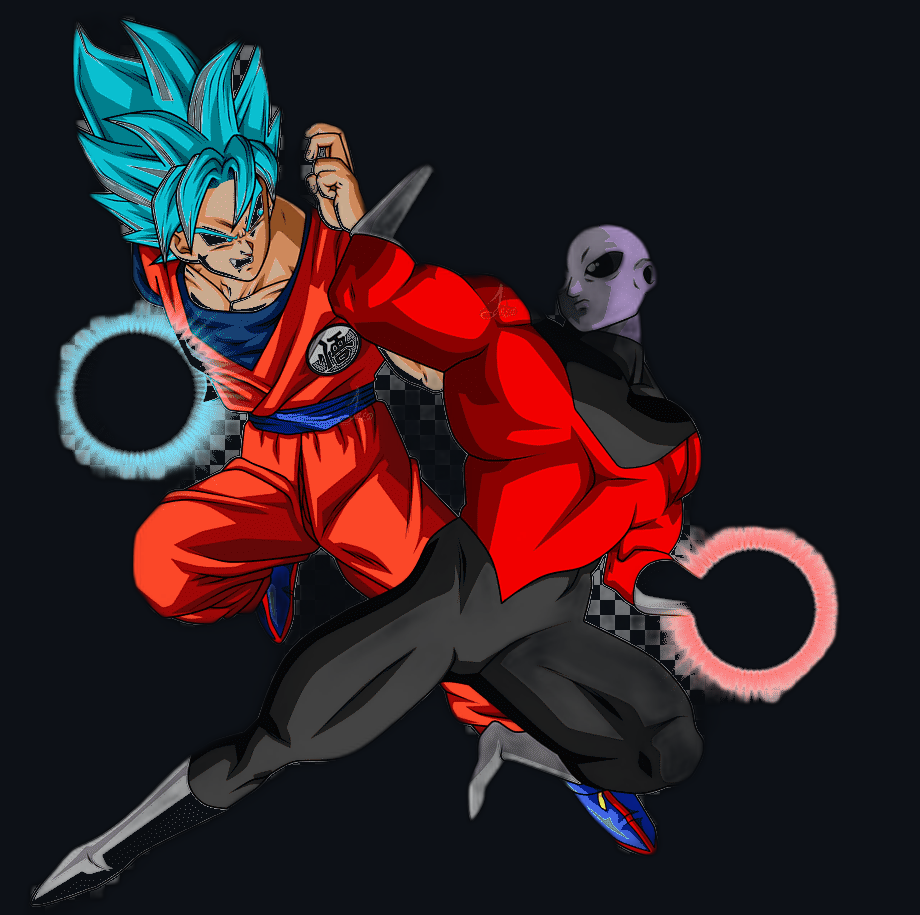
Phase 3: Tournament of Power (Peak Performance). 17's Tournament of Power showing represents his peak as a fighter, not because he grew stronger but because he fought smarter. His strategy was textbook survival: conserve energy, avoid direct confrontation with stronger foes, exploit ring-out rules, and strike at opportune moments. His elimination of Toppo, a God of Destruction candidate, was masterful. He baited Toppo into using his Hakai-imbued destroyer form, which cost Toppo his ring-out immunity, then used 18 to create a blind spot and ringed him out from behind. Against Jiren, 17 did not try to match power but instead created openings for Goku and Frieza, eventually landing the assist that led to Jiren's elimination. His survival to the final three was not luck but the result of perfect energy management and tactical excellence.
6. Matchup and Counter
Android 17 counters: Fighters who rely on stamina-draining techniques or sustained transformations. 17's infinite energy means he never tires, making stamina-based strategies useless. He counters power-up dependent fighters who need time to reach full strength, as 17's tactical approach means he strikes before they can transform. Regenerative fighters struggle because 17 combines ranged and melee attacks in ways that prevent clean recovery. Characters with complex technique sets find their options limited by 17's analytical mind, which identifies and exploits patterns quickly.
Android 17 is countered by: Overwhelming brute force that bypasses strategy entirely. Jiren's raw power exceeded 17's tactical capacity to overcome, requiring teamwork to defeat. Characters with speed so extreme (Dyspo's Light Speed Mode) that 17 cannot react even with analysis. Hakai and existence-erasure techniques that bypass barriers and durability. Fighters who can disable cybernetic components through EMP or electrical attacks. Opponents with area-of-effect attacks that make barrier defense impractical.
How to beat 17's counters: Against brute force opponents, 17 must never commit to direct confrontation. Use barriers to deflect, not absorb. Create distance and use terrain. Against extreme speed, predict rather than react: 17's analysis can identify patterns in even the fastest opponents. Against hakai techniques, avoid entirely rather than attempting to block. Against area-of-effect, use the barrier's directional variant to create safe zones. 17's greatest asset against counters is patience: his infinite stamina means he can wait for the opponent to make a mistake rather than forcing an engagement on their terms.
7. Expert Tips
Common Mistake 1: Treating 17 as a power fighter. Android 17 is not a powerhouse despite his impressive feats. His strength lies in endurance and tactics, not overwhelming force. Players who try to brawl with Saiyans or Gods of Destruction will lose. The correct approach is to treat 17 as a tactical fighter who wins through resource management and opponent analysis. Every attack should have a purpose beyond damage: positioning, information gathering, or stamina depletion.
Common Mistake 2: Overusing the barrier. The Android Barrier is excellent but not invincible. Haki-based attacks and overwhelming force can break through. Using the barrier as a primary defense creates a predictable pattern that analytical opponents can exploit. 17 is still a cyborg with superhuman durability even without the barrier. Mix barrier usage with natural dodging and blocking to remain unpredictable. The barrier is best used reactively against specific attacks, not as a permanent shield.
Common Mistake 3: Forgetting the team dynamic. 17's greatest achievements came through teamwork. Players who isolate 17 from allies are fighting against his design. Even in a 1v1 context, 17 uses the environment as a teammate: terrain, ring-out boundaries, and even the opponent's own attacks can be turned into tools. His tactical genius extends to using everything available, not just his own abilities. Fighting 17 in a vacuum ignores the very trait that makes him dangerous.
8. FAQ
Is Android 17 stronger than Super Saiyan Blue?
Android 17's base power output does not directly match Super Saiyan Blue, but his infinite stamina and tactical approach allow him to compete with and even defeat SSB-level opponents. During the Tournament of Power, he fought alongside Goku (SSB) and Vegeta (SSB) as an equal contributor. His elimination of Toppo, a God of Destruction candidate, proves he can overcome opponents who technically exceed his raw power through superior strategy and endurance. In pure power terms, 17 at his peak is approximately SSB-tier with the critical advantage of never tiring.
Can Android 17 still get stronger?
Unlike Saiyans who gain power through near-death experiences and training, 17's cybernetic body has a fixed maximum output determined by Dr. Gero's original design. However, 17 demonstrated in the Tournament of Power that his tactical ability and combat experience continue to grow. He cannot train to raise his power level like a Saiyan, but he can become more effective through smarter fighting, better technique application, and deeper understanding of opponent psychology. His peak power is capped, but his effective combat ability has no ceiling.
Why was Android 17 not included in major battles after Cell?
Android 17 chose to remove himself from the world of super-powered combat. After being revived by the Dragon Balls, he dedicated his life to protecting the wildlife sanctuary on his island. He was not present for the Majin Buu Saga because he was not notified and likely would not have left his post even if called. Goku specifically sought him out for the Tournament of Power because he remembered 17's potential. His isolated lifestyle meant that even characters who knew he was alive did not know where to find him.
What happened to Android 17 after the Tournament of Power?
In Dragon Ball Super: Super Hero, 17 returned with his family, having married a fellow wildlife ranger and had children. He remained dedicated to protecting his island sanctuary. His brief appearance in the film showed he had not lost his edge, demonstrating his barrier and combat abilities when the situation called for it. His wish on the Super Dragon Balls to restore all erased universes earned him lasting respect across the multiverse, but he chose to return to his quiet life rather than pursue fame or further combat.
Is Android 17 truly a cyborg or an android?
Android 17 is technically a cyborg, not an android. The term "Android" in Dragon Ball Z is a translation choice that does not reflect the actual nature of Dr. Gero's creations. 17 was originally a human boy named Lapis who was kidnapped and extensively modified with cybernetic enhancements. He retains his human mind, emotions, and personality, unlike true androids (artificial beings with no organic components). His sister 18 is the same type of cyborg. The distinction matters because 17's human heart is central to his redemption arc: his capacity for change and growth comes from his humanity, not his cybernetics.