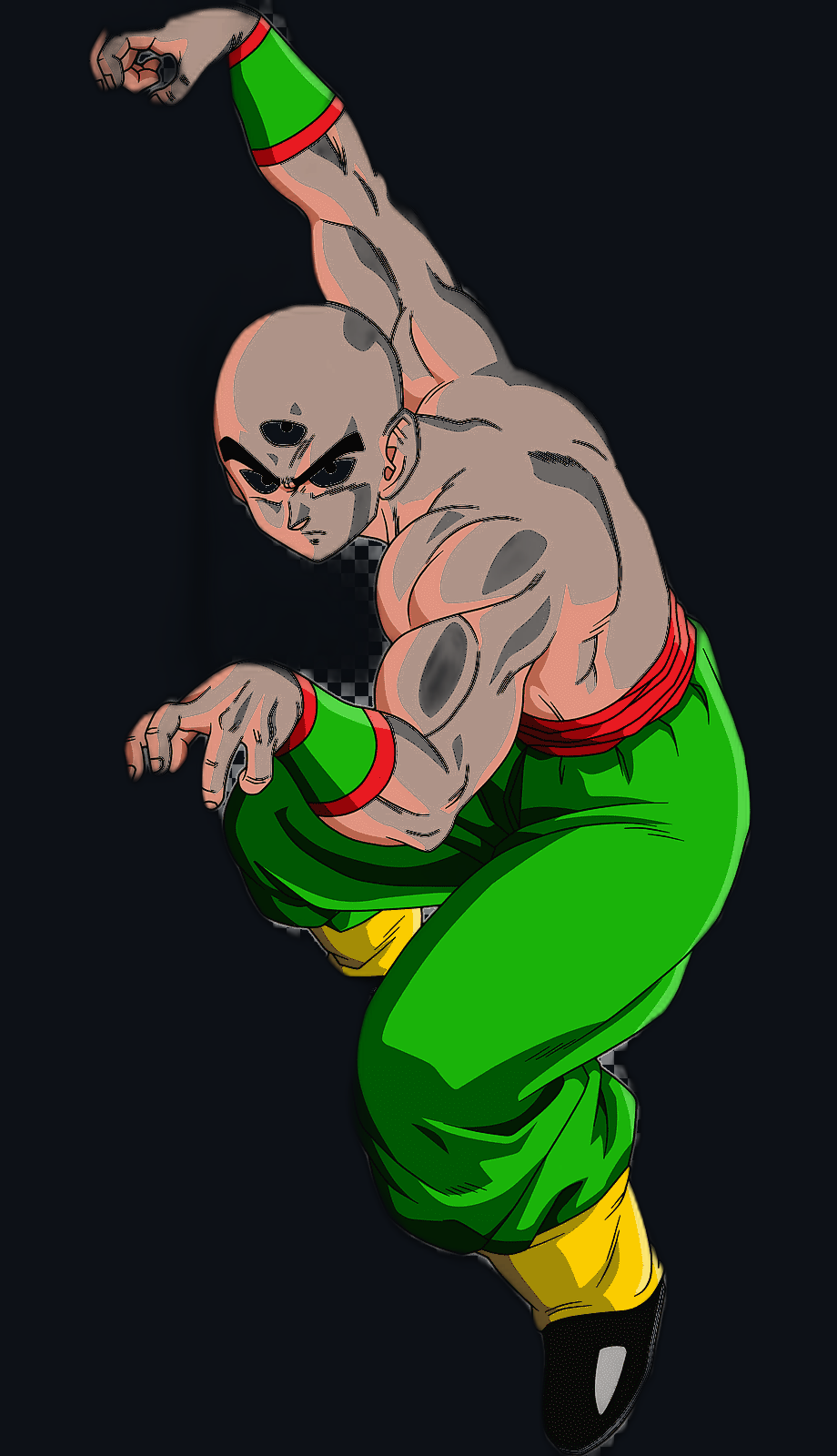
1. Overview and History
The Neo Tri-Beam, known in Japanese as the Shin Kikoho, is an advanced evolution of Tien Shinhan's signature Tri-Beam technique. Developed during the three-year time skip between the end of the Frieza Saga and the arrival of the Androids, the Neo Tri-Beam represents Tien's most significant technical advancement. The technique was specifically created by Tien to address the limitations of the original Tri-Beam, offering sustained fire capability and greater overall power output.
The Neo Tri-Beam made its dramatic debut during the Cell Saga, when Tien used it to hold back the vastly more powerful Semi-Perfect Cell. In one of the most memorable moments of the arc, Tien unleashed a continuous barrage of Neo Tri-Beam blasts that physically staggered Cell, preventing him from absorbing Android 18. This feat is widely considered one of the most impressive displays of technique overcoming power disparity in the entire Dragon Ball series.
The development of the Neo Tri-Beam showcases Tien's evolution as a martial artist. Unlike Goku and Vegeta, who rely on Saiyan biology and transformation multipliers to increase their power, Tien has always achieved growth through technical innovation. The Neo Tri-Beam is the pinnacle of this approach, proving that a human martial artist can hold his own against beings with vastly superior power through sheer technique and determination.
For a complete historical account of Tien's signature techniques, visit the Tien Shinhan page on Dragon Ball Wiki. To learn more about the Tri-Beam technique family, check the Tri-Beam technique entry.
2. Mechanics and Execution
The Neo Tri-Beam is performed using the same distinctive hand formation as the original Tri-Beam, with the user's hands forming a triangle shape to focus their ki. However, the Neo variant introduces significant mechanical improvements. The primary difference is the ability to sustain the beam continuously rather than releasing it in discrete bursts. This sustained fire capability dramatically increases the technique's tactical utility, allowing Tien to exert continuous pressure on opponents.
The energy dynamics of the Neo Tri-Beam differ substantially from the standard version. The user must maintain a constant flow of ki through the triangle formation, adjusting the beam's intensity and width in real-time based on combat needs. This requires exceptional concentration and ki management, as the sustained output must be carefully balanced against the user's total energy reserves. The continuous drain makes the Neo Tri-Beam more demanding than the original but also more versatile in application.
The Neo Tri-Beam also introduces the ability to create a wider energy spread, covering a larger area than the original technique's focused beam. This spread can be adjusted from a narrow piercing beam to a wide suppression blast, giving Tien options for different combat scenarios. The technique can also be fired in rapid succession at multiple targets, as demonstrated when Tien used it against the Cell Juniors during the Cell Games.
3. Types and Classifications
The Neo Tri-Beam belongs to the advanced ki manipulation category of techniques, specifically the sustained energy projection subclass. Within this category, it occupies a unique position as both a suppression tool and a damage-dealing attack. The technique's dual nature allows it to serve multiple tactical roles depending on the combat situation.
Several variants of the Neo Tri-Beam have been demonstrated. The standard sustained beam is the most common form, providing continuous pressure on a single target. The multi-burst variant fires several discrete Neo Tri-Beam blasts in rapid succession, offering better energy efficiency when full sustained pressure is not needed. The wide-spread variant sacrifices power for area coverage, making it effective against multiple opponents or highly mobile targets.
The technique can also be combined with other abilities. In the Cell Games, Tien demonstrated the ability to use Neo Tri-Beam volleys while using Solar Flare to blind opponents simultaneously. This combination approach highlights how the Neo Tri-Beam fits into Tien's broader tactical framework, serving as both a standalone attack and a component of more complex combat strategies that leverage multiple techniques in concert.
4. Notable Users and Examples
Tien Shinhan is the sole creator and user of the Neo Tri-Beam in the Dragon Ball series. The technique is uniquely his, representing the culmination of his life's work as a martial artist. No other character has demonstrated the ability to use this technique, making it one of the few exclusively human-developed techniques that remain relevant at high power levels.
The most famous demonstration of the Neo Tri-Beam occurred during Tien's stand against Semi-Perfect Cell. Recognizing that Cell's absorption of Android 18 would create an unstoppable monster, Tien unleashed a continuous Neo Tri-Beam barrage that held Cell in place. Despite being vastly outclassed in power, Tien's relentless assault prevented Cell from advancing, buying crucial time for the Z Fighters to regroup. The image of Tien, bloodied and exhausted but refusing to stop firing, remains one of Dragon Ball Z's defining heroic moments.
In Dragon Ball Super, the Neo Tri-Beam made a return appearance during the Tournament of Power. Tien used the technique against opponents from Universe 4 and other universes, demonstrating that the technique had continued to evolve alongside his overall power growth. While the Neo Tri-Beam was not always decisive against top-tier Tournament of Power opponents, it proved that Tien's technical innovations remained viable even in multiversal combat.
5. Strategic Analysis
The Neo Tri-Beam's primary strategic value is its ability to control opponent movement and create tactical windows. The sustained beam forces opponents to commit to defensive actions, limiting their offensive options. This suppression capability makes the Neo Tri-Beam invaluable in team battles where Tien can pin down dangerous opponents while allies set up finishing attacks or complete objectives.
Against opponents with superior power, the Neo Tri-Beam serves as a delaying tool. While it may not be able to defeat such opponents outright, it can buy time, exhaust their stamina, or force them into unfavorable positions. Tien's stand against Cell perfectly illustrates this tactical role: the Neo Tri-Beam could not kill Cell, but it could hold him back long enough for the Z Fighters to achieve their objective of rescuing Android 18.
The technique's strategic weakness is its extreme stamina consumption. Extended use of the Neo Tri-Beam can completely exhaust the user, leaving them vulnerable to counter-attack. Tien was left barely conscious after his Neo Tri-Beam barrage against Cell. The technique also requires the user to remain relatively stationary while firing, making them vulnerable to attacks from blind spots or opponents who can withstand the beam's pressure and approach from the side.
6. Training and Mastery
Developing the Neo Tri-Beam required Tien to master the original Tri-Beam first, then push beyond its limitations. The training process involved learning to sustain ki output over extended periods while maintaining the precise hand formation and energy control. Tien spent the three-year time skip before the Android Saga perfecting this technique, often training in isolation to develop the necessary focus and stamina.
The physical demands of the Neo Tri-Beam are exceptional. The technique places enormous strain on the user's body, requiring extreme physical conditioning to withstand the energy throughput. Tien's training regimen included intensive stamina building exercises specifically designed to increase his capacity for sustained ki output. His natural endurance as a human martial artist was pushed to superhuman levels through this targeted training.
Advanced Neo Tri-Beam mastery involves learning to control the beam's properties in real-time. Tien developed the ability to adjust width, intensity, and firing angle mid-attack, allowing him to respond to changing combat conditions without disrupting the sustained beam. This level of control requires complete synchronization between the user's ki manipulation and combat instincts, representing the highest level of technical mastery for any energy-based technique.
7. Comparisons with Other Techniques
The Neo Tri-Beam and the standard Tri-Beam share the same fundamental mechanics, but the Neo variant offers superior sustained output and tactical flexibility. While the standard Tri-Beam is better for single devastating blows, the Neo Tri-Beam excels in prolonged engagements where continuous pressure is needed. Tien's choice between the two techniques depends on whether he needs burst damage or sustained suppression.
Compared to other sustained energy attacks like Frieza's Death Beam or Cell's Kamehameha, the Neo Tri-Beam is unique in its energy source mechanics. Because the Tri-Beam family of techniques draws on the user's life force, the Neo Tri-Beam offers power output disproportionate to the user's normal ki reserves. This life force mechanic is what allowed Tien to affect Cell despite their massive power gap, making the Neo Tri-Beam fundamentally different from standard ki-based sustained attacks.
In video game adaptations, the Neo Tri-Beam is typically portrayed as Tien's ultimate technique, often featuring cinematic cutscenes showing the continuous barrage. Games like Dragon Ball Z: Budokai 3 and Dragon Ball Xenoverse 2 depict it as a multi-hit super attack that can be aimed while firing. These adaptations emphasize the technique's unique sustained-fire property, distinguishing it from single-blast ultimate attacks used by other characters in the roster.
8. Frequently Asked Questions
Does the Neo Tri-Beam require more energy than the standard Tri-Beam?
Yes, the Neo Tri-Beam consumes energy at a higher rate than the standard Tri-Beam due to its sustained output. However, its energy efficiency can be better in situations where continuous suppression is needed, as the alternative would be firing multiple standard Tri-Beams individually, which also consumes significant energy.
Can other characters learn the Neo Tri-Beam?
Theoretically, any character with sufficient ki control and physical endurance could learn the Neo Tri-Beam, as it is a learned technique rather than a racial or genetic ability. However, Tien is the only character who has demonstrated the technique, and the life force drain makes it dangerous for practitioners without exceptional stamina.
Why did Tien not use Neo Tri-Beam against Buu?
Tien was not present for the majority of the Buu Saga battles, as he was off training during the initial conflicts. By the time he might have joined the fight, the power levels involved had escalated beyond what even the Neo Tri-Beam could meaningfully affect against Majin Buu's regenerative abilities.
Is the Neo Tri-Beam stronger than a Kamehameha?
At equivalent user power levels, the Neo Tri-Beam offers superior sustained damage output compared to a standard Kamehameha. However, the Kamehameha can be charged to higher peak power levels, making it better for single devastating blows. The two techniques serve different tactical roles in combat.
How long can Tien sustain the Neo Tri-Beam?
The exact duration depends on Tien's current power level and stamina reserves. During the Cell Saga, he maintained the barrage for approximately 30 seconds against Semi-Perfect Cell, completely exhausting himself in the process. With his increased power in Dragon Ball Super, he can sustain it longer, though it remains a technique with significant stamina demands.