Overview
Hakai, also known as the Destruction technique, is the ultimate power of the Gods of Destruction in the Dragon Ball universe. Unlike conventional energy attacks that destroy matter through explosive force, Hakai erases targets from existence at a fundamental level — body, soul, and consciousness are removed from reality entirely, leaving no trace that can be regenerated, wished back, or restored through any known means. This technique represents the highest authority granted to beings responsible for maintaining universal balance, allowing them to eliminate threats, cleanse corrupted worlds, and regulate the cosmic order according to the will of the gods.
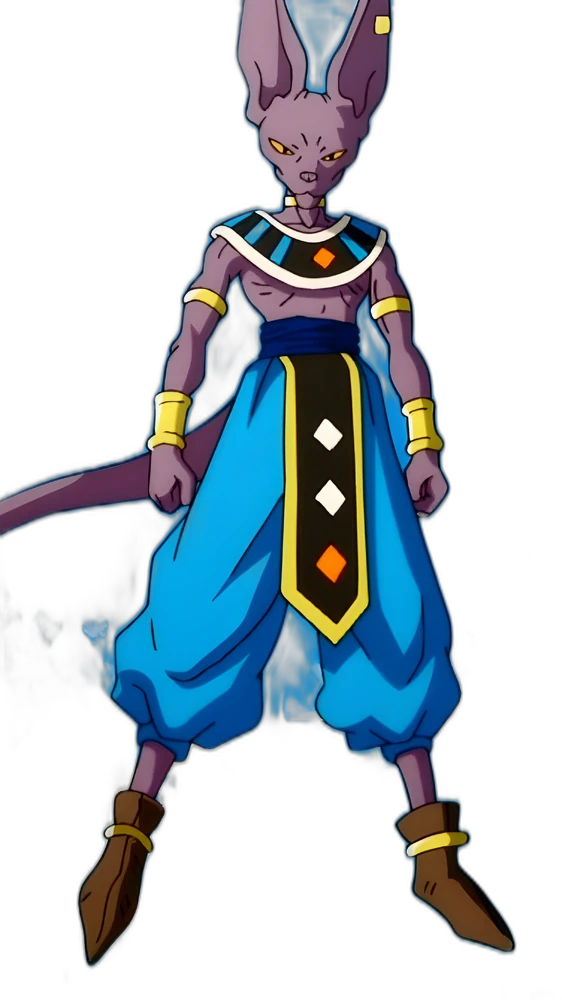
The Hakai technique is intrinsically tied to the role of the Gods of Destruction, beings who exist alongside the Supreme Kais in the divine hierarchy of each universe. Beerus, the God of Destruction of Universe 7, is the most prominent user of Hakai in the series, demonstrating the technique against various opponents throughout Dragon Ball Super. The technique has also been used by other destroyer gods such as Sidra of Universe 9 and by candidates for the position like Toppo, the Pride Trooper who temporarily assumed the mantle of God of Destruction during the Tournament of Power. Each user's Hakai reflects their unique divine energy signature and level of authority.
Mechanics & Rules
Hakai operates on principles fundamentally different from mortal ki techniques. Instead of manipulating life energy (ki) for destructive purposes, Hakai channels the authority of destruction itself — a divine power that exists independently of the user's personal energy reserves. When a God of Destruction performs Hakai, they invoke the universal law of entropy and non-existence, compelling reality itself to remove the target. This divine authority makes Hakai effective against beings regardless of their power level, though sufficiently powerful or divine opponents can resist the technique through their own authority or energy.
The visual manifestation of Hakai varies between users but typically involves a sphere or wave of purple energy that envelops the target. The purple coloration is consistently associated with destruction energy across different universes, distinguishing it from the blue, gold, and green energy of mortal techniques. The process of erasure is not instantaneous in all cases — victims may experience a brief moment of disintegration before being completely erased, as seen when Beerus used Hakai against Zamasu and when Sidra attempted to use it against the thieves attacking his universe. This delay suggests that Hakai can potentially be resisted or escaped if the target possesses sufficient power or divine protection.
Resistance to Hakai appears to depend on several factors: the target's overall power level, their possession of divine energy or authority, and their resistance to existence erasure. In Dragon Ball Super, Vegeta was able to resist and overcome the Hakai energy used by Toppo during the Tournament of Power, demonstrating that sufficiently powerful mortals can survive destruction energy through sheer will and power. Similarly, Fused Zamasu's immortality allowed him to withstand Beerus' Hakai, as his existence was protected by the Super Dragon Balls' wish magic. These exceptions establish that Hakai is not absolute — its effectiveness depends on the relative power and authority of the user versus the target.
Types & Classifications
Hakai belongs to the category of divine destruction techniques, a classification distinct from all mortal combat techniques in the Dragon Ball universe. Within this category, variations exist based on the user's divine rank and specific destruction authority. Full Gods of Destruction like Beerus can perform Hakai with their full divine authority, producing complete and irreversible erasure. Candidates for the position, like Toppo during the Tournament of Power, can access a limited form of Hakai that may be resisted more easily. This tiered access reflects the hierarchy of divine authority within each universe's cosmic structure.
The technique is distinct from other high-level energy attacks in several fundamental ways. Unlike the Spirit Bomb, which gathers energy from living beings, Hakai draws on destruction authority. Unlike the Fusion Dance, which combines existing power, Hakai bypasses conventional power scaling entirely by operating on a different metaphysical level. Unlike the Evil Containment Wave, which seals opponents physically, Hakai removes them from existence permanently. These distinctions make Hakai unique among Dragon Ball techniques — it is not simply a very powerful energy attack but an entirely different category of ability.
Comparable techniques in other fiction include reality erasure abilities, existence nullification, and conceptual destruction. Within Dragon Ball specifically, the Super Dragon Balls' wish magic operates on a similar plane of divine authority, capable of restoring universes erased by the Zenos. The Angels, including Whis, possess authority that exceeds that of the Gods of Destruction, allowing them to potentially reverse Hakai's effects through time manipulation or other divine powers. This hierarchy of divine techniques creates a complex ecosystem of cosmic authority where Hakai occupies a middle tier between mortal techniques and the absolute power of the Angels and Zenos.
Notable Users & Examples
Beerus, the God of Destruction of Universe 7, is the most prominent user of Hakai in Dragon Ball Super. His first significant use of the technique occurs during the Universe 6 tournament arc, where he erases Zamasu after discovering the rogue Kai's plot to destroy mortals. Beerus' Hakai is presented as absolute — when he destroys Zamasu, there is no possibility of regeneration, resurrection, or escape. Beerus also uses Hakai against other threats throughout Super, demonstrating the technique's role as the ultimate sanction available to a God of Destruction when dealing with beings who threaten universal order.
Toppo, the Pride Trooper and candidate for God of Destruction of Universe 11, provides the most detailed examination of Hakai's mechanics and limitations. During the Tournament of Power, Toppo embraces destruction energy after being pushed to his limits, gaining access to Hakai as a God of Destruction candidate. His battle against Vegeta becomes a test of whether mortal willpower can overcome divine destruction authority. Vegeta's Super Saiyan Blue Evolution ultimately prevails, with Vegeta overpowering Toppo's Hakai through sheer determination and refusing to be erased. This battle is crucial for understanding that Hakai is not an automatic win — it can be overcome by sufficiently powerful and determined opponents.
Sidra, the God of Destruction of Universe 9, demonstrates another variation of Hakai during the Tournament of Power's exhibition matches. His attempt to destroy the thieves attacking his universe reveals that even Gods of Destruction can have their Hakai resisted or deflected, as Goku's Super Saiyan God Super Saiyan form was able to deflect Sidra's destruction energy ball back at him. This instance suggests that the effectiveness of Hakai varies between users, with some Gods of Destruction being more proficient or more powerful than others in their destruction abilities.
Strategic Analysis
Hakai's primary strategic value is as an ultimate sanction — a technique that removes the target permanently from existence, bypassing all conventional defensive measures and resurrection methods. This makes Hakai the ideal solution for dealing with threats that cannot be permanently neutralized through normal means, such as immortal beings, regenerators, or enemies who can be resurrected through Dragon Balls. The psychological impact of Hakai is also significant — knowing that an opponent can erase them from existence creates a level of fear and urgency that conventional energy attacks cannot match.
However, Hakai has significant limitations that prevent it from being a universal solution. The technique requires the user to have divine authority, which limits its availability to Gods of Destruction and their candidates. Mortals cannot learn or use Hakai regardless of their power level. Additionally, the technique is not instantaneous in all cases and can be resisted by opponents with sufficient power or their own divine protection. The energy cost of performing Hakai may also be significant, as even Gods of Destruction do not use the technique casually. Toppo, for example, only accessed Hakai after being pushed to his absolute limits during the Tournament of Power.
In combat scenarios, Hakai is best used as a decisive finishing technique rather than a standard engagement tool. Gods of Destruction typically assess threats and exhaust other options before resorting to Hakai, reflecting the responsibility that comes with using existence erasure. The technique's slow execution (relative to the speed of high-level combat) creates a window where opponents can potentially escape or counter, as demonstrated by Zamasu's brief resistance and Goku's deflection of Sidra's destruction sphere. Strategic users of Hakai employ the technique when opponents are immobilized, distracted, or otherwise unable to evade or resist, maximizing the chance of successful erasure.
FAQ
Frequently Asked Questions
Hakai is designed to be permanent and irreversible. However, beings with authority exceeding the Gods of Destruction, such as Angels and the Grand Priest, may possess the power to reverse Hakai. Whis has demonstrated the ability to rewind time, which could theoretically undo a Hakai before it completes, but this has not been explicitly shown.
No, standard Dragon Balls cannot revive those erased by Hakai because the victim's soul is completely destroyed, leaving nothing to resurrect. Even the Super Dragon Balls may be unable to restore someone erased by a God of Destruction's full authority, though this limitation has not been definitively established in canon.
As a God of Destruction, Beerus uses Hakai judiciously because his role is to maintain balance, not indiscriminately destroy. Overusing Hakai could disrupt the cosmic order, and Beerus often prefers to observe or destroy planets conventionally rather than erasing beings from existence unnecessarily.
Hakai is a divine technique that requires the authority of a God of Destruction to perform at full effectiveness. Mortals cannot learn Hakai through training alone, though individuals who become candidates for God of Destruction (like Toppo) can gain access to destruction energy through their candidacy.
Hakai is among the most powerful techniques due to its existence-erasing properties, but it is not absolute. Techniques and abilities at the Angel or Zeno level surpass Hakai in scope and authority. Additionally, sufficiently powerful mortals like Vegeta have demonstrated the ability to resist and overcome Hakai through sheer willpower.
For more details about Hakai, visit the Dragon Ball Fandom page on Hakai. You can also read about Beerus' complete character history on Dragon Ball Fandom.