Overview
The Fusion Dance, also known as the Metamoran Fusion Technique, is one of the most significant and game-changing abilities in the Dragon Ball universe. Originally developed by the inhabitants of Planet Metamor, this technique allows two individuals of nearly equal power levels to temporarily merge into a single, vastly more powerful warrior. Goku learned the Fusion Dance during his training in Other World after the Cell Games, recognizing its potential to combine the strengths of multiple fighters into a force capable of confronting threats beyond any individual's capacity. The technique represents a unique approach to power amplification — instead of training to increase individual strength, the Fusion Dance multiplies existing capabilities through synchronization.
The Fusion Dance is distinct from the Potara Earring fusion used by the Supreme Kais, as it requires precise physical movements and perfect ki synchronization rather than mystical jewelry. The dance involves a series of specific poses and movements performed by both participants simultaneously, culminating in a finger-point and the famous "Fusion!" exclamation. When executed correctly, the two bodies merge into a single being wearing Metamoran-style clothing, with a power level that exceeds the sum of its parts by a significant multiplier. The Fusion Dance has produced some of the most powerful warriors in Dragon Ball history, including Gotenks and Gogeta.
Mechanics & Rules
The Fusion Dance requires absolute precision in execution. Both participants must perform identical movements at exactly the same time, maintaining perfect synchronization throughout the sequence. The dance begins with both fighters standing at a specific distance apart, then progressing through a series of poses that include extending arms, moving sideways, and finally pointing fingers at each other. The final step involves both participants shouting "Fusion!" while their index fingers meet at the tip. Any deviation in timing, angle, or movement causes the fusion to fail, often producing a deformed or weakened result.
A critical requirement for the Fusion Dance is that the two participants must have nearly identical power levels. If one fighter is significantly stronger than the other, the ki imbalance prevents proper fusion, resulting in a deformed fusion that is weaker than either individual. This requirement limits who can successfully perform the dance — Goten and Trunks can fuse because their power levels are naturally close, while Goku and Vegeta required special training to match their ki signatures for the Fusion Dance to work. The power level requirement is absolute; even minor imbalances can cause the fusion to fail or produce suboptimal results.
The fusion lasts for approximately 30 minutes under normal conditions. However, the duration can be shortened if the fused warrior exerts too much power or sustains significant damage. This time limit creates a strategic consideration for fusion users — they must defeat their opponent within the 30-minute window or risk separating at a critical moment. The fusion can separate prematurely if the fused body is subjected to extreme stress, as demonstrated when Super Buu's absorption of Gotenks caused the fusion to unfuse inside Buu's body. After separation, the two individuals cannot immediately fuse again, requiring a cooldown period before attempting the dance once more.
Types & Classifications
The Fusion Dance belongs to the category of Metamoran fusion techniques, distinguishing it from the Potara fusion method. Metamoran fusion produces a fused warrior wearing the characteristic Metamoran vest and pants, regardless of what the original participants were wearing. The resulting fusion has a combined personality that incorporates elements from both individuals — Gotenks, for example, combines Goten's playfulness with Trunks' confidence, creating an overconfident but capable warrior. The fusion's name is typically a portmanteau of the two participants' names.
Within Dragon Ball's fusion classifications, the Fusion Dance is distinct from other combination techniques. The Potara earrings provide a more powerful fusion that is permanent (in theory) but cannot be undone at will. The Fusion Dance provides a temporary but powerful boost and can be attempted multiple times. Other combination techniques, such as the Father-Son Kamehameha or the joint attacks performed by the Z-Fighters, do not involve actual body merging but instead coordinate multiple individuals' attacks. The Fusion Dance is unique in creating a single new entity from two separate beings.
Failed Fusion Dance variants form their own humorous subcategory. When performed incorrectly, the dance produces deformed fusions such as "Fat Gotenks" or "Skinny Gotenks," both of which are significantly weaker than a correct fusion. These failed fusions provide comic relief in the series while demonstrating the technique's precision requirements. In video games like Dragon Ball FighterZ and the Budokai Tenkaichi series, failed fusions are sometimes included as joke characters, highlighting the technique's unique position as both a powerful combat tool and a source of levity.
Notable Users & Examples
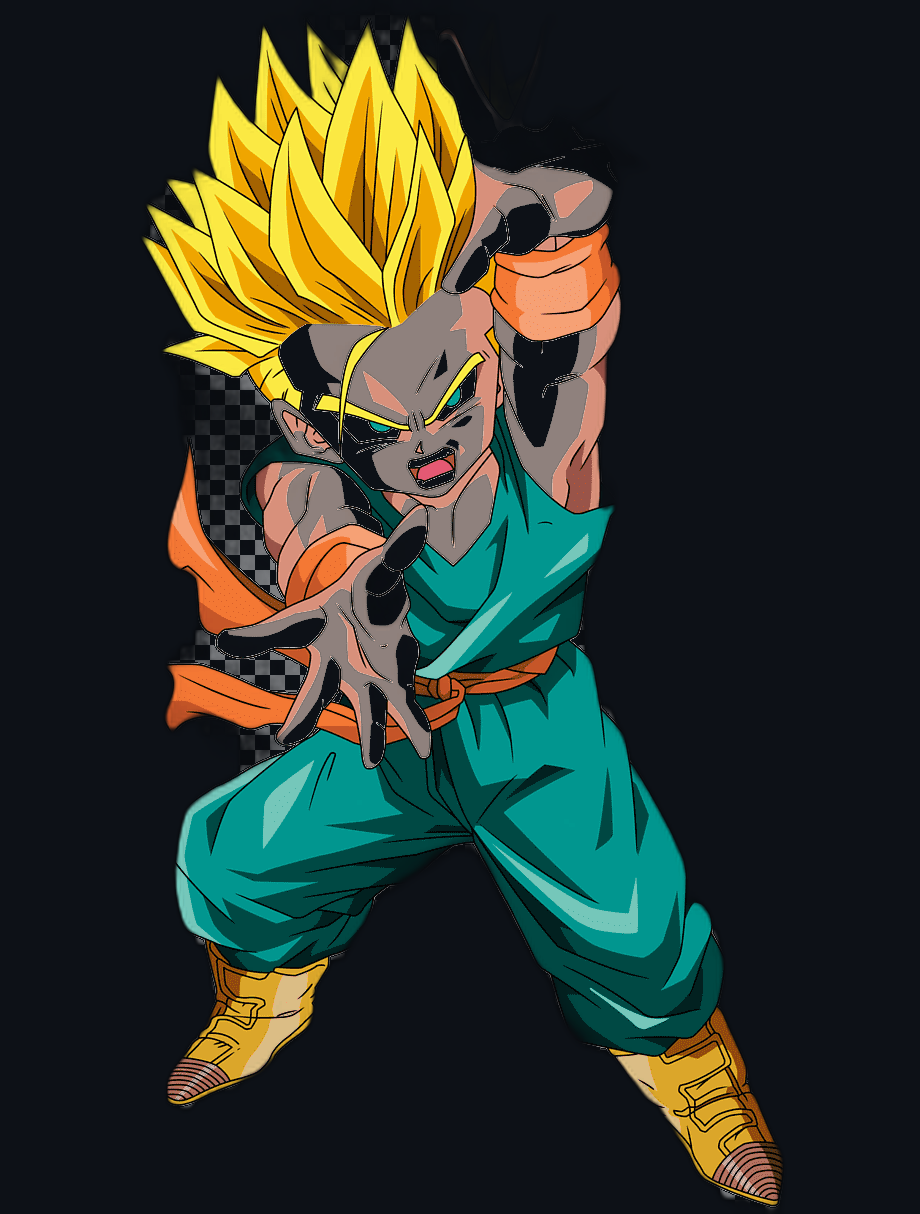
Gotenks, the fusion of Goten and Trunks, is the most frequent user of the Fusion Dance. As two young Saiyans with naturally similar power levels, Goten and Trunks are ideal candidates for the technique. Their fusion, Gotenks, is an exceptionally powerful Super Saiyan who played a crucial role in the Buu Saga. Gotenks demonstrates the Fusion Dance's potential by achieving Super Saiyan 3 — a form that neither Goten nor Trunks could achieve individually. His battles against Super Buu showcase the fusion's power, though Gotenks' overconfident personality often leads to tactical mistakes.
Gogeta, the fusion of Goku and Vegeta via the Fusion Dance, is arguably the most powerful Metamoran fusion in existence. Goku and Vegeta's first successful Fusion Dance occurred in Dragon Ball Z: Fusion Reborn, where Gogeta effortlessly defeated Janemba with techniques like the Stardust Breaker. In Dragon Ball Super: Broly, Gogeta returns in canon form, using the Fusion Dance to merge and confront the Legendary Super Saiyan Broly. Super Saiyan Blue Gogeta's battle against Broly demonstrates the Fusion Dance's incredible power multiplier, as Gogeta completely outclasses the fighter who had earlier overwhelmed both Goku and Vegeta individually.
Goku learned the Fusion Dance from the Metamorans during his training in Other World under King Kai's supervision. After the Cell Games, Goku remained in Other World and traveled to Planet Metamor, where he mastered the technique. Goku later taught the Fusion Dance to Piccolo upon returning to Earth during the Buu Saga, and Piccolo passed the technique to Goten and Trunks. This chain of instruction demonstrates the Fusion Dance's status as a learned technique rather than an innate ability — anyone with sufficient skill and discipline can theoretically master it.
Strategic Analysis
The Fusion Dance's primary strategic advantage is its ability to create a warrior whose power exceeds the sum of its parts. This makes it an ideal solution when facing opponents who individually outclass available fighters. The multiplication factor of fusion means that two fighters who individually have no chance against an opponent can merge into a being that can fight on equal or superior terms. This power multiplication makes fusion one of the most efficient power-boosting techniques in the Dragon Ball universe, particularly when compared to transformations like Super Saiyan that multiply a single fighter's power.
The technique's 30-minute time limit is its most significant tactical weakness. Fused warriors must defeat their opponents within this window or risk separating at the worst possible moment. This limitation encourages an aggressive, high-output fighting style — Gotenks, for example, often wastes time showboating instead of finishing opponents, which has led to his fusion expiring before achieving victory. Gogeta, by contrast, typically fights more efficiently, recognizing the time constraint and ending battles quickly. The time limit makes fusion less suitable for prolonged campaigns or multiple battles, as the fused warrior cannot sustain a presence beyond 30 minutes.
In team battle scenarios, the Fusion Dance creates difficult strategic choices. Fusing reduces the number of combatants from two to one, which means the team loses tactical flexibility in exchange for raw power. If the fused warrior is defeated, both original fighters are effectively eliminated from the battle rather than just one. Additionally, the Fusion Dance requires both participants to stop fighting and focus entirely on the dance sequence, creating a vulnerable window of approximately 30 seconds where neither can defend themselves. This means fusion attempts usually require covering fire from teammates or a temporary lull in combat.
FAQ
Frequently Asked Questions
The Metamoran fusion technique produces Metamoran-style clothing as a byproduct of the fusion process itself. The white vest, pants, and boots are part of the standard Metamoran fusion uniform, regardless of what the participants were wearing before fusion. Potara fusion, by contrast, preserves the original clothing of both participants.
No, the Fusion Dance is specifically designed for two participants. There is no known technique in Dragon Ball that can fuse three or more individuals simultaneously through a single dance. Multiple individuals would need to fuse sequentially, which presents practical difficulties as the power levels of already-fused beings make matching with others challenging.
Potara fusion is generally considered more powerful than the Fusion Dance based on the Elder Kai's statements in Dragon Ball Z. The Potara provides a greater power multiplication factor and does not require equal power levels. Additionally, Potara fusion was originally described as permanent, though Dragon Ball Super retconned this to a 1-hour limit for mortals.
The Fusion Dance requires a partner with nearly identical power levels, limiting Goku's options. For most of Dragon Ball Super, Vegeta was the only fighter close enough to Goku's power level to perform the dance. Additionally, Goku prefers to face challenges head-on rather than relying on fusion, treating it as a last resort.
Theoretically, the Fusion Dance should work on any two beings with sufficient ki control and matched power levels, regardless of race. In practice, the technique has only been demonstrated by Saiyans in canon material. The dance's origins on Planet Metamor suggest the technique was developed by and for non-Saiyan beings originally.
For more information about the Fusion Dance, visit the Dragon Ball Fandom page on the Fusion Dance. You can also read about Gogeta's biography on Dragon Ball Fandom to see the fusion's ultimate result.