Overview
The Father-Son Kamehameha is one of the most emotionally resonant and iconic techniques in the Dragon Ball franchise. It is not merely a powerful energy attack but a narrative device that represents the unbreakable bond between Goku and his eldest son, Gohan. The technique debuted during the climactic final battle of the Cell Games, when Gohan, having been pushed to his absolute limits by Super Perfect Cell, found himself on the verge of defeat. With all hope seemingly lost, Goku's voice reached out from the Other World, guiding his son to channel one final Kamehameha while Goku's own spirit energy flowed into the attack from beyond the grave.
The Father-Son Kamehameha transcends the boundaries between life and death, serving as a powerful narrative statement about the Saiyan father-son relationship that had been a central theme throughout the Cell Games saga. Goku's decision to remain dead after the Cell Games, his trust in Gohan's potential, and his ability to reach across dimensions to aid his son all converge in this single technique. The visual image of Goku's spirit form appearing behind Gohan, both shouting in unison as the blue-white energy wave surges toward Cell, remains one of the most replayed and celebrated moments in anime history.
Mechanics & Rules
The Father-Son Kamehameha operates on a unique spiritual energy transfer mechanism that distinguishes it from standard ki techniques. When Goku died during the Cell Games, his spirit traveled to the Other World, where he trained under King Kai's supervision. Unlike most deceased fighters who cannot interact with the living world, Goku's exceptional connection with his son, combined with the desperate circumstances of the battle, allowed him to project his ki across the dimensional barrier between the living world and the afterlife. This spiritual energy manifested as Goku's translucent form behind Gohan, providing both moral support and tangible power enhancement.
The technique's power comes from the simultaneous channeling of two separate ki sources into a single Kamehameha wave. Gohan generated the base energy using his own Super Saiyan 2 reserves, while Goku contributed an additional stream of spirit energy from the Other World. These two energy streams merged into a single wave that exceeded either fighter's individual capacity. The resulting beam displayed unusual properties — it appeared thicker and more intense than a standard Kamehameha, with Goku's spirit image superimposed over the energy flow. This visual phenomenon may represent the harmonization of two distinct ki signatures into a single unified attack.
One critical aspect of the technique's mechanics is its emotional prerequisite. The Father-Son Kamehameha cannot be performed through technical training alone — it requires a genuine emotional connection between the participants and a moment of absolute necessity. Gohan's rage-fueled power alone was not enough to defeat Cell; it was only when he combined his strength with his father's spiritual support that he achieved the decisive victory. This emotional component suggests that the technique operates on principles beyond standard ki manipulation, potentially tapping into the spiritual energy that connects living beings across dimensional boundaries in the Dragon Ball universe.
Types & Classifications
The Father-Son Kamehameha falls into a rare subcategory of Dragon Ball techniques: cooperative energy attacks with a spiritual dimension. While the series features numerous combination attacks, such as the Fusion Dance techniques used by Gotenks and Vegito or the joint attacks performed by the Z-Fighters, the Father-Son Kamehameha is unique because its participants are separated by the boundary between life and death. This places the technique in a category that might be called "transcendent cooperative techniques" — attacks that require connection across dimensional or spiritual barriers.
Other techniques in this rare category include Goku's Spirit Bomb, which draws energy from living beings across the planet and sometimes from the universe itself, though the Spirit Bomb gathers energy from many sources rather than a single specific individual. The Genki Dama operates on similar principles of spiritual energy collection but lacks the personal, familial connection that defines the Father-Son Kamehameha. The technique also shares characteristics with the Special Beam Cannon's charging mechanism, as both involve energy accumulation beyond the user's personal reserves, though through entirely different methods.
Within the Kamehameha family, the Father-Son Kamehameha is one of several named variants that include the Super Kamehameha, the God Kamehameha (used by Super Saiyan God Goku), and the Instant Kamehameha. However, the Father-Son Kamehameha is the only variant that explicitly involves two separate individuals contributing energy simultaneously, making it structurally distinct from power-boosted versions used by a single fighter. Its unique mechanics and emotional requirements set it apart as one of the most unusual techniques in the Kamehameha lineage.
Notable Users & Examples
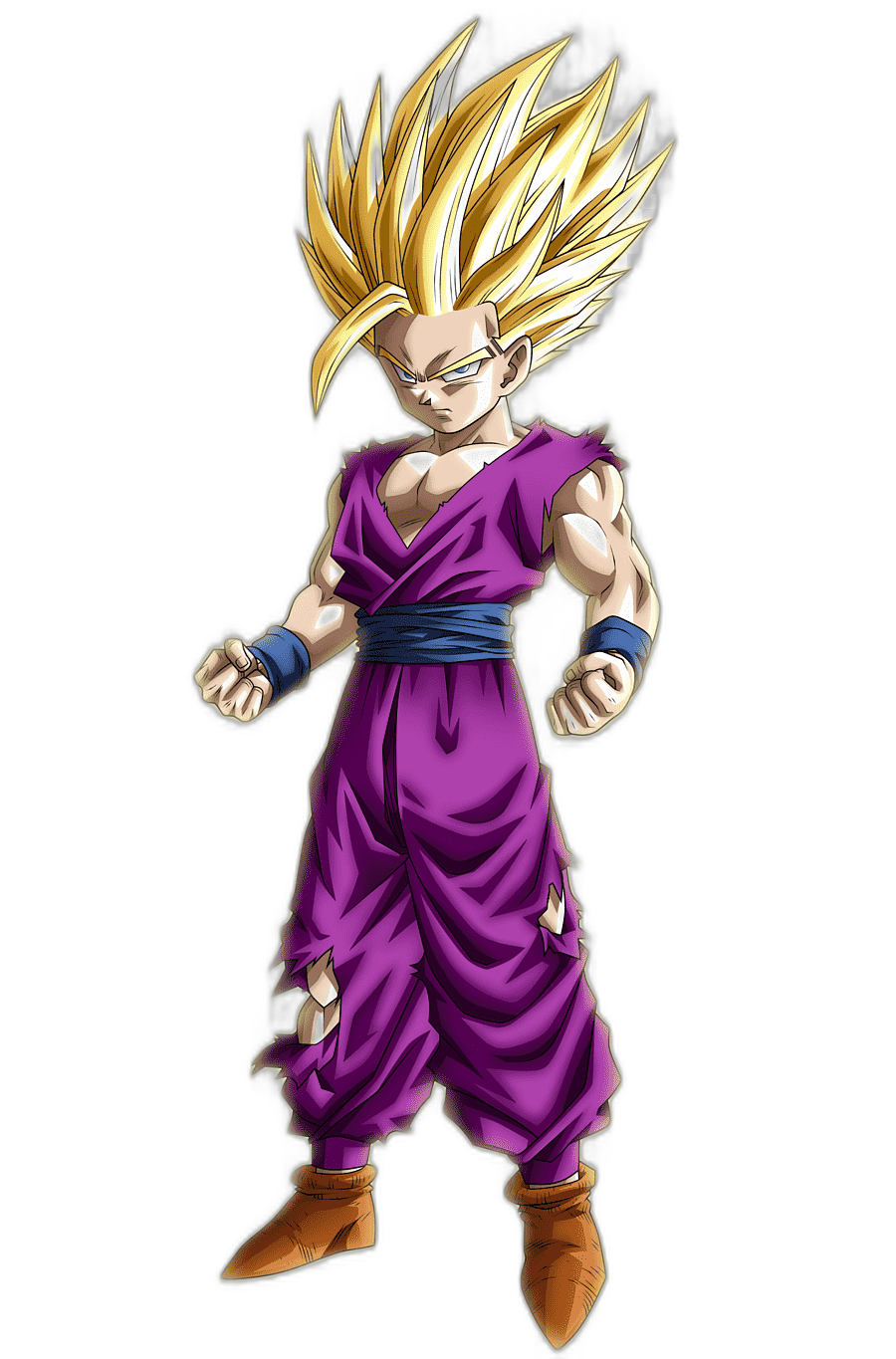
Gohan is the primary executor of the Father-Son Kamehameha, serving as the physical channel through which the combined energy is fired. His role in the technique's execution is active and demanding — he must maintain his Super Saiyan 2 form while simultaneously drawing on his father's spiritual energy. Gohan's Super Saiyan 2 form, awakened by the emotional trauma of Android 16's death and the sight of Cell harming his friends, provided the raw power base necessary to challenge Super Perfect Cell. Without Gohan's immense latent potential, even Goku's spiritual assistance would not have been sufficient to overcome Cell's regeneration.
Goku, despite being deceased, plays an equally crucial role in the technique's success. His ability to project his spirit energy from the Other World into the living world demonstrates his exceptional ki control and his deep connection to his son. Goku's voice guides Gohan through the final moments of the battle — coaching him to aim for Cell's central nucleus, encouraging him to push beyond his limits, and ultimately channeling his own remaining ki into Gohan's attack. The visual of Goku's spirit form, arms extended in the classic Kamehameha stance, appearing behind Gohan creates one of the most powerful images in the entire Dragon Ball series.
In Dragon Ball Super, the Father-Son Kamehameha makes a spiritual return during the Tournament of Power. During the climactic battle against Jiren, Gohan calls upon the spirit energy of his fellow Universe 7 warriors to power a Kamehameha, mirroring the original Father-Son technique. While this version differs in mechanics — drawing from multiple living allies rather than a single deceased parent — the emotional core remains the same. Gohan once again channels the combined strength of those who believe in him into a single decisive energy wave, honoring the legacy of the original Father-Son Kamehameha that defeated Cell.
Strategic Analysis
The Father-Son Kamehameha is, by its nature, a desperation technique rather than a standard combat option. Its reliance on external spiritual assistance and specific emotional conditions means it cannot be deployed on command or trained for repeated use. This makes the technique unsuitable for sustained combat and limits its practical application to single decisive moments. In strategic terms, the Father-Son Kamehameha functions as an ultimate trump card that can only be played once under very specific circumstances, but when those circumstances align, its power is nearly unstoppable.
The technique's primary strength is its ability to exceed the power limits of either individual participant. Gohan alone, even at full Super Saiyan 2 power, was unable to overcome Super Perfect Cell's Kamehameha in their beam struggle. The addition of Goku's spirit energy provided the critical power differential needed to turn the tide. This suggests the Father-Son Kamehameha can bridge power gaps that would otherwise be insurmountable, provided the spiritual connection requirement is met. The technique effectively allows Gohan to access power beyond his natural limits through an external, emotionally-triggered power source.
However, the technique's extreme specificity creates significant tactical vulnerabilities. It requires the deceased participant to have sufficient ki control to project their energy across dimensional boundaries — a feat that Goku accomplished due to his unusual status as a fighter who retained his body and training access in the Other World. It also requires the living participant to be in the correct emotional state and to have strong enough ki reserves to serve as the primary channel. If either condition is not met, the technique cannot be executed. Additionally, the beam struggle format means the attack can be countered by an opponent with sufficient raw power or the ability to deflect energy attacks.
FAQ
Frequently Asked Questions
The technique's mechanics are not family-exclusive in theory, but its emotional prerequisite — a deep, genuine connection between the participants — suggests it could work with other close bonds. In practice, only the Goku-Gohan combination has been shown in canon material.
Goku spent very little time with Goten before his death, and by the time Goten was old enough to fight, Goku was alive again and didn't need to project spirit energy from the Other World. Additionally, the circumstances requiring the technique — a desperate last stand — didn't arise during their time together.
Direct comparison is difficult as both techniques operate on different principles and face different opponents. The Father-Son Kamehameha's power depends on emotional and spiritual factors, while the Stardust Breaker is a standard fusion technique with consistent output. Both have demonstrated the ability to defeat otherwise unbeatable foes.
King Kai likely provided Goku with the spiritual training that made the technique possible. After training under King Kai in both life and death, Goku developed exceptional ki control and understanding of spiritual energy, though the specific technique of projecting spirit energy to the living world from the afterlife was Goku's own innovation.
Theoretically, any deceased fighter with sufficient ki control could project energy to aid a living ally with a strong emotional connection. However, Vegeta's pride and his complex relationship with Trunks make it unlikely that he would seek or need this type of collaborative technique in the same way Goku did with Gohan.
For more details about the Father-Son Kamehameha, visit the Dragon Ball Fandom page on the Father-Son Kamehameha. You can also read about Gohan's character biography on Dragon Ball Fandom for context on this legendary technique.