Overview
The Dodon Ray is a signature assassination technique of the Crane School, created by Master Shen as a counterpart to the Turtle School's Kamehameha. Unlike the wide, sweeping energy wave of its rival school, the Dodon Ray concentrates all of the user's ki into an incredibly thin, high-speed beam fired from the index finger. This piercing attack trades raw explosive power for surgical precision and velocity, making it one of the most feared assassination techniques in early Dragon Ball. Master Shen developed the Dodon Ray to embody the Crane School's philosophy of efficient, lethal combat — every ounce of energy is channeled into a single devastating point of impact rather than being dispersed across a wide area.
The technique first appears during the 22nd World Martial Arts Tournament, where Tien Shinhan and Chiaotzu demonstrate their mastery of the Crane School's signature move. The Dodon Ray's distinctive crimson-red beam and finger-firing stance immediately set it apart from the Turtle School's palm-fired blue energy waves. Throughout the Dragon Ball series, the Dodon Ray represents the philosophical and practical divide between the assassination-focused Crane School and the more honorable Turtle School approach to martial arts.
Mechanics & Rules
The Dodon Ray operates on a fundamentally different energy projection principle than most ki attacks in the Dragon Ball universe. Instead of gathering ki into a large sphere or wave and projecting it outward, the user compresses their energy into an extremely dense point at the tip of their index finger before releasing it as a beam. This compression process requires exceptional ki control, as the energy must be channeled through the finger rather than the entire palm or body. The resulting beam travels at tremendous speed — significantly faster than the Kamehameha — making it extremely difficult for opponents to dodge at close range.
The technique's assassination classification stems from its ability to pierce through an opponent's body with minimal energy waste. Unlike explosive techniques that disperse energy upon impact, the Dodon Ray's focused nature means nearly all of its ki penetrates the target, causing deep internal damage while leaving the surrounding area untouched. This makes it ideal for precision strikes in situations where collateral damage must be minimized. However, this same focus limits the technique's area-of-effect capabilities, making it less effective against multiple opponents or large targets without precise aim.
Power scaling for the Dodon Ray is directly tied to the user's overall ki reserves and finger-based energy channeling proficiency. As users grow stronger, the beam becomes faster, more penetrating, and more difficult to deflect. The technique's effectiveness also depends on the user's finger strength and ki conductivity — factors that vary between practitioners and explain why Tien's Dodon Ray was notably more powerful than Chiaotzu's despite both learning from the same master.
Types & Classifications
The Dodon Ray falls into the category of piercing-type energy attacks within the Dragon Ball ki technique classification system. Unlike blast-type attacks that explode on contact or wave-type attacks that push against the target, piercing attacks focus energy into a small cross-sectional area to maximize penetration. The Dodon Ray is the Crane School's primary piercing attack, distinguished from other piercing techniques by its finger-based firing mechanism and lack of charging time.
Related piercing techniques include Piccolo's Special Beam Cannon, which operates on similar penetration principles but requires extensive charging and uses a spinning, drill-like energy projection. The Dodon Ray trades the Special Beam Cannon's raw power for near-instantaneous execution, making it more practical in fast-paced combat scenarios. Other comparable techniques include Frieza's Death Beam, which similarly fires a thin, piercing energy projectile from a finger, though Frieza's version operates at vastly higher power levels.
In terms of technique rarity, the Dodon Ray is classified as a school-exclusive technique — known only to Crane School members and their students. Unlike the widely-taught Kamehameha, the Dodon Ray was never mass-disseminated, and after the Crane School's disbandment following Master Shen's defeat and the defection of Tien and Chiaotzu, the technique's knowledge base became extremely limited. This exclusivity adds to the Dodon Ray's mystique and makes it a distinctive marker of Crane School lineage in the Dragon Ball world.
Notable Users & Examples
Master Shen, the founder of the Crane School, is the original creator and most proficient user of the Dodon Ray. He first demonstrates the technique during the 22nd World Martial Arts Tournament, using it against Goku and demonstrating its lethal precision. Shen's version of the Dodon Ray is powerful enough to threaten even Goku, who had already demonstrated considerable durability against other attacks at that point in the series. Master Shen's mastery of the technique reflects his decades of refinement since creating it.
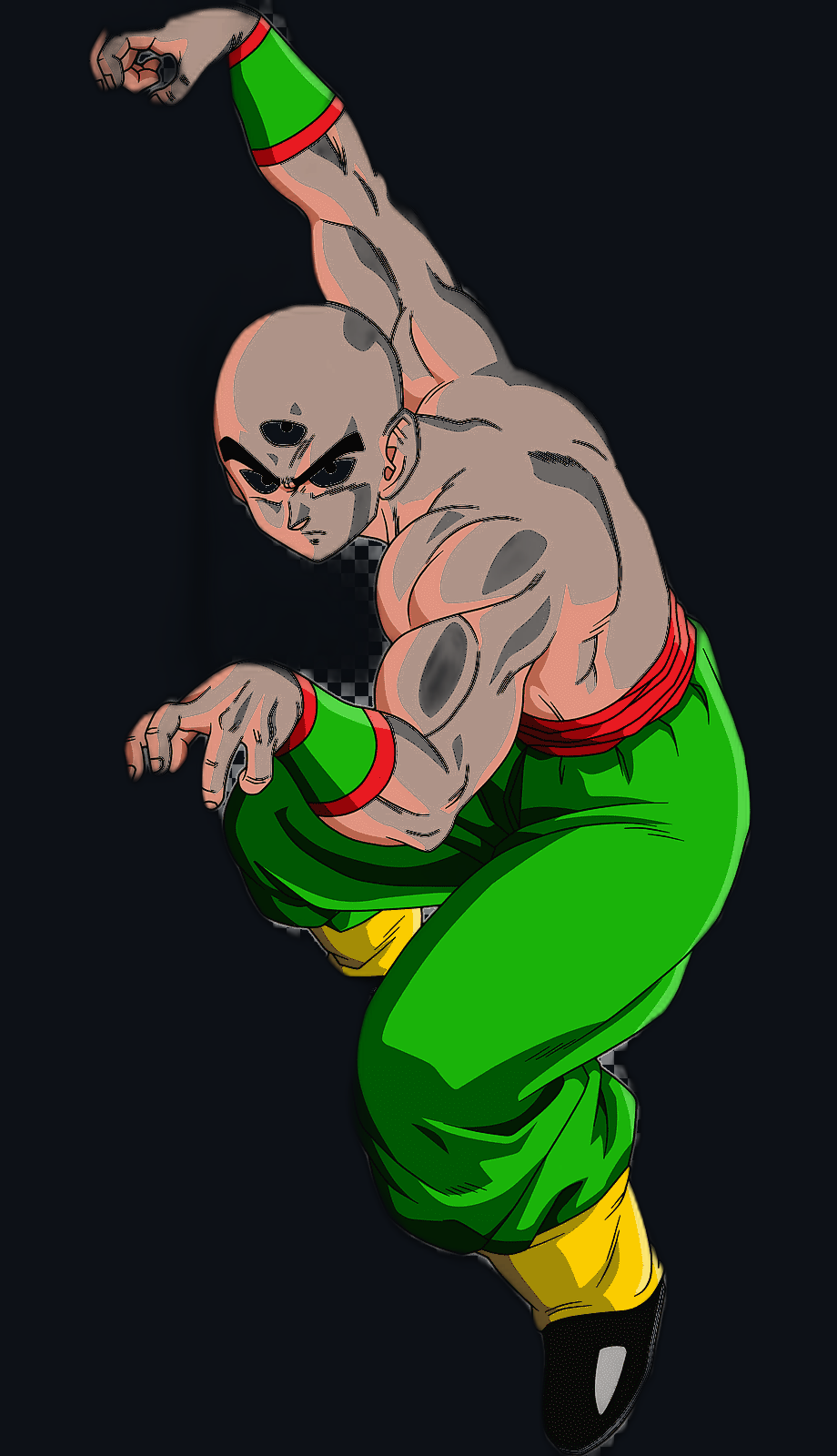
Tien Shinhan becomes the second known user of the Dodon Ray after learning it during his Crane School training. Tien employs the technique multiple times throughout his early appearances, most notably during his battles against Goku and later against King Piccolo's demon army. Tien's Dodon Ray shows greater power and precision than Chiaotzu's, reflecting his superior overall strength and ki control. However, after defecting from the Crane School and developing his own techniques like the Tri-Beam, Tien gradually phases out the Dodon Ray in favor of original techniques better suited to his evolving martial arts philosophy.
Chiaotzu also learns and uses the Dodon Ray during his Crane School days, though his version is notably weaker due to his smaller stature and more limited ki reserves. Chiaotzu's usage of the technique primarily occurs during the 22nd World Martial Arts Tournament, where he faces Goku. Despite its reduced power, Chiaotzu's Dodon Ray still demonstrates the characteristic speed and precision of the Crane School's signature technique. After Chiaotzu and Tien cut ties with the Crane School, Chiaotzu rarely uses the technique in later battles, favoring his psychic abilities instead.
Strategic Analysis
In combat scenarios, the Dodon Ray excels as a surgical strike tool. Its instant execution speed makes it ideal for catching opponents off-guard, particularly when they expect the longer charge time associated with larger energy attacks. Fighters facing a Dodon Ray user must maintain constant lateral movement, as the technique's linear trajectory and high speed make it nearly impossible to dodge once fired if the user has properly predicted the target's position. The technique's effectiveness diminishes against opponents who can create energy barriers or who possess sufficient durability to withstand piercing attacks.
The Dodon Ray's primary tactical weakness is its lack of area control. Unlike the Kamehameha, which can sweep across a battlefield or catch multiple opponents, the Dodon Ray can only engage one target at a time with a single shot. This makes it poorly suited for crowd control situations. Additionally, because the technique channels energy through a single finger, users who sustain finger injuries may find their ability to execute the Dodon Ray significantly impaired. Defensively, opponents who can deflect or absorb the thin beam — such as those using energy shields or possessing energy absorption abilities — can neutralize the technique entirely.
In team battles, the Dodon Ray serves best as a support attack rather than a primary offensive tool. Its speed allows users to interrupt opponent techniques, force dodges that create openings for teammates, or finish wounded targets with minimal energy expenditure. The technique also works well as a feinting tool — the distinctive finger-pointing stance can force opponents to commit to defensive maneuvers, allowing the user to follow up with a different attack entirely. Against significantly stronger opponents, the Dodon Ray's piercing nature can still deal damage where blunt energy waves might be completely blocked, making it a valuable fallback option in uneven matchups.
FAQ
Frequently Asked Questions
While the index finger is standard, skilled practitioners can theoretically channel the technique through any finger. However, the index finger provides the most natural ki channeling path, and variations through other fingers typically result in reduced power or accuracy.
No, Goku never learned the Dodon Ray. As a Turtle School student, he specialized in the Kamehameha and other techniques taught by Master Roshi. Goku's fighting style emphasizes overwhelming power and adaptability rather than assassination-focused precision strikes.
The Dodon Ray is not classified as a forbidden technique in the same way as the Evil Containment Wave or the Mafuba. However, its classification as an assassination technique and its association with the Crane School's controversial methods make it morally questionable in the eyes of Turtle School practitioners.
The Dodon Ray makes limited appearances in Dragon Ball Super, primarily through flashbacks or as a technique referenced by characters familiar with the Crane School. The technique's lower power ceiling means it is rarely used by main characters in Super's higher power-level battles.
There are no documented instances of the Dodon Ray being combined with other techniques in canon material. Its single-finger firing mechanism and focused energy nature make it difficult to merge with other attacks, unlike the more versatile Kamehameha which has numerous hybrid variations.
For more details on Crane School techniques, visit the Dragon Ball Fandom page on the Dodon Ray. You can also read about Tien Shinhan's biography on Dragon Ball Fandom for additional context on the technique's most prominent user.