Overview
Absorption is one of the most versatile and feared ability categories in the Dragon Ball universe, allowing a user to incorporate external matter, energy, or living beings into their own form to enhance their power, gain new abilities, or restore their own energy reserves. Unlike conventional ki attacks that project energy outward, absorption represents an inward channeling of external resources, fundamentally altering the user's capabilities by integrating foreign elements into their own biology or energy system. This technique manifests in several distinct forms across the series, from Cell's biological assimilation of entire life forms through his tail to Majin Buu's grotesque body absorption that incorporates victims into his malleable flesh, and the Androids' technological energy-draining palm techniques. Each variant operates under different rules and offers unique strategic advantages, but all share the fundamental principle of incorporating external elements into the user's own being.
The concept of absorption has appeared in nearly every major saga of Dragon Ball, beginning with the energy-draining techniques of early villains and evolving into complex biological and magical forms of assimilation by the time of Dragon Ball Super. What makes absorption particularly dangerous compared to other techniques is its snowballing nature: the more the user absorbs, the stronger they become, creating a feedback loop that can quickly overwhelm opponents who fail to end the fight early. This makes absorption-based characters some of the most threatening antagonists in the series, as they possess unlimited growth potential as long as they have access to new targets to absorb. Understanding the mechanics, types, and strategic implications of absorption is essential for any comprehensive analysis of Dragon Ball's combat system.
Mechanics & Rules
The mechanics of absorption vary significantly depending on the user and the specific technique employed, but several fundamental principles govern how absorption functions across the Dragon Ball universe. First, absorption requires physical contact or close proximity between the user and the target in most cases. Cell's tail must pierce his victims, Buu's body must envelop them, and the Androids' palms must touch their opponent's body or energy attack. Second, the absorbed material is integrated into the user's own biology, permanently altering their capabilities. Cell gains the genetic traits and techniques of anyone he absorbs, Buu takes on physical characteristics and power levels, and the Androids convert absorbed energy into their own power reserves. Third, absorption has limits based on the user's capacity. Cell could only absorb specific targets (Androids 17, 18, and later individuals), Buu has a finite storage capacity within his body, and the Androids can only store so much energy before reaching maximum output.
The transformation process during absorption is also noteworthy. When Cell absorbs a target through his tail, the victim's body is broken down into genetic material that spreads throughout Cell's cellular structure, granting him their abilities and physical traits. This process is permanent and irreversible under normal circumstances. Buu's absorption works differently: his body's malleable flesh wraps around the target, encasing them in a cocoon-like structure that incorporates them into his form. The absorbed victim remains conscious inside Buu, allowing them to communicate and even resist from within under certain conditions. The Androids' energy absorption is purely energetic rather than biological, functioning as a direct conversion of ki into usable power. More recent additions to the series, such as Moro's magic-based absorption, have expanded these mechanics further, demonstrating that absorption can also work at planetary scales through magical means that bypass physical contact requirements entirely.
Types & Classifications
Absorption techniques in Dragon Ball can be classified into several distinct categories based on their mechanism and effect. Biological absorption involves the physical incorporation of living beings into the user's body, permanently altering their form and granting them the absorbed individual's abilities. Cell's tail absorption is the prime example, where he absorbs entire life forms through a stinger-like appendage to gain their genetic traits. Body absorption is Majin Buu's specialty, where he uses his amorphous body to envelop and incorporate victims into his flesh, gaining their power and appearance while they remain conscious inside him. This form of absorption can be partially reversed if the absorbed individuals are forcibly expelled. Energy absorption focuses on draining ki rather than physical matter, as demonstrated by Androids 19 and 20 who absorb energy through their palms to replenish their own power reserves. Unlike biological absorption, this form is temporary and the absorbed energy is converted into combat power rather than permanently altering the user's form.
Magical absorption was introduced with the character Moro in Dragon Ball Super, who uses ancient magic to drain the life energy from entire planets and individuals at a distance. This form bypasses the physical contact requirement of other absorption types and operates on a vastly larger scale. Spirit absorption refers to techniques like the Spirit Bomb's collection of energy from living things, as well as techniques that drain spiritual energy rather than physical ki. The Genki Dama (Spirit Bomb) collects small amounts of energy from all living things on a planet, though this is typically portrayed as voluntary donation rather than forced absorption. Each classification presents unique strengths and weaknesses, with biological absorption offering permanent power gains at the cost of specific target requirements, while energy absorption provides flexible but temporary enhancements.
Notable Users & Examples
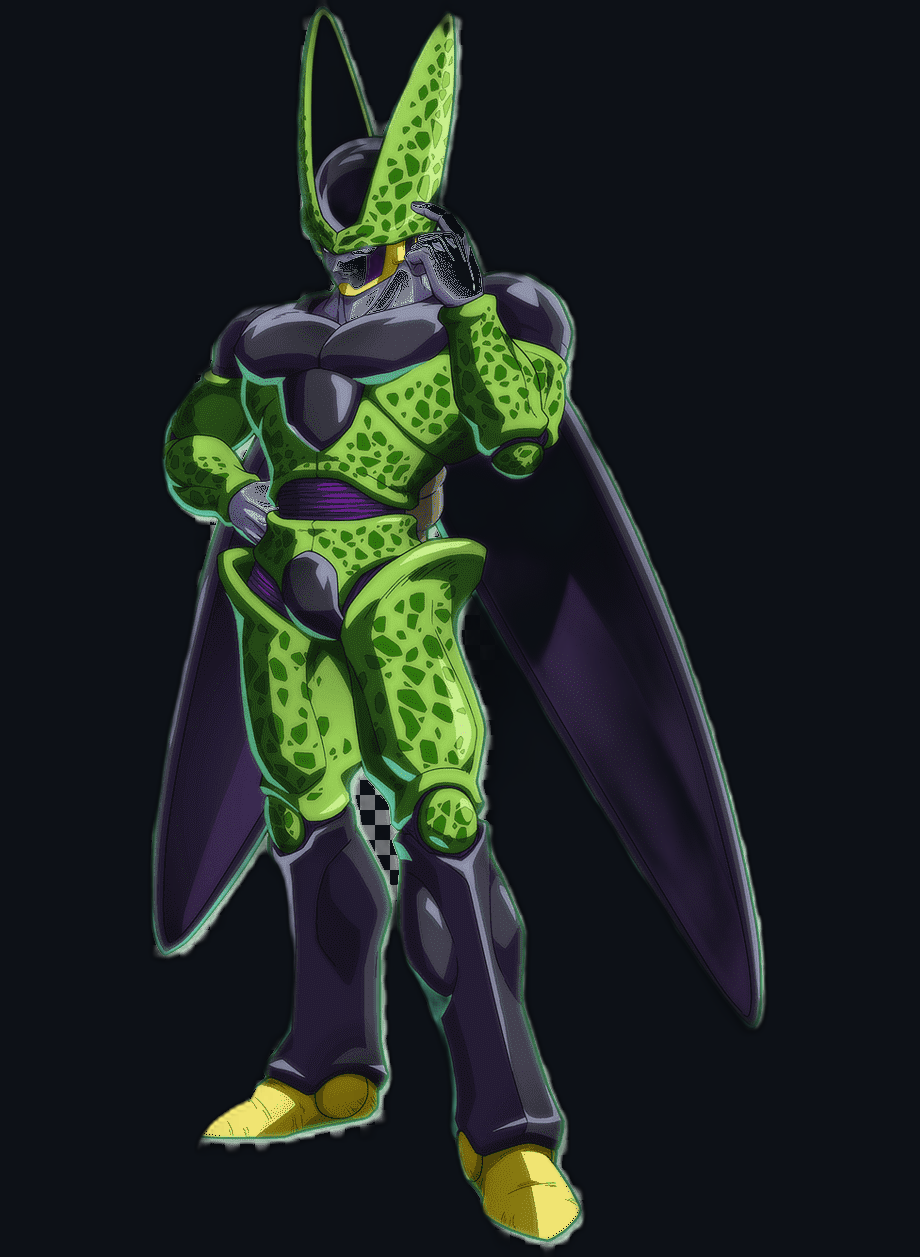
Cell stands as one of the most iconic absorption users in Dragon Ball history. His entire character arc revolves around absorption: he was created from the genetic material of the universe's greatest warriors, and his primary goal was to absorb Androids 17 and 18 to achieve his Perfect form. Cell's absorption of Android 17 on an island marked a turning point in the Cell Saga, and his subsequent absorption of Android 18 completed his transformation into Perfect Cell, one of the most powerful beings in the universe at that time. Even after achieving perfection, Cell could still absorb life energy through his tail, as demonstrated when he attempted to absorb Goku's energy during their final Kamehameha clash.
Majin Buu's absorption abilities are equally legendary. He absorbed numerous powerful warriors throughout the Buu Saga, including Good Buu (to become Super Buu), Gotenks, Piccolo, and Gohan. Each absorption significantly boosted his power and altered his appearance, with Super Buu being arguably the most dangerous form due to his combination of power and cunning. The absorbed victims remained conscious inside Buu, which ultimately led to his downfall when Vegito's resistance from within created an opening. Androids 19 and 20 (Dr. Gero) represent the technological side of absorption, using their cybernetic palm implants to drain ki from opponents. Dr. Gero's extensive data collection on the Z-Fighters before creating the Androids also represents a form of information absorption, making him uniquely prepared to counter the heroes' techniques. In Dragon Ball Super, Moro's magic-based absorption raised the stakes to planetary levels, as he could drain the life energy from entire worlds simultaneously.
Strategic Analysis
From a strategic perspective, absorption techniques offer both tremendous advantages and notable drawbacks. The primary advantage is the exponential power growth that absorption provides. A single absorption event can multiply a character's power level several times over, as demonstrated when Cell transformed from his Imperfect to Perfect form. This creates a time-sensitive dynamic where opponents must defeat the absorber before they can absorb more targets. The longer a fight continues, the more opportunities the absorber has to enhance themselves, making quick, decisive attacks the optimal strategy against absorption-based foes. Additionally, absorption often grants specific abilities or techniques from the absorbed target, providing both raw power and tactical versatility that the user did not previously possess.
However, absorption techniques also carry significant strategic weaknesses. The absorption process itself often requires a moment of vulnerability, as the user must establish physical contact with their target. This creates an opening that skilled opponents can exploit. The absorbed individuals may also retain some degree of consciousness and independence within the absorber, creating a potential internal weakness that external forces can exploit. Vegito's strategy against Buu relied on this principle, as he deliberately allowed himself to be absorbed so he could attack from within. Furthermore, absorption users may become overconfident after powering up, as seen with both Cell and Buu, leading them to toy with opponents rather than finishing fights decisively. Understanding these strategic dynamics is crucial for any Dragon Ball combat analysis, as absorption-based characters require fundamentally different approaches compared to more conventional fighters who rely solely on their own innate power.
Legacy & Impact on the Series
Absorption techniques have left an indelible mark on the Dragon Ball narrative, shaping some of the most memorable story arcs in the franchise. The Cell Saga's entire plot structure revolves around the threat of absorption, with Cell's quest to achieve his Perfect form driving the conflict forward. This created a unique narrative dynamic where the heroes had to balance the need to defeat Cell against the risk of making him stronger through absorption. The Buu Saga similarly centered on absorption as a core plot mechanism, with Buu's ability to absorb warriors creating escalating stakes as each major character fell to his power. The dramatic reversal, where absorbed characters were freed from within, provided one of the series' most creative resolutions.
In Dragon Ball Super, absorption continued to evolve with Moro's introduction, showing that the concept still has room for innovation even after decades of storytelling. The recurring presence of absorption techniques across multiple sagas demonstrates their enduring appeal as a narrative device that raises stakes, creates temporary power imbalances, and forces heroes to develop creative counter-strategies. For fans studying the Dragon Ball power system, absorption represents one of the few technique categories that can bridge massive power gaps in an instant, making it a perennial wildcard in any combat scenario. External resources for further reading include the Dragon Ball Wiki page on Absorption and the Dragon Ball Wiki page on Cell.