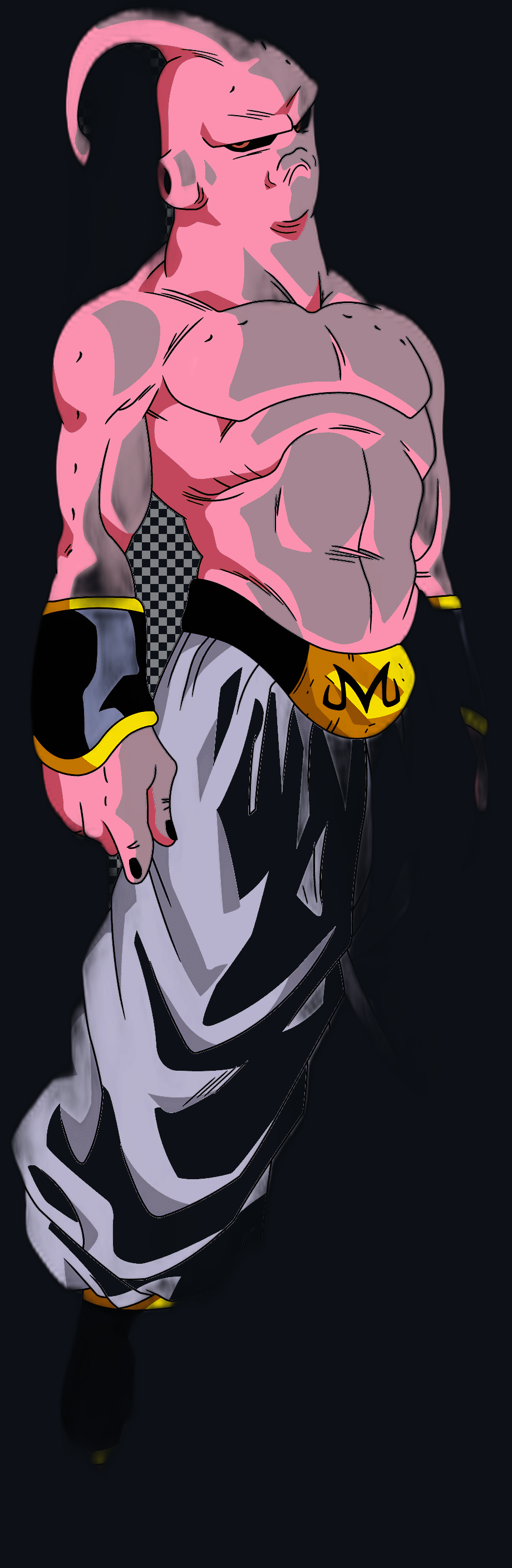
Overview
The Kid Buu Saga is the final story arc of Dragon Ball Z, bringing the epic 291-episode anime series to a thunderous conclusion. Running from episodes 276 through 291, this saga represents the ultimate confrontation between the Z fighters and the original, pure form of Majin Buu. After the complex fusion battles and absorption strategies of the Fusion Saga, Kid Buu emerges as a stripped-down, primal force of destruction with no reasoning capacity, no desire for entertainment, and no goal beyond the complete annihilation of all existence.
The saga begins immediately after the Fusion Saga's climax, when Super Buu reverts to his original Kid Buu form after the Fat Buu inside him forces a transformation. Unlike Super Buu, who at least showed some capacity for strategy and amusement, Kid Buu is a mindless engine of destruction that immediately sets about destroying Earth. After a desperate battle on the dying planet, Goku and Vegeta are forced to flee to the Sacred World of the Kais, where the final confrontation takes place. The saga features some of Dragon Ball Z's most iconic moments: Vegeta's emotional speech acknowledging Goku as the greatest, Mr. Satan's heroic plea to humanity, and the planet-sized Spirit Bomb that finally ends the Buu threat forever.
Mechanics & Rules
The Kid Buu Saga operates on combat mechanics that differ significantly from the earlier Buu saga sub-arcs. Kid Buu's regeneration ability is faster and more complete than Super Buu's, allowing him to recover from virtually any physical damage instantly. Unlike Super Buu, who used absorption and strategy, Kid Buu relies solely on raw destructive power and relentless aggression. His primary attack, a massive sphere of destructive energy, can destroy planets instantly, and he fires these repeatedly without apparent energy drain, creating an endless barrage that keeps the heroes constantly on the defensive.
The Spirit Bomb, which defeats Kid Buu, operates under specific rules that are fully explored in this saga. The attack draws energy from all living beings, but only those with pure hearts can contribute significant power. Evil beings either cannot contribute or actively resist the energy gathering. The Spirit Bomb's power scale is proportional to both the number of contributors and their willingness to participate. Goku's Super Saiyan 3 form, which he uses throughout this saga, demonstrates the limitations of the form's energy consumption rate. Unlike earlier battles where SSJ3 was used briefly, the extended fight with Kid Buu reveals that Super Saiyan 3 drains stamina at an unsustainable rate, forcing Goku to conserve power throughout the battle. The fusion rules established in the previous saga are reinforced when Goku decides not to use the Potara earrings for a rematch with Vegeta, acknowledging that their fusion would not address the core problem.
Types & Classifications
As the final saga of Dragon Ball Z, the Kid Buu Saga occupies a unique position in the franchise's narrative structure. It functions as both a conclusion to the Majin Buu Arc and a finale for the entire Dragon Ball Z series. In terms of saga classification within DBZ, it represents the fourth sub-arc of the Buu storyline, following the Resurrection F (Goku and Vegeta's return), the Absorption (Super Buu's power escalation), and the Fusion (Vegito and the rescue mission) sagas. Each sub-arc escalates the threat level while introducing new combat strategies, with Kid Buu representing the final, most dangerous form.
Narrative classification places this saga as a survival horror story within the Dragon Ball framework. Unlike the strategic battles of earlier sagas, Kid Buu's mindless destruction creates an atmosphere of constant crisis where there is no time for planning or training. The sacred World of the Kais setting provides a stark, otherworldly battlefield that emphasizes the cosmic scale of the conflict. The saga's classification as a finale is reinforced by its thematic content, which includes the resolution of Goku and Vegeta's rivalry, the redemption of Mr. Satan as a genuine hero, and the passing of the torch to the next generation through Uub's introduction. The saga balances high-stakes action with emotional closure, providing a satisfying conclusion to the series that launched an international phenomenon.
Notable Users & Examples
The Kid Buu Saga features some of Dragon Ball Z's most memorable character moments and transformations. Kid Buu himself, despite being a mindless villain, creates an unforgettable impression through his chaotic design, cackling laughter, and relentless destructiveness. His small, childlike appearance contrasts dramatically with his universe-threatening power, making him one of the most visually distinctive villains in the series. His habit of destroying planets for amusement and his immunity to conventional attacks make him seem truly unstoppable, raising the tension to maximum levels.
Vegeta receives his finest character moment in this saga through his heartfelt speech acknowledging Goku as the strongest warrior. This admission, coming from the proud Saiyan prince who has spent his entire life trying to surpass Goku, represents the culmination of Vegeta's character development from villain to reluctant ally to true friend. His willingness to sacrifice himself, to fight alongside Goku rather than against him, and to finally let go of his rivalry demonstrates how far he has come since his introduction in the Saiyan Saga. Mr. Satan's role as the unlikely hero who rallies humanity to contribute to the Spirit Bomb provides one of the series' most satisfying redemption arcs, transforming a comedic character into a genuine hero through his courage and determination when it matters most.
Strategic Analysis
The narrative strategy behind the Kid Buu Saga demonstrates Akira Toriyama's understanding of serialized storytelling and audience expectations. By reducing the final villain to a pure, mindless force of destruction, the saga strips away all complexity and forces the heroes to rely on their most fundamental values: courage, teamwork, and the support of ordinary people. This approach creates a thematic resonance that distinguishes the finale from earlier battles. Unlike Frieza, who represented racism and tyranny, Cell, who embodied perfectionism, or Super Buu, who symbolized gluttony and consumption, Kid Buu represents pure, meaningless destruction, the ultimate evil that must be opposed simply because it exists.
The strategic use of the Spirit Bomb as the final attack is particularly significant. Throughout Dragon Ball Z, the Spirit Bomb had been Goku's ultimate technique, but it had never successfully defeated a major villain. By finally succeeding in the series finale, the Spirit Bomb's narrative arc reaches its completion, justifying Goku's faith in humanity's inherent goodness. The requirement for everyone on Earth to raise their hands and contribute their energy creates a participatory climax where the audience metaphorically joins the battle alongside the characters. The saga's epilogue, which fast-forwards ten years to show the peace that the Z fighters have created and introduces Uub as Buu's reincarnation, provides emotional closure while leaving the door open for future stories. The final image of Goku flying away with Uub, smiling as he looks toward the future, is one of the most iconic endings in anime history.
FAQ
What is the difference between Kid Buu and Super Buu?
Kid Buu is the original, pure form of Majin Buu before any absorptions. Unlike Super Buu who is larger, more intelligent, and has unique techniques from absorbed fighters, Kid Buu is smaller, completely insane, and purely destructive. Kid Buu is actually more dangerous because he has no reasoning capacity and exists only to destroy.
How does the Kid Buu Saga end Dragon Ball Z?
The Kid Buu Saga ends with Goku destroying Kid Buu with a planet-sized Spirit Bomb powered by energy from Earth's entire population, including Mr. Satan's plea for help. Goku wishes for Buu to be reincarnated as a good person, leading to Uub's birth. The series concludes with Goku leaving to train Uub.
What is Vegeta's famous speech in the Kid Buu Saga?
Before the final battle, Vegeta gives an emotional speech acknowledging Goku as the strongest warrior and the true hero. He admits that Goku has always been number one and that his rivalry with Goku has defined his life. This speech is considered one of Dragon Ball Z's most powerful character moments.
What role does Mr. Satan play in defeating Kid Buu?
Mr. Satan plays a crucial role by convincing Earth's population to raise their hands and donate their energy to Goku's Spirit Bomb. He first demonstrates by raising his own hands, then uses the public address system to rally everyone. Without Mr. Satan, the Spirit Bomb would not have been powerful enough to destroy Kid Buu.
How is the Spirit Bomb able to kill Kid Buu?
The Spirit Bomb kills Kid Buu because it is made of pure good energy, which is fundamentally opposite to Buu's pure evil nature. Buu's regeneration ability cannot heal damage from the Spirit Bomb because the attack is spiritual rather than physical. Dende's wish on the Namekian Dragon Balls restores Goku's strength just in time to throw it.
External resources: Kid Buu on Dragon Ball Wiki | Majin Buu Forms Guide