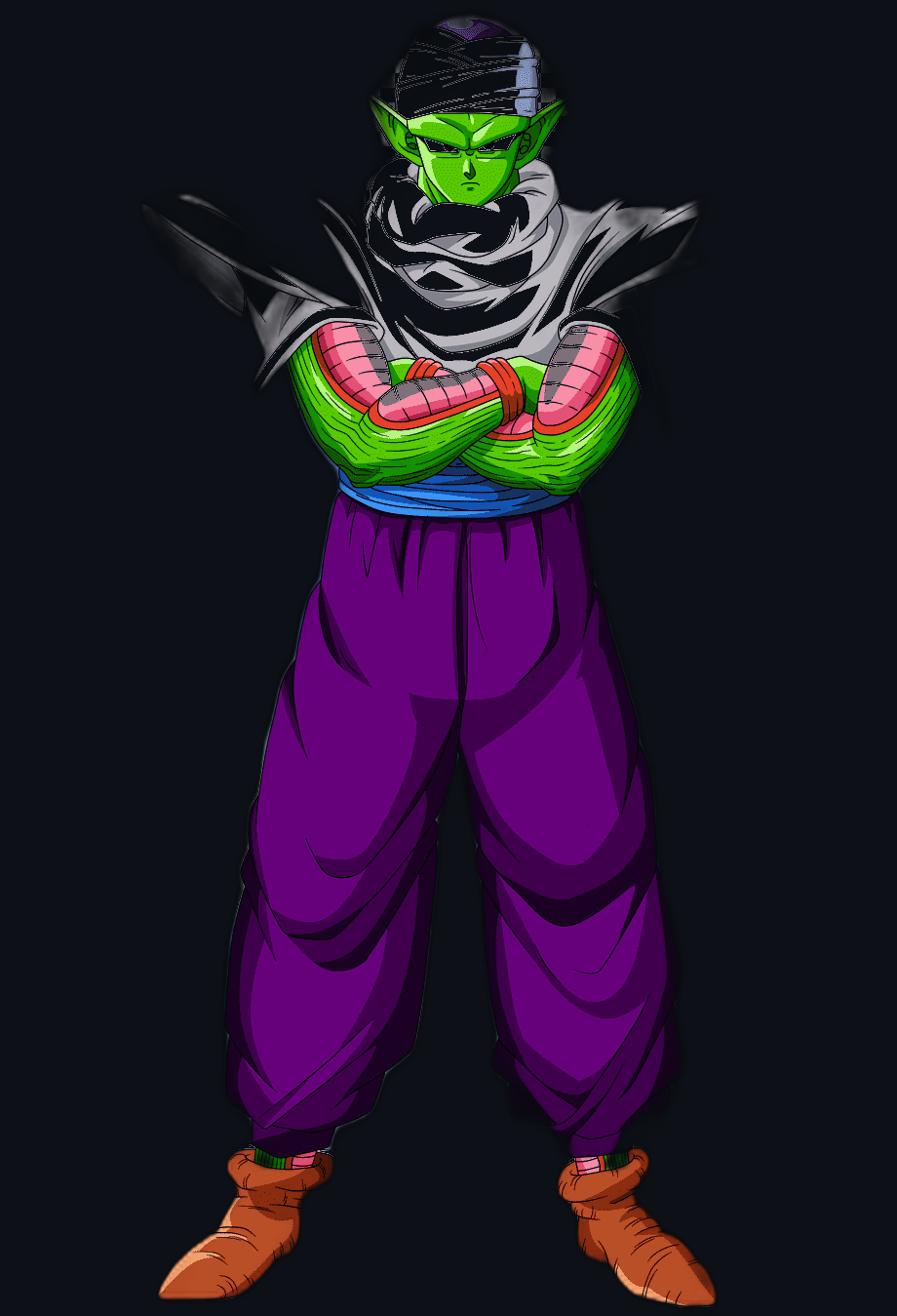
Overview
The Demon King Piccolo Saga is one of the most transformative arcs in the original Dragon Ball series, marking a decisive shift from lighthearted adventure to genuine peril and mature storytelling. Spanning episodes 102 through 122 of the original Dragon Ball anime, this saga introduces the franchise's first truly world-threatening villain and permanently alters the series' tone. When King Piccolo is released from the rice cooker seal after generations of imprisonment, he wastes no time establishing his reign of terror across Earth, systematically eliminating martial arts masters and establishing his demon clan's dominance.
The saga begins with the climax of the Tien Shinhan Saga, where King Piccolo's release creates immediate chaos. He spawns mutated children including Tambourine, who hunts and kills Krillin during the tournament, and Drum and Cymbal, who terrorize the population. King Piccolo's ultimate goal is to use the Dragon Balls to restore his youth and destroy Shenron, ensuring no one can undo his reign. Goku, devastated by Krillin's death and the destruction of the Dragon Balls, must seek out the Ultra Divine Water from Korin's tower to unlock his latent potential and confront the Demon King in a battle that determines Earth's fate.
Mechanics & Rules
This saga operates on several unique mechanical systems that differentiate it from both earlier and later Dragon Ball arcs. The Demon King's life-creation ability allows him to spawn mutated children from his mouth, each with distinct powers and personalities. These offspring, including Tambourine, Drum, and Cymbal, serve as his army and can absorb defeated opponents to grow stronger. This spawning mechanic creates an escalating threat where each defeated minion can be replaced by an even more powerful successor, forcing the heroes to target the source rather than the symptoms.
The Ultra Divine Water introduces a high-risk power enhancement mechanic that influences future Dragon Ball power-up systems. Unlike the Senzu Beans that simply restore energy, the Ultra Divine Water unlocks latent potential but carries a 50% mortality rate for those unworthy of its power. Goku's survival and subsequent power gain establishes the precedent for risk-based power enhancement that appears in later sagas through methods like the Hyperbolic Time Chamber and the Godly Water on Namek. King Piccolo's own power mechanics include age-based fluctuation, where his strength increases when he regains youth through the Dragon Balls, and mastery of the Evil Containment Wave (Mafuba), a technique he ironically fears being used against him.
Types & Classifications
The Demon King Piccolo Saga can be classified as a transitional arc within the original Dragon Ball narrative structure. It bridges the gap between the martial arts tournament arcs that dominated early Dragon Ball and the world-threatening conflicts that define Dragon Ball Z. The saga introduces several narrative archetypes that become franchise staples: the invincible villain who conquers Earth, the death of a major character (Krilling's first death), the power-up quest (seeking Ultra Divine Water), and the climactic city-destroying battle between Goku and the main antagonist.
In terms of villain classification, King Piccolo represents the first true demon lord archetype in Dragon Ball, distinct from the martial arts rivals (Tien, Piccolo Jr.) and space conquerors (Frieza, Vegeta) that follow. His magical nature and demonic origins place him in a different category than pure martial artists, explaining his unique abilities including spawning minions, energy blasts with tracking properties, and the capacity to destroy Dragon Balls. The saga's structure follows a classic five-act tragedy: the demon's release and initial conquest, the heroes' failed resistance, Goku's preparation and training, the decisive battle, and the aftermath that sets up Kami's role as Earth's guardian. This structural classification helps explain why the saga remains one of Dragon Ball's most critically acclaimed story arcs.
Notable Users & Examples
The saga features expanded roles for existing characters while introducing figures who shape Dragon Ball's future direction. King Piccolo himself remains one of Dragon Ball's most effective villains due to his intelligence, cruelty, and personal connection to the series' mythology. His design, with white skin, red eyes, antennae, and Namekian features, creates an iconic visual that makes him immediately recognizable as a threat. His psychological manipulation of the Earth's population through televised executions and martial arts master assassinations demonstrates a sophisticated understanding of terror tactics that later villains rarely match.
Goku's development in this saga is crucial to his character arc. His first encounter with genuine loss (Krillin's death) and his subsequent quest for vengeance establishes the emotional foundation for his later transformations, particularly Super Saiyan on Namek. Master Roshi's attempted use of the Evil Containment Wave against King Piccolo and his subsequent death marks a passing of the torch moment, where the old generation of martial arts masters gives way to the new. Tien Shinhan's role as a fighter who temporarily joins King Piccolo out of desperation and then rebels against him demonstrates the moral complexity that Dragon Ball increasingly explored during this period. The saga also introduces Yajirobe as a reluctant ally who provides crucial support by retrieving Goku after his near-fatal injuries.
Strategic Analysis
The narrative strategy behind the Demon King Piccolo Saga represents one of Dragon Ball's most successful tonal reinventions. By transitioning from tournament-based storytelling to a world-conquest narrative, the series opened up new possibilities for stakes and tension that sustained the franchise for decades. The strategic decision to kill Krilling specifically, rather than a less important character, demonstrates sophisticated audience manipulation, as Krilling was Goku's oldest friend and the death carries maximum emotional weight. This death establishes that no character is safe, raising the narrative stakes for every subsequent conflict.
The saga's combat strategy follows a deliberate escalation pattern that became a template for future arcs. Initial encounters with King Piccolo's minions establish the threat level. Goku's first defeat at the Demon King's hands creates the crisis point. The Ultra Divine Water training sequence provides the necessary power boost. The final battle in King Piccolo's stronghold delivers the cathartic victory. This pattern of establish-threat, defeat, train, rematch-and-win became the foundational structure for virtually every major Dragon Ball Z arc that followed. The strategic use of King Piccolo's destruction of Shenron, preventing the Dragon Balls from being used to undo the damage, creates permanent narrative consequences that raise the stakes beyond anything the series had attempted before.
FAQ
How is the Demon King Piccolo Saga different from the Piccolo Jr. Saga?
The Demon King Piccolo Saga features the original King Piccolo, a separate entity from his reincarnation Piccolo Jr. King Piccolo is older, more ruthless, and represents pure evil. The Piccolo Jr. Saga, which follows the 23rd World Tournament, features his son/reincarnation who eventually becomes Goku's ally.
What is the Ultra Divine Water?
The Ultra Divine Water is a sacred liquid obtained from Korin's tower that can unlock a person's hidden potential. Goku drinks it to gain the power needed to defeat King Piccolo. The water is extremely dangerous and can kill the drinker if they are not worthy. It unlocks Goku's latent power significantly.
Does Krillin die in the Demon King Piccolo Saga?
Yes, Krillin is killed by Tambourine, one of King Piccolo's mutated children. This marks Krillin's first death in the series. He is later revived by the Dragon Balls after Goku defeats King Piccolo. Krillin's death is a major turning point that motivates Goku to seek revenge.
What is King Piccolo's connection to the Namekian race?
King Piccolo is actually a Namekian. He was created as a pure evil entity by the Nameless Namekian (who later becomes Kami) when he split himself into two beings: Kami (the good) and King Piccolo (the evil). This explains his green skin, antennae, and unique biology.
How does Goku defeat King Piccolo?
Goku defeats King Piccolo by using a devastating Oozaru-powered punch that pierces through King Piccolo's chest. After drinking the Ultra Divine Water, Goku gains enough power to match the Demon King. He uses Kamehameha and physical combat to weaken him before delivering the final blow through the chest.
External resources: King Piccolo on Dragon Ball Wiki | Demon King Piccolo Saga Guide