Overview
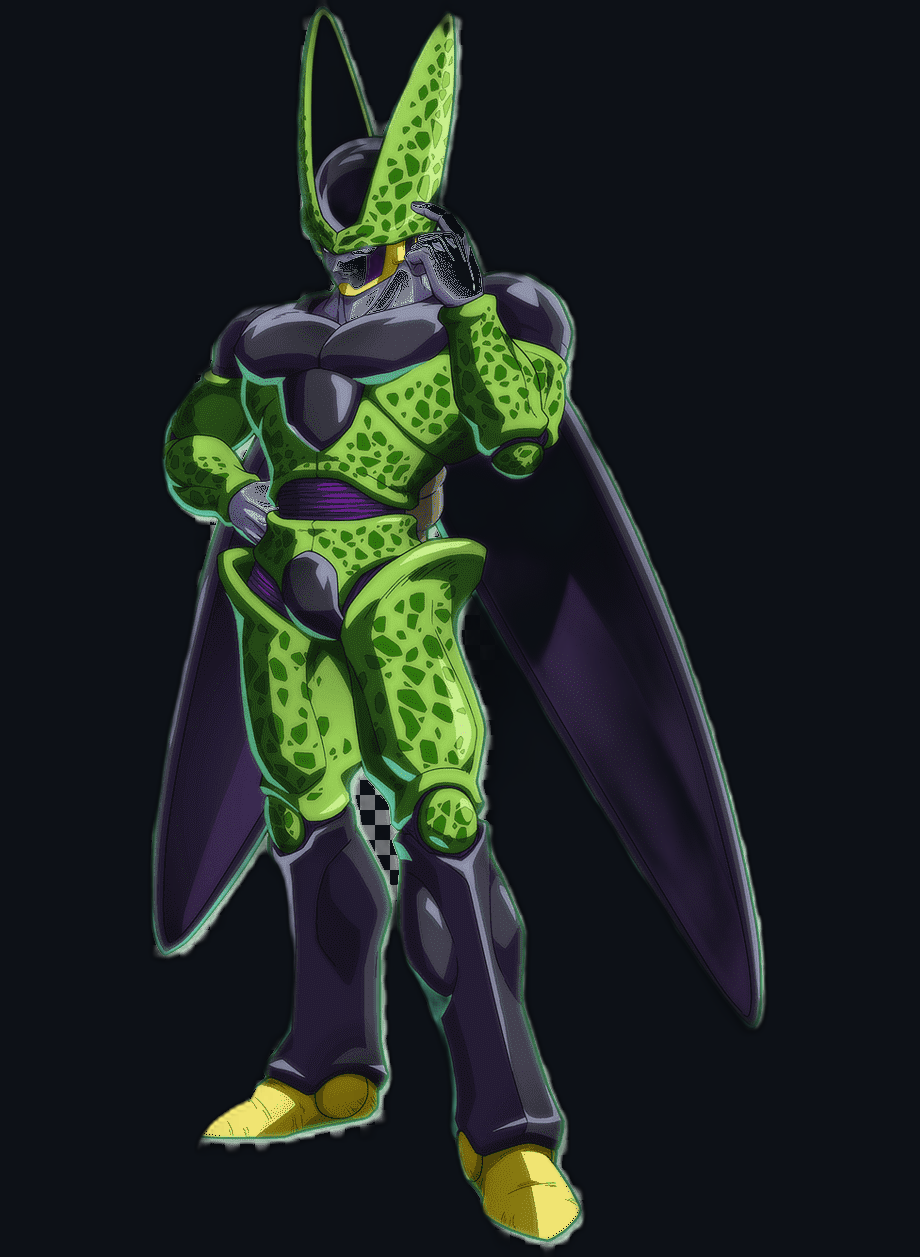
The Cell Saga is Dragon Ball Z's exploration of bio-engineering and the consequences of meddling with natural evolution. Dr. Gero, the Red Ribbon Army's top scientist, creates Cell, a biological android composed of the genetic material from the universe's strongest fighters including Goku, Vegeta, Piccolo, Frieza, and the Saiyans. The saga spans the Androids' initial attacks, the emergence of Cell from his incubation chamber, the Cell Games tournament, and culminates in Gohan's Super Saiyan 2 transformation. This arc is notable for shifting the spotlight from Goku to Gohan as the primary hero, developing Future Trunks as the time-traveling hope from a destroyed timeline, and creating the most memorable tournament setting in Dragon Ball history through the Cell Games.
The Cell Saga introduces the Android threat through Future Trunks' warning, establishing the parallel timeline concept that adds complexity to Dragon Ball's cosmology. The saga's structure follows a mystery thriller pattern initially, with Cell hunting and absorbing victims in the shadows, then transforms into an action spectacle with the Cell Games tournament. The emotional climax features the Father-Son Kamehameha, symbolically passing the torch from Goku to Gohan, and one of the series' most poignant endings with Goku's decision to remain dead.
Key Events & Structure
The Cell Saga divides into four clear parts: the Future Trunks arrival, the Android confrontation, Cell's evolution, and the Cell Games. Future Trunks' appearance is one of Dragon Ball's most dramatic moments, as the mysterious Super Saiyan from the future effortlessly defeats Mecha Frieza and King Cold, then reveals his identity as Vegeta's son. The three-year training period before the Androids' arrival allows the Z-Fighters to reach Super Saiyan level, with Goku and Gohan training in the Hyperbolic Time Chamber. The Androids 19 and 20 attack, but the real threat emerges when Androids 16, 17, and 18 are released.
Cell's emergence from his underground incubation chamber begins the saga's second half. He evolves through three forms: Imperfect Cell (hunting for Androids 17 and 18), Semi-Perfect Cell (after absorbing Android 17), and Perfect Cell (after absorbing Android 18). The Cell Games represent Cell's ultimate challenge to Earth, a tournament with universe-ending stakes. The Cell Juniors attack, Gohan's Super Saiyan 2 transformation occurs, and the final confrontation involves Cell's self-destruction, Goku's sacrifice, and Gohan's finishing Father-Son Kamehameha with Vegeta's distraction. The saga ends with Future Trunks returning to his timeline to defeat the Androids and Cell there.
Major Characters & Factions
Cell is a unique Dragon Ball villain because he combines the traits of multiple characters. His personality reflects Vegeta's pride (from Saiyan cells), Frieza's cruelty, Goku's fighting spirit, and Piccolo's tactical genius. His Perfect form represents physical perfection combined with the abilities of all the Z-Fighters. The Androids provide contrasting character types: Android 16 is a gentle pacifist built for destruction, Android 17 is a thrill-seeking free spirit, and Android 18 is pragmatic and independent. Dr. Gero represents scientific hubris, having lost sight of his original grudge against Goku.
Gohan's character arc is the emotional center of the Cell Saga. His transformation from a reluctant fighter into the Earth's champion represents the coming-of-age theme. Goku's decision to pass the torch to his son shows his faith in the next generation. Vegeta's role evolves significantly, as his arrogance in allowing Cell to reach Perfect form directly causes the crisis. His guilt-driven attack on Cell from behind in the final moments shows his growth. Future Trunks bridges the past and present, carrying the weight of his destroyed timeline and finding hope through his training.
Techniques & Power System
The Cell Saga introduces the Hyperbolic Time Chamber as a training mechanism, where one day outside equals one year inside. Goku and Gohan train to achieve Super Saiyan Full Power, a mastery of the form that eliminates the rage requirement and reduces stamina drain. This represents a philosophical shift: Super Saiyan is not just a power-up but a state to be mastered through calm and control. Gohan's Super Saiyan 2 transformation is the first of its kind, doubling Super Saiyan's power and adding electrical aura and sharper features.
Cell's techniques include the Kamehameha (learned from Goku's cells), the Solar Flare, Special Beam Cannon, regeneration from a single cell (thanks to Piccolo's Namekian DNA), and his signature attack, the Perfect Attack. The Cell Juniors are miniature versions of Cell created to torment the Z-Fighters, demonstrating Cell's sadistic nature. The Instant Transmission Kamehameha combination attack is introduced when Goku teleports and fires simultaneously, catching Cell off guard. Vegeta's Final Flash attack demonstrates the immense power Saiyans can generate when focusing their energy.
Strategic Analysis
The Cell Saga provides crucial lessons in strategic consequences. Vegeta's decision to let Cell absorb Android 18 stems from his pride in wanting to defeat a perfect opponent, directly causing the crisis. This is one of the clearest examples in Dragon Ball of how ego can override tactical judgment. Goku's strategy of relying on Gohan is also debated by fans, as he misjudges both Gohan's fighting spirit and Cell's resilience. The strategic use of the Hyperbolic Time Chamber creates a power imbalance that shifts every character's relative strength.
Cell's strategy of announcing the Cell Games and giving Earth ten days to prepare is both a tactical masterstroke and a flaw. It creates maximum terror and entertainment for Cell, but gives the Z-Fighters crucial preparation time. The Cell Juniors' attack serves as psychological warfare, breaking the Z-Fighters' morale. From a narrative strategy perspective, the saga uses parallel timelines to create narrative depth, showing that Trunks' future serves as a warning of what happens without preparation and training.
FAQ
How does Cell absorb Androids?
Cell absorbs Androids by extending his tail, which transforms into a syringe-like apparatus. He inserts the tail into the Android's body to absorb them whole. Android 17 is absorbed first into Cell's back, followed by Android 18. The absorption changes Cell's appearance and massively increases his power.
What are the Cell Games?
The Cell Games are a tournament organized by Perfect Cell, broadcast worldwide. Cell challenges Earth's strongest fighters to defeat him, threatening to destroy the planet if no one can. The tournament takes place on Cell's arena, a square platform floating in the sky. It features a ring-out and kill-allowed format.
Why does Goku choose Gohan over himself?
Goku believes Gohan's hidden potential exceeds his own, especially after sensing Gohan's rage-fueled power during training. He correctly judges that Gohan can surpass Super Saiyan but misjudges Gohan's lack of fighting instinct and confidence. This decision demonstrates Goku's faith in his son but also his limitations as a father who does not fully understand Gohan's gentle nature.
How strong is Super Saiyan 2 Gohan?
Super Saiyan 2 Gohan is significantly stronger than Perfect Cell during the Cell Games. After unlocking his hidden potential and his rage-boost following Android 16's death, Gohan's power exceeds Cell's by a considerable margin. Akira Toriyama has stated that SSJ2 Gohan is the strongest non-fused character in the Cell Saga.
What happens to Future Trunks after the Cell Saga?
Future Trunks returns to his timeline and uses his increased power to easily destroy Android 17, Android 18, and Imperfect Cell. He becomes the protector of his future world, eventually marrying and having a daughter. He also creates a new timeline where Cell never exists.
External resources: Cell Saga on Dragon Ball Wiki | Cell Character Profile