Overview
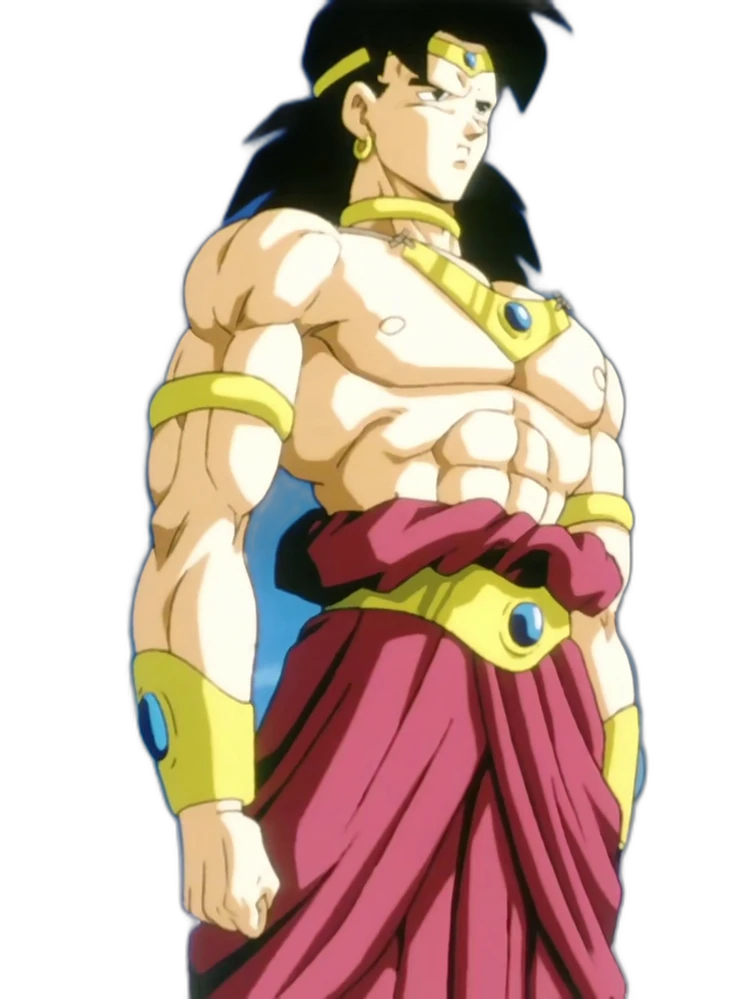
Dragon Ball Super: Broly, released in 2018, marks the official canon introduction of the legendary Super Saiyan into the main Dragon Ball timeline. Written and supervised by series creator Akira Toriyama, the film serves as both a spectacular theatrical experience and a significant expansion of Saiyan lore. The story follows two parallel narratives: the childhood of Broly on the harsh Planet Vegeta and the present-day conflict when Broly and his father Paragus arrive on Earth seeking vengeance against Vegeta's royal family.
The saga begins with Frieza's destruction of Planet Vegeta, revealing that Paragus and his infant son Broly survived the cataclysm by escaping to a remote planet. While Vegeta grew up as a prince under Frieza's thumb, Broly endured a brutal survival existence on Planet Vampa. Paragus equipped his son with a remote-controlled shock collar to suppress his rage, fearing Broly's uncontrollable power. Decades later, Frieza recruits the pair for his revenge against Goku and Vegeta, setting the stage for an explosive confrontation that redefines Saiyan combat in the Dragon Ball Super era.
Mechanics & Rules
The Broly Saga operates on several unique narrative and combat mechanics that distinguish it from other Dragon Ball story arcs. The central conflict mechanics revolve around Broly's unprecedented power growth rate, which surpasses even the legendary Saiyan potential displayed in previous sagas. Unlike traditional Saiyans who gain power through near-death experiences and Zenkai boosts, Broly's strength escalates continuously during active combat without any triggering event. This exponential growth creates a ticking-clock dynamic where Goku and Vegeta must find a way to defeat him before he becomes unbeatable.
The saga also introduces refined combat choreography that emphasizes tactical team fighting over single combat. Goku and Vegeta initially fight Broly in sequence, then attempt tag-team strategies, and ultimately resort to fusion when individual approaches fail. The film's combat system emphasizes environmental interaction, with fighters using the arctic landscape as both weapon and shield. Broly's Wrathful form represents a unique transformation mechanic that channels the power of the Great Ape (Oozaru) without requiring a full moon or tail, establishing a biological shortcut to enhanced power that challenges conventional Saiyan transformation rules.
Types & Classifications
The Broly Saga can be classified across multiple categories within the Dragon Ball franchise structure. As a theatrical film arc, it occupies a unique position compared to television sagas, featuring higher production values, streamlined storytelling, and a self-contained narrative that still connects to ongoing manga continuity. The saga functions as both a standalone origin story for Broly and a bridge between the Universe 6 Saga and the Galactic Patrol Prisoner Arc.
In terms of narrative classification, the saga combines several archetypes: the revenge story (Paragus seeking vengeance against Vegeta's family), the forbidden power narrative (Broly's uncontrollable rage as both strength and weakness), and the redemption arc (Broly's eventual rescue by Cheelai and Lemo). Combat classifications include one-on-one duels, team battles, and the climactic fusion showdown. The transformation hierarchy introduced includes Base Broly, Wrathful Broly, Super Saiyan Broly (green-tinged aura), and Super Saiyan Full Power Broly, each representing distinct power thresholds with unique visual and behavioral characteristics.
Notable Users & Examples
Beyond Broly himself, the saga features expanded roles for established characters and introduces new personalities that enrich the Dragon Ball universe. Goku demonstrates his growth as a martial artist by using progressive transformation levels, from Super Saiyan through Super Saiyan God, matching Broly's escalating power. Vegeta's character development shines through his tactical analysis of Broly's fighting patterns and his willingness to set aside pride for fusion. The film showcases Super Saiyan Blue Vegeta's Gamma Burst Flash and Super Saiyan Blue Goku's Kaioken techniques.
Cheelai and Lemo represent a new archetype in Dragon Ball: the ordinary soldiers who choose compassion over obedience. Cheelai's use of the Dragon Balls to transport Broly to safety rather than wishing for power or immortality demonstrates how the wish-granting orbs continue to drive character-driven resolutions. Frieza's role as manipulator and survivor is highlighted by his brief alliance with Broly and his cowardly retreat when Gogeta appears. Paragus serves as a cautionary tale of parental control and revenge obsession, his death at Broly's hands marking a tragic end to a misguided father-son relationship.
Strategic Analysis
The combat strategies in the Broly Saga represent some of the most sophisticated tactical thinking in Dragon Ball Super. Goku's initial approach involves testing Broly's power level while protecting his allies, using Instant Transmission to evacuate Frieza and retreat when necessary. Vegeta's strategy relies on overwhelming offense combined with precise targeting of weak points he identifies during observation. The decision to fuse into Gogeta represents the ultimate strategic escalation when conventional power gaps become insurmountable.
From a narrative design perspective, the saga's pacing follows a deliberate escalation structure. The first act builds dread through Broly's childhood flashbacks and Paragus's manipulations. The second act delivers extended combat sequences that showcase each fighter's abilities in rotation. The third act introduces Gogeta as the decisive factor, providing the visual and emotional climax. The epilogue establishes Broly's new status quo on Planet Vampa with Cheelai and Lemo, setting up future story potential. The strategic use of the Dragon Balls in the climax, where Cheelai wishes Broly away from Gogeta's finishing attack, demonstrates how the orbs can create unexpected narrative resolutions beyond simple resurrection.
FAQ
Is Broly canon in Dragon Ball Super?
Yes, DBS: Broly (2018) is the official canon version of Broly in the Dragon Ball timeline. Unlike the original Broly movies from the 1990s, this version is written by Akira Toriyama and integrated into the main continuity. The non-canon Z movies remain a separate continuity.
How does Broly transform in the Broly Saga?
Broly transforms through several stages during his fight: Base form, Wrathful form (using Great Ape power in humanoid form), Super Saiyan (with green aura), and Super Saiyan Full Power. His power grows continuously throughout the battle, forcing Gogeta to use Super Saiyan Blue.
Who wins the fight in DBS Broly?
Gogeta defeats Broly using Super Saiyan Blue Gogeta. However, they do not kill him. Broly is spared and later befriends Cheelai and Lemo, staying on Planet Vampa with Cheelai using the Dragon Balls to send him there.
Who are Cheelai and Lemo?
Cheelai and Lemo are members of the Frieza Force who desert the army after befriending Broly. Cheelai is a young green-skinned female soldier who shows compassion for Broly, while Lemo is an older male soldier who helps them escape. They become Broly's first real friends.
How does the Broly Saga connect to the Moro Arc?
The Broly Saga directly leads into the Galactic Patrol Prisoner Arc. After Broly is taken to Planet Vampa, Goku and Vegeta train on Beerus's planet, with Vegeta learning from Yardrat techniques. Broly is later recruited as a Galactic Patrol ally during the Moro crisis.
External resources: Broly on Dragon Ball Wiki | Dragon Ball Super: Broly Film