Overview
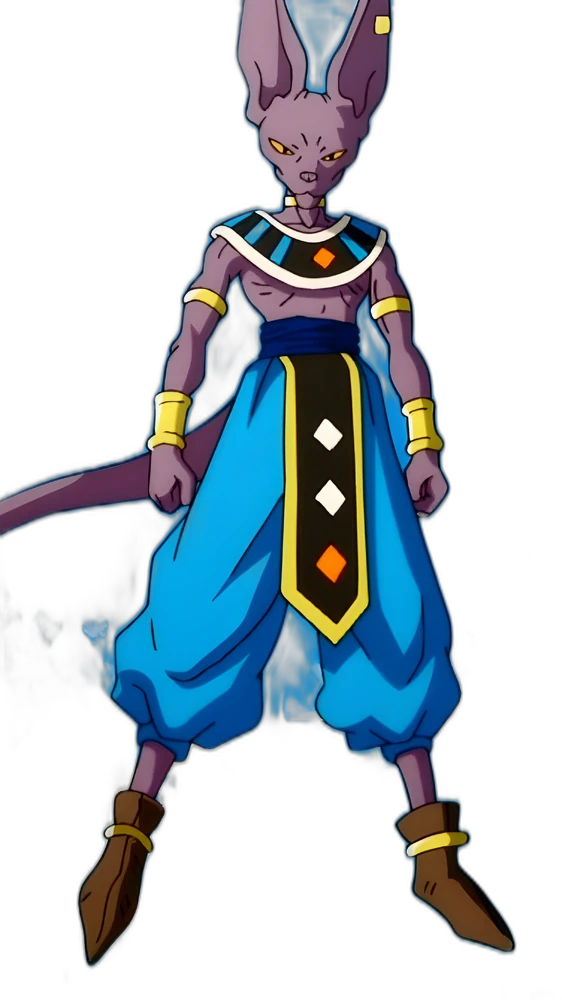
The Battle of Gods Saga is the introductory story arc of Dragon Ball Super, adapting the 2013 theatrical film Dragon Ball Z: Battle of Gods with expanded story elements. The saga marks Dragon Ball's return to television after an 18-year hiatus and introduces the divine hierarchy that would define Dragon Ball Super's cosmology. Beerus, the God of Destruction for Universe 7, awakens from a long slumber following a prophecy about the Super Saiyan God, a legendary Saiyan form with godly power. Goku must achieve this divine transformation through a ritual involving five pure-hearted Saiyans to challenge Beerus and save Earth from destruction. The saga establishes the new power ceiling beyond Super Saiyan 3, introduces Whis as the angel attendant and martial arts teacher, and sets the foundation for the godly transformations that define Dragon Ball Super.
The saga represents a tonal and narrative shift from Dragon Ball Z's conclusion, bringing back the humor and casual pacing of original Dragon Ball while maintaining Z's high-stakes combat. Beerus and Whis are complex new characters who serve as both antagonists and mentors, a dynamic unprecedented in Dragon Ball. The saga's emphasis on divine ki, godly power levels, and the multiverse expands Dragon Ball's scope beyond anything in Z or GT. The Battle of Gods Saga is shorter than most Dragon Ball arcs but critical for establishing the God of Destruction and Angel concepts that underpin all subsequent Super storylines.
Key Events & Structure
The saga opens with Beerus awakening from a 39-year sleep after a premonition of a powerful opponent called the Super Saiyan God. His search for this legendary warrior begins with a dream-like sequence and leads him to King Kai's planet, where he first encounters Goku. Beerus's introduction demonstrates his immense power: his casual flick destroys half of King Kai's planet. The saga then shifts to Earth, where Beerus attends Bulma's birthday party, creating humorous interactions with the Z-Fighters who initially do not recognize the God of Destruction. The party sequence provides essential character interactions and comedic relief before the serious battle begins. Beerus's anger over not being served pudding escalates into a confrontation with the Earth's mightiest warriors.
Goku's fight against Beerus as Super Saiyan 3 demonstrates the vast gap between mortal and godly power. Beerus defeats SSJ3 Goku with two fingers, establishing that Z-era power levels are insignificant against divine opponents. The Super Saiyan God ritual is performed by Vegeta, Gohan, Goten, Trunks, and the unborn Pan (in Bulma's womb), channeling their energy into Goku. The resulting form has red hair, a slender build, and divine ki that Beerus can sense. The battle between Super Saiyan God Goku and Beerus spans the sky above Earth, with shockwaves threatening to destroy the planet. Goku eventually loses the form but absorbs its power into his base state, a concept later called Super Saiyan God Super Saiyan (SSJ Blue). Beerus spares Earth, impressed by Goku's fighting spirit.
Major Characters & Factions
Beerus is the defining new character of the Battle of Gods Saga. As the God of Destruction, his role is to destroy planets and civilizations to maintain universal balance. His cat-like appearance belies his devastating power, and his love for food and sleep creates humorous contrasts with his destructive duties. Unlike previous Dragon Ball villains, Beerus is not evil but amoral, fulfilling his cosmic function without malice. Whis, Beerus's angel attendant and martial arts teacher, is even more powerful than Beerus. His calm demeanor, love for Earth food, and mysterious time-rewind ability make him a unique supporting character who can reverse damage and teach Goku divine techniques.
Goku's character in the Battle of Gods Saga shows his growth as a martial artist seeking ever-stronger opponents. His excitement at fighting Beerus, even when hopelessly outmatched, demonstrates his Saiyan love for combat. Vegeta's contribution to the Super Saiyan God ritual shows his acceptance of teamwork for survival, a significant character development from his prideful Z-era self. Bulma's birthday party sequence demonstrates her importance as the social center of the Z-Fighters community. The Earth's destruction stakes are lower than previous sagas because Beerus is not a traditional villain, creating a morally gray antagonist who could destroy Earth for a trivial reason or spare it on a whim.
Transformations & Power System
The Battle of Gods Saga revolutionizes Dragon Ball's power system by introducing divine ki. Unlike mortal ki (chi), divine ki cannot be sensed by those without godly training, creating a new power hierarchy inaccessible through normal training. Super Saiyan God is the first divine transformation, achieved through a five-Saiyan ritual rather than individual training. The form grants red hair, a leaner build, slower heartbeat (allowing calmer combat), and the ability to sense divine ki. Its power exceeds Super Saiyan 3 by an enormous margin, though Beerus still holds back during their fight. Goku's absorption of Super Saiyan God power into his base form is a crucial development, allowing him to access godly power without the ritual's limitations.
The saga soft-retires the numeric power level system permanently, replacing it with qualitative comparisons against divine benchmarks. Beerus is established as the measuring stick for all future Super villains. Whis's time-rewind ability demonstrates that Angels possess capabilities beyond destruction, introducing the Angel hierarchy above Gods of Destruction. The concept of destruction energy (Hakai) is introduced through Beerus, though its full explanation comes later. The saga also introduces the multiverse concept with the revelation that there are 12 universes, each with its own God of Destruction and Angel. This expansion of Dragon Ball's cosmology from a single universe to a multiverse sets the stage for Dragon Ball Super's entire narrative framework.
Strategic Analysis
The Battle of Gods Saga's strategic elements differ from traditional Dragon Ball arcs. Goku's strategy of fighting Beerus despite knowing he is weaker reflects Saiyan battle philosophy: growth through challenge. Beerus's strategy is not conventional combat but testing Earth's fighters to entertain himself, making his motivation unpredictable. The Super Saiyan God ritual requires coordination among Saiyans, a strategic teamwork element rare in Dragon Ball. The saga's climax, where Goku loses SSJ God but retains its essence in base form, represents adaptive power growth unique to Saiyan biology.
The saga's broader strategic lesson introduces the principle that not all conflicts can be resolved through combat. Beerus cannot be defeated through fighting, only impressed into mercy. This shifts Dragon Ball's conflict resolution from pure power escalation toward diplomatic and emotional engagement. The birthday party sequence demonstrates that treating a potential destroyer with hospitality can avert catastrophe. Whis's observation that Goku should train with him rather than fight Beerus establishes mentorship as an alternative path to power. The saga redefines Dragon Ball strategy for the Super era: sometimes the best victory is surviving a fight you cannot win.
FAQ
Is Battle of Gods canon?
Yes, Battle of Gods is canon in Dragon Ball Super continuity. The events were written by Akira Toriyama and adapted into both a film (2013) and expanded anime arc (2015). The anime version includes additional scenes not in the movie, including Beerus's dream prophecy and extended character interactions.
How powerful is Beerus compared to previous villains?
Beerus is exponentially more powerful than every previous Dragon Ball villain combined. He defeats Super Saiyan 3 Goku with two fingers, and Super Saiyan God Goku could not force Beerus to use even 70% of his power. This represents the largest power gap between hero and villain in the series at the time.
Does Goku learn Ultra Instinct in Battle of Gods?
No, Ultra Instinct is not introduced in the Battle of Gods Saga. Goku uses only Super Saiyan God and briefly SSJ2. Ultra Instinct first appears in the Tournament of Power Saga, introduced through Whis's training. The Battle of Gods Saga focuses exclusively on the Super Saiyan God transformation.
How long is the Battle of Gods Saga in Super?
The Battle of Gods Saga spans 14 episodes in Dragon Ball Super (episodes 1-14). It aired from July to 2015. The saga covers the same basic plot as the film but adds additional scenes including expanded backstory for Beerus, more Z-Fighter interactions, and extended battle sequences.
Who wins the Battle of Gods fight?
Beerus wins the Battle of Gods fight. While Super Saiyan God Goku pushes Beerus to use a small fraction of his true power, Beerus ultimately prevails. However, Beerus is impressed by Goku's spirit and decides to spare Earth, also hoping Goku will grow stronger to provide better fights in the future.
External resources: Battle of Gods on Dragon Ball Wiki | Beerus Character Profile