1. Overview
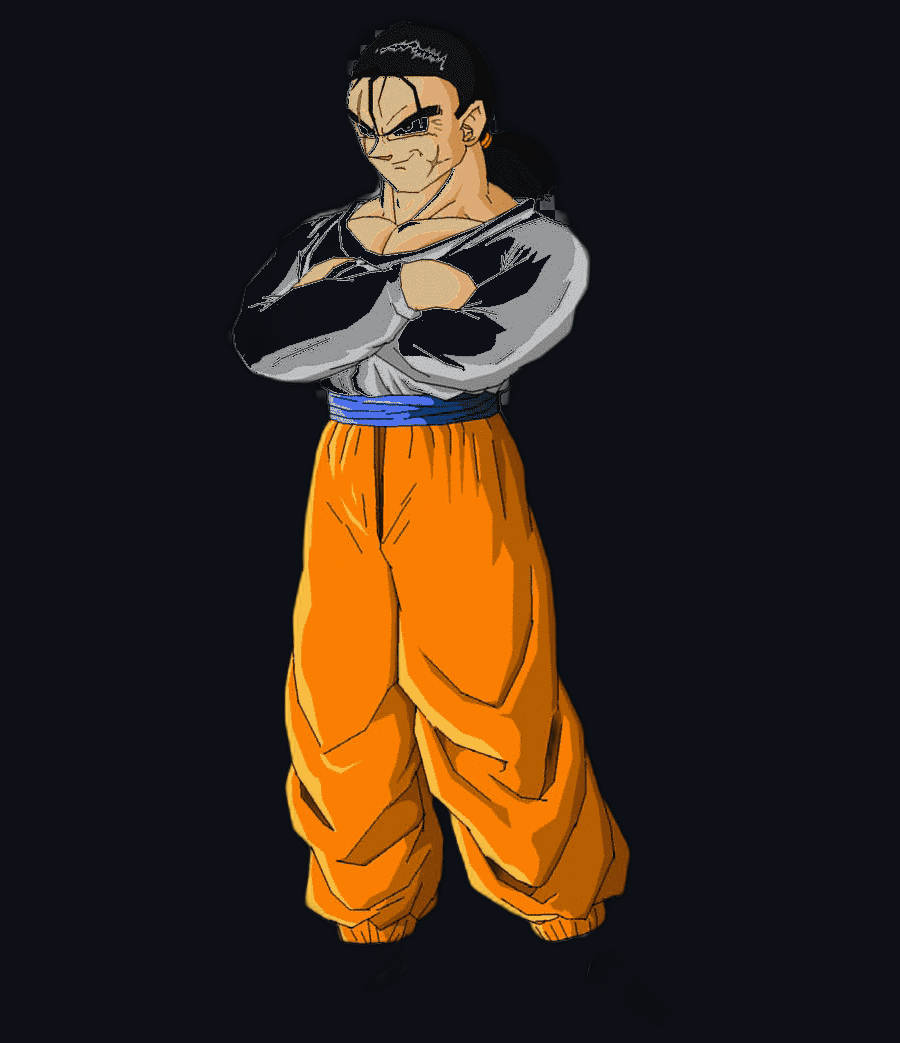
Uub is the pure-hearted human reincarnation of the primordial demon Kid Buu, born from Goku's dying wish that the universe's greatest evil be given a second chance as a force for good. The Dragon Ball Fandom Wiki describes Uub as one of the most significant characters introduced in the original manga's final arc. Hailing from a poverty-stricken tropical village, Uub grew up unaware of his cosmic origin, knowing only that he possessed inexplicable strength and a gentle, timid nature. He made his debut at the 28th World Martial Arts Tournament in the closing chapters of Dragon Ball Z, where Goku recognized the boy's latent power during their first-round match. Goku abandoned the tournament mid-fight, flew away with Uub on his back, and declared him his final student. In Dragon Ball GT, Uub's role expanded significantly — he fused with the good Fat Buu to become Majuub, a warrior combining Kid Buu's raw destructive potential with Fat Buu's compassionate heart. For players in Dragon Ball games, Uub represents a unique archetype: the sleeper character who appears unassuming but can tap into one of the multiverse's most terrifying power sources. He is the thematic bookend of the Dragon Ball narrative, transforming the saga's ultimate evil into its newest protector. According to the Wikipedia article on Dragon Ball GT, Uub and Majuub were created as part of the series' effort to introduce new characters connected to the original Dragon Ball Z finale.
2. Basic Data & Specifications
Uub's combat statistics must be understood as a story of potential — his untrained base is modest, but his latent Kid Buu reincarnation power makes his ceiling nearly limitless.
| Attribute | Uub (Untrained) | Majuub (GT) | Evaluation |
|---|
| Power Level | ~1e11 (latent) | ~2e15 | Dramatic growth from training with Goku and fusion with Fat Buu. Majuub rivals SS4-level fighters. |
| Ki Regeneration | Basic human recovery | Majin-tier regeneration | As Majuub, Uub inherits Buu's famous regeneration, making him extremely durable in prolonged fights. |
| Technique Learning | Raw instinct only | Full Kamehameha + Ki control | Goku's training transformed Uub from a wild power source into a disciplined martial artist. |
| Combat Instincts | 8/10 (Buu instincts) | 9/10 (Goku-trained) | Buus natural combat instincts plus Goku's technical training make Uub exceptionally well-rounded. |
| Emotional Control | 3/10 (rage triggers Buu) | 7/10 (disciplined) | Uub's greatest weakness early on is losing control when angry, triggering Buu's violent tendencies. |
3. Ability Analysis
Uub's abilities draw from three sources: his inherited Kid Buu power, techniques learned from Goku, and the unique fusion abilities of Majuub.
Inherited Buu Power (Rage Mode)
When Uub is pushed to emotional extremes — particularly anger — his latent Kid Buu power surfaces, manifesting as a violent, crimson-tinged aura. In this state, Uub's power output spikes dramatically, sometimes exceeding 10x his base level. However, control is severely compromised: technique accuracy drops by roughly 40%, and Uub risks injuring allies. The rage state is triggered by specific stimuli: witnessing harm to innocents, direct taunts about his weakness, or perceived threats to his village. Goku's training focused heavily on channeling this rage state into controlled power rather than wild outbursts. In games like Budokai Tenkaichi 3, this mechanic is represented as a temporary transformation buff with reduced defense.
Kamehameha (Goku-Taught)
Goku's first lesson to Uub was the Kamehameha, which Uub learned with surprising speed — a testament to his natural talent. Uub's Kamehameha has a distinctive orange-gold hue, differing from Goku's blue and Gohan's purple, suggesting his ki signature carries traces of Buu's unique energy. In practical terms, Uub's Kamehameha has approximately 80% of Goku's output at equivalent training levels but costs 15% less ki to execute, thanks to Buu's naturally efficient energy economy. Best used as a medium-range pressure tool or as a combo ender after physical strikes.
Majuub Fusion Techniques
As Majuub, Uub gains access to several unique abilities combining Buu's magic with Goku's martial arts. The Majuub Fusion form grants body manipulation abilities (stretching limbs, forming barriers), chocolate beam (turning opponents into candy — though Uub rarely uses this due to his gentle nature), and the Mystic Flash, a devastating area-of-effect energy release. Majuub's most significant combat advantage is Majin-style regeneration — he can recover from most non-fatal injuries within seconds. This regeneration costs ki rather than stamina, with a moderate wound costing approximately 10-15% of Majuub's total ki reserves to heal. In GT, Majuub demonstrated the ability to fight on par with Baby Vegeta and contribute meaningfully against Omega Shenron.
4. Build Recommendation & Fighting Style
Build A: Patient Growth (Pre-Fusion)
Start defensive and let the opponent drive the engagement. Uub's base form is weaker than most Z-Fighters, so the first 30 seconds should focus on reading opponent patterns. Use basic ki blasts to probe range preferences. The key to this build is provoking the opponent into overextending, then capitalizing with a rage-mode burst. Once rage triggers, fire a Kamehameha or melee combo while the opponent is adjusting to your power spike. After the rage burst, retreat and recover — the post-rage stamina penalty is significant.
Build B: Fusion Dominator (Majuub)
As Majuub, Uub transforms from a reactive fighter into an aggressive pressure machine. Open with limb extension techniques to close distance instantly — Majuub's stretchable arms catch most opponents off guard. Mix physical strikes with Mystic Flash for sustained damage. Use regeneration proactively: don't wait until critically wounded to heal. The regeneration window (requires 2-3 seconds of no damage) can be created by using a Barrier technique to absorb incoming fire. This build is energy-intensive but gives Majuub the staying power to outlast almost any opponent.
5. Strategy Guide
Early Game: Observe and Survive
Uub's pre-rage toolkit is limited. Focus entirely on defense and observation. What is the opponent's preferred range? Do they favor overhead or low attacks? How do they react to feints? Each piece of information gathered in the first minute of combat is more valuable than any damage Uub can deal in his base form. Use the Power Ball technique's absence as a deliberate signal — opponents who know Dragon Ball lore will expect Buu-type abilities and may hesitate, buying you time.
Mid Game: Rage Management
Once you have identified the opponent's patterns, trigger a controlled rage burst. The ideal moment is when the opponent commits to a long-animation attack — Uub's rage-state speed increase lets him punish these windows harshly. Limit rage bursts to 15-20 seconds maximum; longer exposure reduces control and leaves Uub exhausted. In Majuub form, the mid game shifts to aggressive pressure. Use Mystic Flash to break guards, then follow with a stretch-arm combo into Kamehameha.
Late Game: Regeneration Advantage
Majuub's regeneration means you win attrition wars. If the opponent is below 40% health and Majuub is above 60%, the advantage is decisive. Trade blows deliberately — every exchange favors the fighter who can heal. Against opponents without regeneration, target their stamina bar rather than their health bar. A drained stamina opponent cannot avoid the Mystic Flash. If Uub is still in base form during late game, the situation is dire. Conserve ki for one final rage burst and Kamehameha combination. Win or lose, it ends quickly either way.
6. Matchups & Counters
Uub performs well against opponents who rely on attrition tactics — his regeneration and rage-mode power spike make drawn-out battles favor him. He excels against characters with slow, telegraphed attacks, as his rage-state speed allows easy punishment. He struggles against opponents who can seal abilities or suppress ki, such as characters with divine power nullification or energy-draining techniques. Frieza-type opponents who use wide-area destruction attacks force Uub to either tank damage or waste ki on evasion, both of which are unfavorable. The most difficult matchup for Uub is Beerus or any God of Destruction — their Hakai energy can bypass Majin regeneration entirely by erasing matter at the soul level, making Uub's primary survival tool useless. Against such opponents, Uub's best strategy is to avoid direct confrontation and fight hit-and-run, using limb extension for poke damage and retreating before the opponent can retaliate. Overall, Uub is a mid-tier fighter with top-tier potential in prolonged engagements.
7. Expert Tips & Common Mistakes
Mistake 1: Triggering Rage Too Early
Rage mode gives Uub a tempting power spike, but triggering it in the first 30 seconds of combat is almost always wrong. The opponent has not committed to a pattern yet, and Uub wastes his best advantage on adaptation phase. Save rage for when you have read at least two of the opponent's habits — the burst advantage is much more decisive against a predictable foe.
Mistake 2: Over-Reliance on Regeneration
Majin regeneration is powerful but not free. Each moderate heal costs 10-15% ki, and consecutive heals stack a ki penalty that reduces the second heal's effectiveness by 30%. Players who tank damage thinking "I can just heal it" often find themselves at 10% ki with 50% health and no offensive options. Regeneration is a second chance, not a primary strategy.
Mistake 3: Forgetting Uub Is a Student
Uub has been trained by Goku — he knows the fundamentals. Many players treat Uub as a wild Buu clone and ignore the martial arts discipline Goku instilled. Proper stance, footwork, and technique timing are all part of Uub's toolkit. Use the Kamehameha as Goku would use it: as a combo finisher at medium range, not as a screen-wide panic button.
8. Frequently Asked Questions
Is Uub the reincarnation of Kid Buu?
Yes. Uub is the pure-hearted human reincarnation of Kid Buu, born from Goku's wish that the demon be reborn as a good person so they could fight again. This makes Uub the only character who directly inherits a villain's power as a hero.
What is Majuub?
Majuub is the fusion of Uub and the good Fat Buu, achieved through the Fusion Dance in Dragon Ball GT. The resulting warrior combines Kid Buu's raw power, Fat Buu's magic, and Uub's discipline under Goku's training.
Is Uub canon in Dragon Ball Super?
Uub has not appeared in Dragon Ball Super as of the current manga and anime story arcs. He remains a canonical character from the original manga's ending (Chapter 518) but has not been integrated into Super's ongoing narrative.
How strong is Uub compared to other Z-Fighters?
Untrained Uub is among the weakest Z-Fighters. Post-training Uub is comparable to early Majin Buu Saga power levels. Majuub from GT is significantly stronger, capable of fighting Super Saiyan 4-tier opponents like Baby Vegeta.
Does Uub appear in any Dragon Ball video games?
Yes. Uub is playable in Budokai Tenkaichi 3 (base form and Majuub), Dragon Ball FighterZ (as an assist character), Dokkan Battle, and various DBZ mobile games. He is typically classified as a high-potential, mid-tier character.