1. Overview
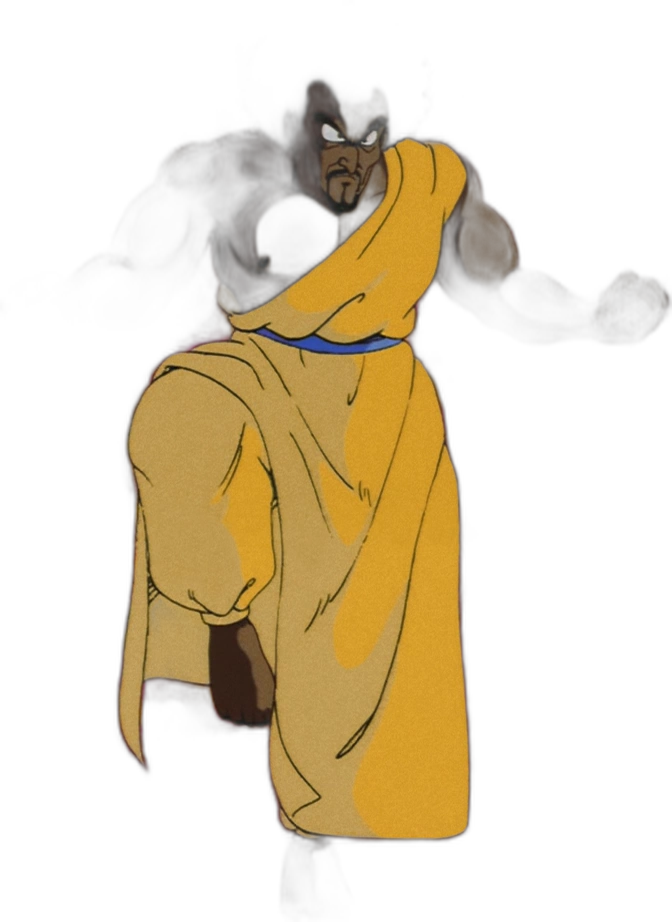
King Chappa is a legendary figure in Dragon Ball's martial arts tournament history — a champion who won the World Martial Arts Tournament an undisclosed number of times without ever losing a single match. His undefeated streak spanned years, making his name synonymous with tournament dominance in the era before ki projection and superhuman combat became the norm. Chappa's signature technique, the Eight-Hand Fist (Hasshu-ken), was a flurry of strikes so rapid that eight fists appeared to attack simultaneously, a technique of pure speed that overwhelmed ordinary opponents before they could react. Unlike many of Dragon Ball's powerhouses who rely on energy attacks and transformations, King Chappa represents the pinnacle of pure physical martial arts — raw speed, precision, and tournament-honed instinct. His encounters with Son Goku across two World Martial Arts Tournaments serve as a narrative measuring stick for Goku's growth. Despite suffering humiliating defeats — knocked out of the ring in seconds during the 22nd Budokai, then unconscious before landing a punch in the 23rd — Chappa's dignified persistence and continued training embody the spirit of the human martial artist in a world increasingly dominated by aliens and gods.
2. Basic Data
King Chappa's official biography and comparison with Son Goku at the time of their first encounter at the 22nd World Martial Arts Tournament.
| Attribute | King Chappa | Son Goku (22nd Budokai) | Assessment |
|---|---|---|---|
| Species | Human (Earthling) | Saiyan (Earth-raised) | Different biology limits potential |
| Debut | Dragon Ball Ch. 113 (1987) | Dragon Ball Ch. 1 (1984) | Chappa debuted years later |
| Power Level | ~120 (estimated peak) | ~180 (post-Korin training) | Goku 50% higher |
| Fighting Style | Eight-Hand Fist, pure speed | Mixed martial + Kamehameha | Goku far more versatile |
| Tournament Record | Multiple-time undefeated champion | 2nd place (21st Budokai) | Chappa had better past record |
| Ki Utilization | Minimal ki projection | Kamehameha, flight, kiai | Goku significantly advanced |
King Chappa was born in the Age before the World Martial Arts Tournament became a global phenomenon. He trained exclusively in hand-to-hand combat, developing the Eight-Hand Fist through years of repetitive shadow boxing and speed drills. Unlike most martial artists in the Dragon Ball world, Chappa never learned to project ki or fly, remaining a purely physical fighter throughout his career. His tournament reign ended when he faced Goku, a boy trained under Master Roshi and Korin, who had already begun bridging the gap between physical martial arts and ki-based combat. The contrast between Chappa's pure physicality and Goku's hybrid style represents a turning point in Dragon Ball's power progression.
3. Ability Analysis
King Chappa's abilities reflect a pure martial artist who reached the human limit through dedicated physical training. His techniques, while lacking the flash of ki attacks, were devastating against tournament-level opponents.
Eight-Hand Fist (Hasshu-ken)
Chappa's signature technique generates eight illusory fists through sheer speed. The technique works by exploiting the opponent's visual processing limits — Chappa strikes so fast that the human eye cannot track individual punches, instead registering a multi-fist blur. The Eight-Hand Fist is not a supernatural ability; it is purely physical, achievable through extreme speed training. This technique made Chappa virtually unbeatable among tournament-level fighters who relied on sight-based defense. Its primary limitation is that it depends entirely on Chappa being faster than his opponent — against anyone with superior speed, the technique is completely neutralized.
Tournament Champion's Strike
A full-power straight punch backed by Chappa's entire body weight and momentum. While lacking the flash of energy attacks, the Champion's Strike carries devastating kinetic force. Against opponents without ki-enhanced durability, this strike is potentially fight-ending. Its limitation is its linear nature — a fighter who can move faster than Chappa's recovery time can counter before he repositions. The strike also leaves Chappa briefly off-balance, making it a high-risk technique against agile opponents.
Endurance and Conditioning
Chappa's tournament career required extraordinary stamina. He conditioned his body to maintain peak speed across multiple consecutive matches, a skill that separated him from less experienced fighters. This endurance allowed him to overwhelm opponents who exhausted themselves early by pressing the attack in later rounds. However, Chappa's conditioning was based on human-level tournament expectations and proved insufficient against the superhuman endurance of ki-trained fighters like Goku, who could fight at full power for extended periods.
Kiai Resistance Experience
Having been defeated by Goku's kiai (pressure wave) in the 23rd Budokai, Chappa gained first-hand experience with energy-based attacks. While he never developed ki projection himself, his exposure to ki-based combat made him more aware of the limitations of purely physical fighting. This awareness, however, came too late in his career to meaningfully adapt his fighting style, and he never demonstrated any ki techniques.
4. Build Recommendations
King Chappa's fighting style offers two primary approaches, each optimized for different opponent types. The choice between them depends on whether Chappa's speed advantage applies.
Pure Speed Flurry Build
This build maximizes Chappa's natural speed advantage, relying entirely on the Eight-Hand Fist to overwhelm opponents before they can organize their defense. The strategy is simple: close distance instantly, unleash the full Eight-Hand Fist combo, and retreat before the opponent can counter. This build works best against opponents who rely on telegraphed techniques or have slow startup times. Its fatal weakness is any opponent with superior speed or automatic ki-based defense — Goku's post-Korin training completely negated this approach, countering Chappa before he could land a single blow.
Endurance Counter Build
This defensive approach focuses on outlasting opponents rather than overwhelming them. Chappa uses his tournament-honed stamina to weather early exchanges, studying opponent patterns before committing to offensive strikes. The build relies on Chappa's fight IQ and experience — recognizing when an opponent is winding up a major attack, avoiding it, and punishing the recovery window. A single well-timed Champion's Strike can end a fight against an opponent who overextends. This approach fails against opponents with overwhelming power differentials, as demonstrated by Goku's kiai in the 23rd Budokai where endurance was irrelevant against a one-shot technique.
Optimal Playstyle Assessment
Against tournament-level opponents (power level ~50-150), the Pure Speed Flurry Build is optimal — Chappa's natural abilities give him a clear edge. Against post-Korin or ki-using opponents (power level 150+), neither build is reliably effective, but the Endurance Counter Build at least allows Chappa to survive longer and potentially find a single opening. Chappa's lack of ki techniques severely limits his adaptability, making him a one-dimensional fighter by Dragon Ball Z standards.
5. Strategy Guide
King Chappa's combat strategy revolves around his tournament experience and the Eight-Hand Fist. Understanding when and how to deploy his limited toolkit is essential for success.
Pre-Match Scouting
Chappa's best asset is his experience evaluating opponents during the opening moments of a match. He should observe the opponent's stance, breathing pattern, and weight distribution before engaging. A fighter who carries weight on their back foot is preparing to retreat; one centered on the balls of their feet is preparing to rush. This observation window lasts only seconds but provides critical information for choosing between the Speed Flurry and Endurance approaches. Chappa should also watch for signs of ki-based attacks — glowing hands, unusual auras, or focused expressions — and adjust his approach accordingly.
First Exchange Tactics
The first exchange defines the match for a pure physical fighter like Chappa. If Chappa can land the Eight-Hand Fist within the first three seconds, the opponent will be disoriented and on the defensive for the remainder of the fight. If Chappa fails to land or is countered in the first exchange, his chances drop dramatically, as his entire fighting style is predicated on speed dominance. The ideal opening is a low feint followed by the Eight-Hand Fist aimed at the opponent's midsection — center mass is the hardest area to dodge.
Handling Elite Opponents
Against fighters with superior speed, ki blasts, or flight capabilities, Chappa must abandon standard tournament tactics and adopt survival-focused movement. The correct response is unusual but necessary: stay in close range. Despite the Eight-Hand Fist's short range requiring proximity, close-quarters combat actually limits the opponent's ability to use long-range ki attacks. Maintaining center ring position prevents being cornered and keeps escape routes open. Against airborne opponents, Chappa's lack of flight is a critical weakness with no tactical workaround — his only option is to wait for the opponent to descend or force a ring-out.
6. Matchup Analysis
Wins Against
Preliminary tournament fighters (power level 30-80): Chappa's Eight-Hand Fist overwhelms these opponents before they can mount any defense. Giran: The dinosaur fighter's size and slow movements make him an ideal target for the Speed Flurry approach. Nam: Though a skilled fighter, Nam lacks Chappa's speed and tournament experience. Ranfan: Chappa's disciplined mindset makes him immune to psychological tactics that would distract less focused fighters.
Struggles Against
Son Goku (post-Korin training): Goku's superior speed and ki mastery make Chappa's Eight-Hand Fist completely ineffective. Tien Shinhan: Tien's combination of ki techniques (Solar Flare, Dodon Ray) and martial arts prowess creates too many variables for Chappa's pure physical style. Master Roshi (Max Power): Roshi's ki-enhanced physical attacks outmatch Chappa's purely physical strikes. Any ki-proficient fighter: The fundamental disadvantage is that Chappa has no defense against energy attacks of any kind, making even moderately powerful ki users a serious threat.
7. Expert Tips
1. Mistaking tournament experience for absolute power
Chappa's undefeated record made him believe his skills were universal. Tournament victories against fellow physical fighters did not prepare him for ki-based combat. Fighters should recognize that dominance in one environment does not guarantee success across all environments. The World Martial Arts Tournament ruleset — ring boundaries, no weapons, no killing — created a comfort zone that did not translate to real combat.
2. Failing to adapt between tournaments
Chappa's second defeat by Goku in the 23rd Budokai is especially telling because he had time to prepare but apparently did not adjust his training to address ki-based attacks. The same strategy that failed in the 22nd Budokai failed again in the 23rd. Adaptation between encounters is critical — an opponent who defeated you once has shown you exactly what you need to overcome.
3. Over-reliance on a single technique
While the Eight-Hand Fist is Chappa's signature technique, his dependence on it left him without a backup plan when it failed. A well-rounded skill set, even at lower specialization, provides more options than hyper-specialization in one technique. Chappa would have benefited from developing even basic ki techniques to supplement his physical attacks.
8. FAQ
How many times did King Chappa win the World Martial Arts Tournament?
The exact number is never stated in the manga or anime, but he is described as having won the tournament multiple times and maintained an undefeated record until facing Goku. His streak was sufficiently impressive that his status as a living legend was widely acknowledged by tournament organizers and fellow competitors.
What happened when King Chappa fought Goku in the 22nd and 23rd Budokai?
Chappa fought Goku twice. In the 22nd Budokai, Goku knocked him out of the ring within seconds using speed gained from his training under Korin. In the 23rd Budokai, Goku defeated Chappa with a single kiai (pressure wave) before Chappa could throw a single punch. Both encounters lasted less than ten seconds and demonstrated the growing gap between tournament-level fighting and ki-based combat.
Is the Eight-Hand Fist a supernatural technique?
No. The Eight-Hand Fist is purely physical — extreme speed creates the optical illusion of eight fists striking simultaneously. It has no ki component and is theoretically achievable by any sufficiently fast human martial artist. The technique is closer to real-world martial arts concepts like rapid combinations than to Dragon Ball's energy-based attacks.
Does King Chappa appear in Dragon Ball Z?
Chappa makes a brief but notable appearance in the Other World Tournament filler arc of Dragon Ball Z (episodes 195-199), where he competes as a deceased fighter against other legendary warriors. He faces Olibu, an ancient Earth warrior, in a match that demonstrates his continued skill even in the afterlife. This filler appearance serves as a reminder that Chappa's abilities, while obsolete by Z standards, were genuine.
Why is King Chappa called King?
King is an honorary title earned through his tournament victories and undefeated record. It is not a royal or governmental title but a martial arts honorific recognizing his dominance in the World Martial Arts Tournament. The title reflects the reverence with which tournament veterans regarded his achievements, similar to how God is used as a title for Kami or Mighty for other legendary fighters.